
Introduction
Yes! putters are cult classics, best known for their immediately recognisable C-Groove face. It was invented and patented by European Tour coach and “putting guru” Harold Swash in 1995. He went on to form a joint venture with Denver-based Yes! Golf in 1996, and the putters were born. The C-Groove face was the secret sauce, promising an earlier, truer roll than smooth-faced putters. Interestingly, today’s hottest putting coach, Phil Kenyon, trained under Swash at Formby Hall.
Yes! enjoyed real tour success, most famously with Retief Goosen winning two US Opens, in 2001 and 2004, using a Tracy. Throughout the 2000s, they were used by other recognisable names, including Henrik Stenson and Edoardo Molinari. Unfortunately, the putter market is brutally competitive, and in 2010, Yes! filed for bankruptcy. They were acquired by Adams Golf in 2011, which was subsequently acquired by TaylorMade, and then Yes! quietly disappeared.
Around the same time the company went bust, an aspiring 16-year-old amateur named Matt Fitzpatrick put a Tracy II in his bag. He used it to win the US Amateur in 2013 and then, as a professional, the British Masters in 2015. He liked the putter so much that he bought as many as he could find to keep plenty of spares.
In 2020, Fitzpatrick agreed to a deal with Bettinardi. They made an exact copy of the Tracy II, and the DASS BB1 Fitz Proto was born. He used that putter to win the US Open in 2022, and while he has since switched to a BB48 Proto, he has kept the C-Groove face concept in that newer club.
Fitzpatrick is regarded as one of the best putters in the world, and he built that reputation with this shape in his hands. That’s the reason I bought this putter. I wanted to see what he saw.
First Impressions
For £75, this putter is a great example of what you can find second-hand and an absolute bargain find. For a relatively old putter, it is in superb condition. There’s only one small mark on the trailing edge, and it’s almost invisible in play.


My first impression was simple: wow, this is a really nice putter. The offset is spot on, the contrasting colours are excellent, with a lighter leading edge and a darker rear section, and it sits beautifully behind the ball. It even came with a headcover that’s also in excellent condition, but it’s a bit quirky, so more on that later.
I think this particular putter has had a shaft replacement at some point, as I don’t believe it came with a black shaft as standard.
Specs (as tested)
Total weight: 544g
Head weight: 340g
Swing weight: C5
Length: 34”
Loft: 2.5°
Lie: 71° (standard)
Toe Hang: 60° (5 on clockface)
Grip: Iomic classic mid (aftermarket)
Despite being the same head shape as the recently reviewed Toulon Madison, the weights are quite different. It weighed 558g, with a 352g head and a D2 swing weight.
Protocol Snapshot (How I Tested It)
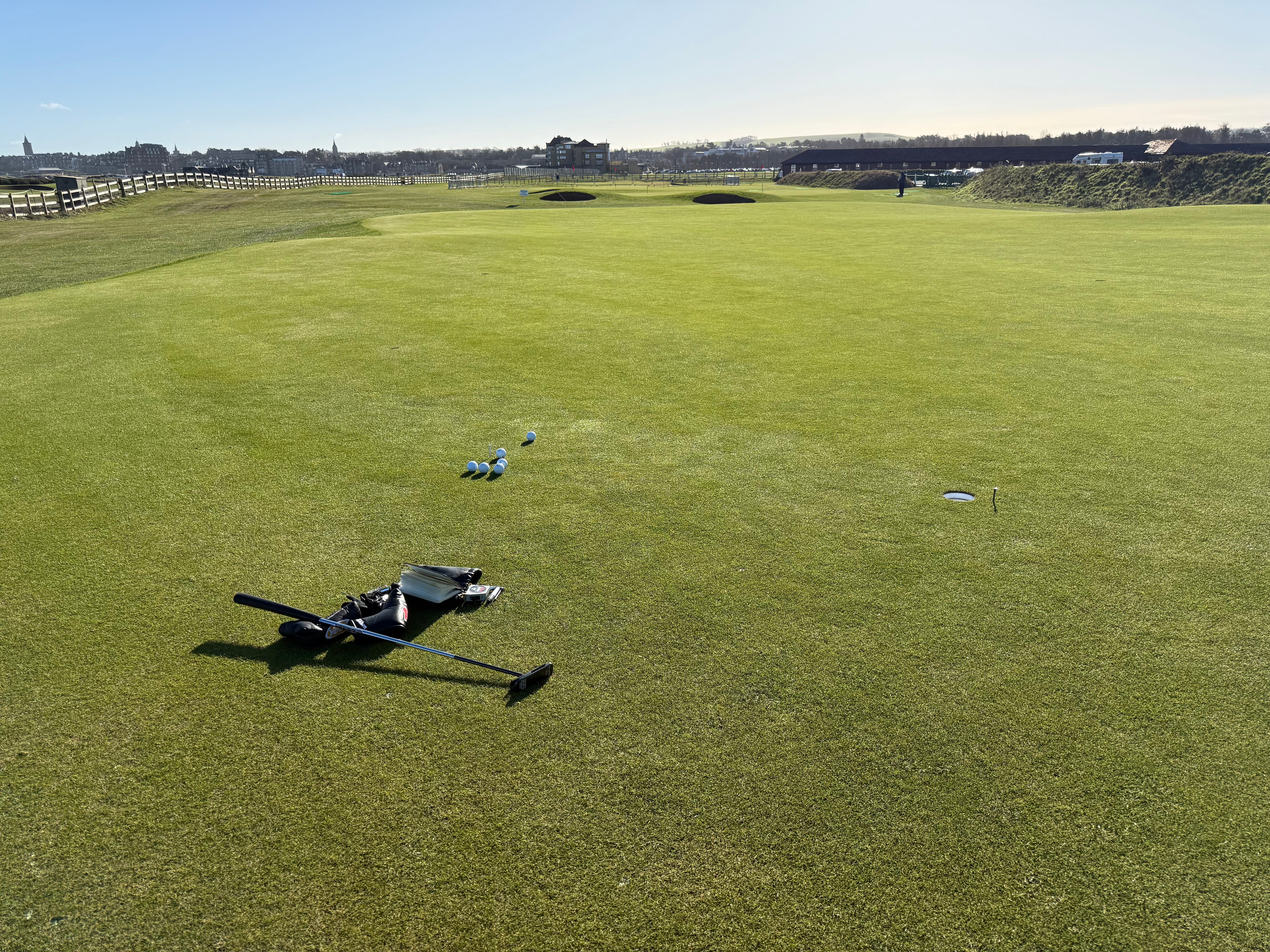
Surface: St Andrews Academy practice green
Conditions: A lovely day, but cold (4°C) and light wind.
Make Test: 6 putts x 3 reps from 3, 6, 9, 12, 15 ft
Lag Test: 40 ft to 3 ft - uphill and downhill - run once
Start Line: Gate drill (two tees at 18 inches ahead, gate only just wider than a ball)
Benchmark: My current gamer, a SeeMore Nashville FGP (run once)
Full testing framework: HERE
How did it perform?
Notes
Despite the continued cold weather, it was another lovely day for testing. I pretty much had the green to myself, so I was able to take my time setting up the tests and also had my pick of hole locations.
This was a pretty good performance overall from the old Tracy 2, and highlights that older putters are still very worthy of consideration. There are some nuances that I will discuss below, but I was pleasantly surprised by this putter.
Pros and Cons
Looks and Feel (+ve): This is one of the nicest feeling and sounding putters I have tested. It’s made from 304 Stainless Steel, and the sound at impact is everything I like from a putter. It has that Goldilocks pitch where it’s not too tingy and not too muted. For what was a relatively affordable putter when new (around £150), the finish is superb. I’ve seen a lot of very tatty examples on the second-hand market, though, so I may just have been lucky to find one in such good condition. I’ll not bore you here with the differences between 303 and 304 stainless steel, but they’re worth a quick web search if you’re as much of a golf nerd as I am.
Pace control (+ve): I found the C-Groove face fantastic for pace control, and I was able to trust it really quickly. Even just warming up and hitting a few putts around the green, it performed extremely well. The face feels very similar to my SeeMore Nashville mFGP, which is also a stainless steel head with shallow milling.
Aim/Alignment (-ve): Hmm, a bit like the Toulon Madison, I felt there was a degree of right aim bias. I struggled to gain confidence with aim, which was a shame given how much I liked it for pace and feel. The issue became more apparent as the distance increased. With the lag tests, front-to-back dispersion was good, but left-to-right dispersion was poor. After testing, while researching Yes for this review, I found a comment from Matt Fitzpatrick, “I’d bought numerous Yes! putters online, but my putting coach Phil Kenyon noticed the backline actually pointed slightly to the right. I would line the putter up, and the face would aim left, so I would hit good putts, but they would miss left.” Could this one be the same? If it is, it’s really subtle, but that’s the sort of thing your eyes and brain can pick up on unconsciously.
Headcover (+ve): At first glance, it looks like any normal blade putter cover, but the opening is at the front rather than the back. This makes for an exceptionally secure fit when it’s on the club, but it’s awkward to get on and off as the magnets tend to attach to the shaft, making it tricky to get the head into the cover.


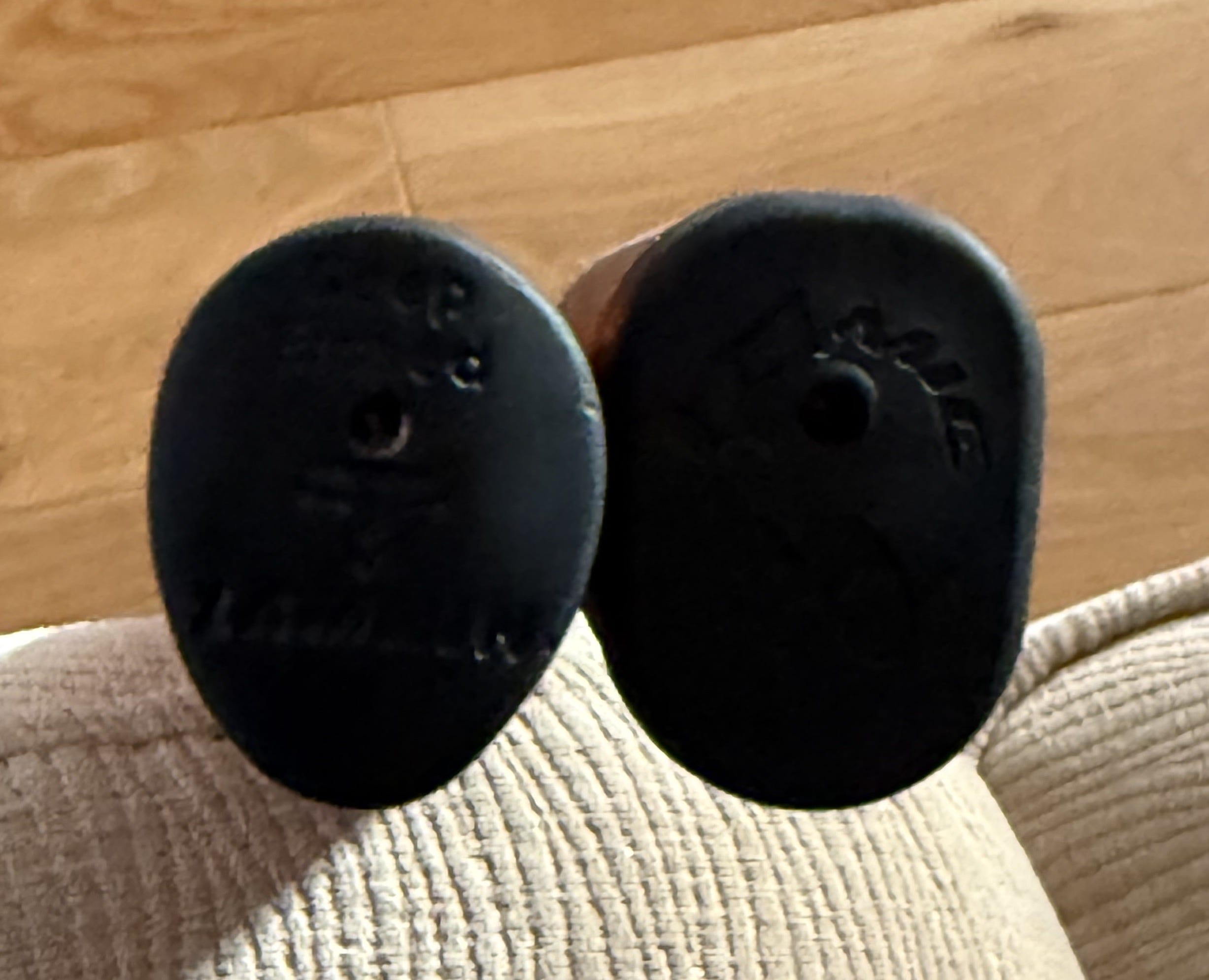
Grip (+ve): This is the first Iomic grip I’ve used. On first glance, it reminded me of the P2P grip that I didn’t like on the Bettinardi BB48 I tried last year. However, the Iomic feels much nicer. It’s a similar size to the Lamkin Deep Etched, but more rectangular in shape. However, if I were keeping the putter, I’d change the grip.
Price (+ve): Relatively inexpensive when new, at around £150 and available second-hand from £40 upwards (although it will likely be a bit battered). I paid £75 for this one, and it was worth every penny in my opinion. I shouldn’t lose too much on resale.
Conclusion
This is another lovely Anser-style putter, and I much preferred it to the Toulon Madison from my previous review. The C-Groove face feels brilliant, and I would be keen to try some other models after this experience. However, as with the Madison, my biggest problem with this putter was aim, and that keeps it out of my bag.
I’m sorry, Matt, but this putter just wasn’t for me. I know you’ve moved on to the BB48, but if you want to buy this Tracy 2 to add to your collection, then drop me an email! (Now, that would be funny!)
If you value independent testing and would like new reviews sent directly to your inbox, then please subscribe. It’s free, and you can cancel at any time.
Links:
Phil Kenyon Interview: here
Full testing framework: here
All my other putter reviews: here
The reason for the line bias was that the putters were often bent to a stronger loft to take advantage of the grooves. This opens the putter.