

Introduction
The 8802 shape sits in that small category of putters that doesn’t need explaining. A timeless beauty with a slim blade, a flowing neck and hardly any visual noise. It’s the sort of putter you pick because you love putting, not because you want technology to do the work. It’s a very revealing putter. It’s also an interesting contrast to the Odyssey Metal-X #8 that I reviewed recently, as it has a fully milled face and no distracting alignment lines.
The shape harks back to the glory days of Ben Crenshaw, when he won the Masters in both 1984 and 1995. He loved the shape so much he even called his putter “Little Ben”. John Daly also used an 8802 to win the Open at St Andrews in 1995. But Arnold Palmer is probably the golfer most associated with making this style of “flanged blade” famous.
First Impressions
This is a thing of beauty, and it was pretty much love at first sight. But will that grow or fade as testing continues? The head is small without being fiddly, and the overall shape feels purposeful (and very pretty). It’s not trying to impress you. In fact, many would likely say it’s more intimidating than impressive. The face milling is lovely and adds a modern touch to this classic head.


The lack of alignment didn’t feel like a problem (initially). It actually felt a bit liberating, although the real test of that is still to come. It sat square to my intended line, and I felt like I could just set it down and swing. While visually very different, in motion, the way it swung felt broadly the same as my SeeMore Nashville mFGP, making the transition easy.
One thing I learned from the earlier Odyssey #8 test is that the sweet spot is closer to the heel than the geometric centre of the blade, which influences setup.
Specs (as tested)
Total weight: 524g
Head weight: 335g
Swing weight: C6
Length: 34.5”
Loft: 3°
Lie: 71°
Toe hang: 90° fully toe-down
Grip: SuperStroke 1.0 Pistol GT
With the Odyssey having been slightly too short, this one is actually a touch too long, but that’s easier to adjust for.
Protocol Snapshot (How I Tested It)
Location: St Andrews Links Academy practice green
Conditions: 6°C, but with wind chill it felt colder; green relatively slow
Make Test: 6 putts x 3 reps from 3, 6, 9, 12, 15 ft
Lag Test: 40 ft to 3 ft circle – uphill and downhill
Start Line: Gate drill (two tees at ~18 inches, just wider than a ball)
Benchmark: SeeMore Nashville mFGP
Full testing framework: here
How did it perform?

Notes
This is the first putter to give the SeeMore a proper run for its money. Over most of the tests today, it performed as well as, or even better than, my SeeMore. I was particularly surprised at how well it performed as the distances increased. Yes, you get a lot of feedback if you don’t strike the sweet spot, but I didn’t feel like those misses were overly punished, and my distance control was very good.
It was a cold day with additional wind chill, and the green was slow. What stood out was how quickly the 8802 felt ‘normal’. I aim the leading edge on my target line and let it go. When it missed, it tended to be a start-line issue rather than a pace issue.
Pros and Cons
Looks (+ve): Classic 8802 shape. Small but not fiddly. ‘Just a putter’ in the best way. I really like it, but it could frighten others more used to mallets or even Anser shapes.
Aim/Alignment (+ve, for me): No line meant no negotiation with the back. I could focus on the face and aim the leading edge. That simplicity boosted confidence, and confidence in your aim is vital if you are going to use this putter.
(Context note: part of this putter test is to triangulate against the earlier review of the Odyssey Metal-X #8; a similar shape but with a front-to-back alignment line. I found that line surprisingly hard to trust, and it bled confidence.)
Feel (+ve): The full-face milling felt closer to my SeeMore Nashville mFGP than the Metal-X #8 did. That familiarity matters, as I was immediately comfortable with the putter and didn’t have to think about how the ball would react with the face. There is a lot of feedback from the head. You certainly know if you miss the sweet spot.
Pace control (+ve): Strike quality and touch are key for pace control with this design. If you are a little bit out, you will get punished, although poorly struck putts did still perform better than I expected. Similar to the Odyssey, I liked the lighter total weight of this putter, especially as the putts got longer.
Performance (+ve): These were strong test numbers across the board. With longer putts, I feel I can stroke them with real freedom, and there is something really liberating about that. With shorter putts, I did question my aim a little compared to my SeeMore. I think time and familiarity would help with that. During the lag test, the most interesting aspect was the very tight dispersion, both distance and line. When it missed, it tended to miss right, which is actually my dominant miss, as shown in the two Tangent visuals below. That reads like start-line, or holding the face open at impact, rather than pace.


Grip (neutral, as tested): The SuperStroke 1.0 Pistol GT worked fine, but if I keep the club, then I’d go thinner. EDIT - now changed, see below.
Fit (neutral): I’d trim it to 34” for my preferred build. I like the feedback I get from this putter. I know immediately if it’s been struck well or not.
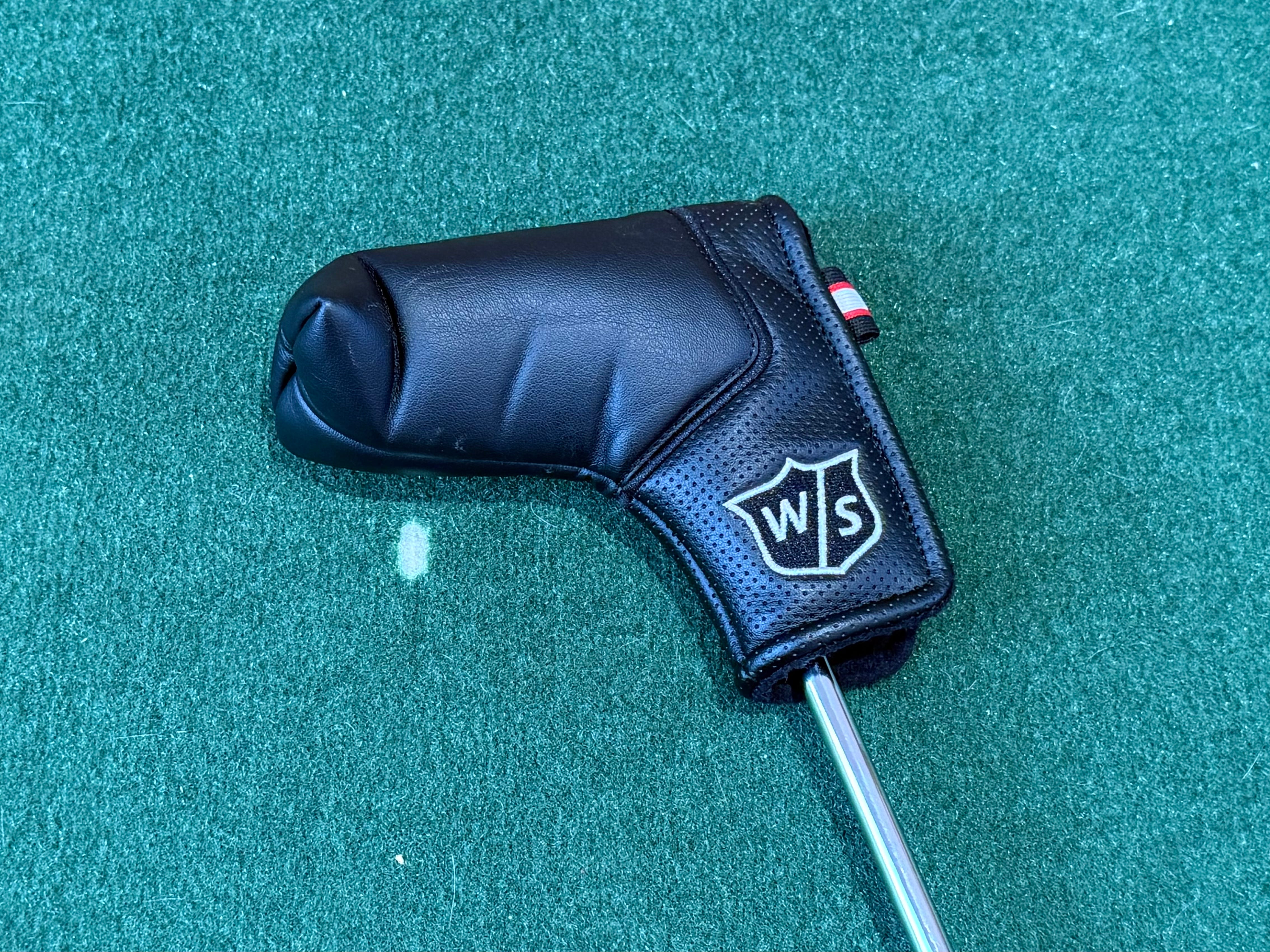
Headcover (+ve): The headcover is a really nice, simple model with a magnetic closure. It comes down the shaft nicely and is a very secure fit. It fits nicely into the putter slot on my bag.
Price (neutral): These are currently selling new for around £299, which feels a bit much. The quality is excellent, though, and just as good as putters like a Ping PLD or Scotty Cameron that cost over £400. I picked this one up second-hand for £145, and despite needing to regrip it, I’d say it’s a great second-hand buy.
Conclusion
The Wilson Staff Model 8802 is a proper blade in the old sense: it doesn’t help you, and it doesn’t distract you. But it will expose you! It best suits a golfer who already has a decent sense of face control and distance control, and who prefers a visually quiet putter. If you see the putt well, like a natural release and dislike alignment aids, it could be excellent for you.
The most interesting outcome for me wasn’t the scorecard (although the make-test and lag-test numbers were strong). It was what the head removed from the process compared to the Odyssey #8. With no alignment line to second-guess, I could focus on the face and aim the leading edge. However, it can be hard to find the sweet spot, and I would like to try a top line or dot to help.
My fit verdict (for me):
Would I game it tomorrow? It’s definitely a contender! My SeeMore has the edge for the moment, simply because I feel more comfortable with it.
What would I change? I’ve trimmed it to 34” and switched grip. From listening to David Edel, I’ve wanted to try a round grip and found a possible answer in the Odyssey Chipper grip. It’s the same diameter as a SuperStroke Tour 1.0, but it is totally round rather than having a flat edge.
What did I learn? I like a putter to have less, rather than more. The contrast with the Odyssey #8 confirmed my alignment preferences. I like the clean lines of the 8802, but if my putting is off, I know it will punish me. The SeeMore still has the edge for the moment.
If you like a traditional blade and alignment lines make you think rather than commit, the 8802 is a reminder that sometimes less really is more. Please comment below if you play an 8802 or similar putter (or even tried a round grip) and tell me why.
If you value independent testing and would like new reviews sent directly to your inbox, then please subscribe. It’s free, and you can cancel at any time.
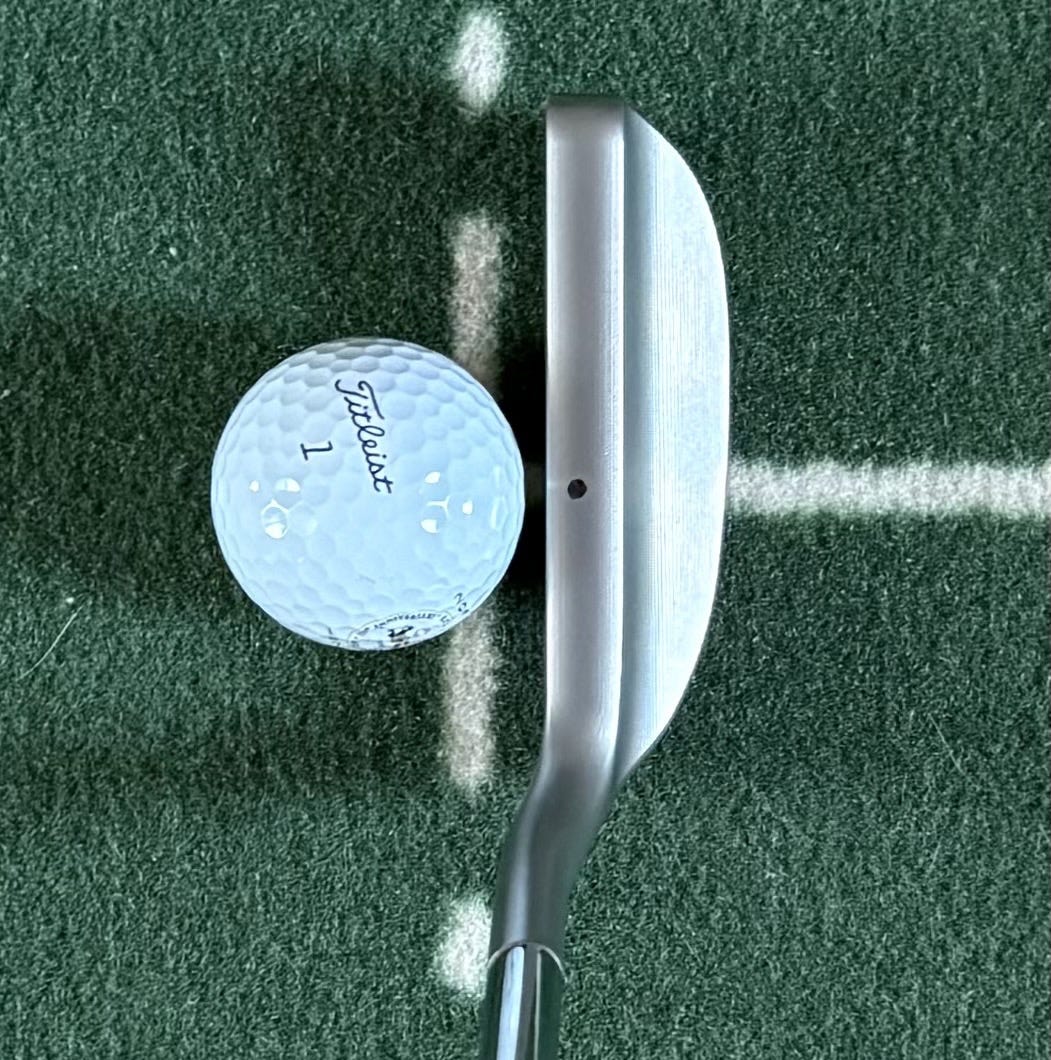
Edit: Since regripping, I’ve been able to test the putter on the course. As much as I like it for pace, flow and instinctive putting, my biggest issue is at address. Because the sweet spot is slightly toward the heel, rather than the geometric middle, I find it tricky to address the ball. I ended up fiddling about and making poor strokes. I’ve since added a Sharpie mark where I feel the sweet spot is, and will try it again. There are too many things I like about it to give up yet.
Links:
Full testing framework: here
Odyssey Metal-X #8: here
All my other putter reviews: here
Watch out for the grip weight. Too heavy will change your rhythm and feel. The original Designed by Arnold Palmer weighed slightly less than 320 grams. Finally, Mr Palmer never used the Wilson model they copied a MacGregor Tommy Armour he had modified. Old Reliable. He continued using and modifying until after 64 Masters
I have fiddled around with putters over the years but always go back to my Odyssey Dual Force 882 when the "magic" wears off whatever putter is being fiddled. It's not exactly the 8802 but the putter has a way of taking me back to the basics and freeing me up. Hard to explain but it just feels right.