
Introduction
Originally released in 2008, the Scotty Cameron Studio Select Newport 2.6 is a precision-milled, 303 stainless steel putter that combines the classic Newport 2 blade shape with an unusual straight-shafted design. Unlike the more familiar plumber’s neck configuration, the shaft enters the head close to its centre, giving the putter a very different appearance at address whilst still retaining a considerable amount of toe hang.
I’ve wanted to try one for a long time, particularly given my previous success with the SeeMore Nashville mFGP and my positive experience with the Bettinardi BB-28. Unfortunately, finding one to test has proved difficult, so I was delighted when my friend Martin offered to lend me his. Whether he’ll get it back remains to be seen!
I’ve often thought that the second-hand putter market offers some of the best value in golf equipment. While manufacturers of drivers, fairway woods and irons have made genuine technological advances over the years, the same argument is harder to make for putters, particularly traditional milled blades.
That’s not to suggest that putter technology has stood still. There have been developments in forgiveness, alignment and face technology, while the emergence of zero-torque designs represents a more fundamental change in how putters behave during the stroke. But a precision-milled stainless steel putter from nearly twenty years ago isn’t necessarily going to perform any worse than one made today. A milled stainless steel head is still a milled stainless steel head.
So, how does this nearly twenty-year-old Scotty Cameron compare with the modern putters I’ve been testing, and does it demonstrate just how much value there might be in the second-hand market?
First Impressions
This is still a very nice-looking putter. I know that the shaft design won’t suit everyone’s taste, but I like it. For me, the straight shaft and the way it enters the head create a simple visual clarity. It does mean that the top line needs to be a bit thicker than on the Bettinardi BB-28 or the Yes! Pippi 12, but I think the head looks better for it. I put this putter behind the ball and immediately feel comfortable.


One interesting aspect of this particular putter is its weight and balance. Despite weighing a relatively substantial 570g overall, its 33” length contributes to a swing weight of just C4, the same as the Spider Tour V that I really liked when testing recently. Normally, a putter built to this length would have heavier 20g sole weights installed, whereas this one has 15g weights. That suggests it probably started life as a 34” putter and has subsequently been cut down.
But, as with the Spider, I really liked the balance.
Specification (as tested)
Total weight: 570g (surprisingly heavy)
Head weight: undeclared
Swing weight: C4
Length: 33”
Loft: 4°
Lie: 71°
Toe Hang: 75° - see image below
Grip: TaylorMade SuperStroke Tour 1.0
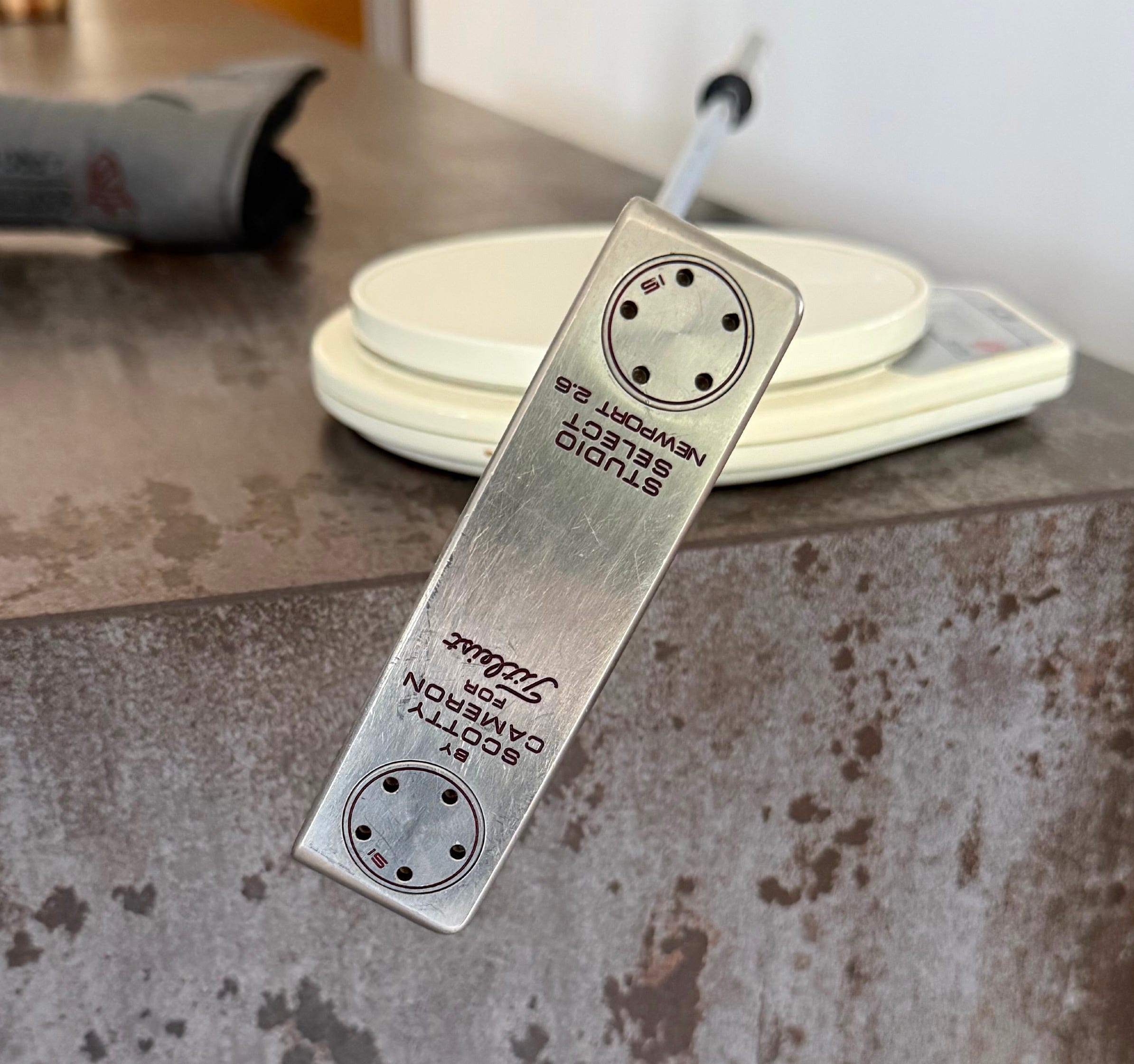
One of the interesting things about the Newport 2.6 is that its shaft position suggests something closer to face-balanced. In reality, the toe hang is substantial, and much more than you might expect when looking at the putter at address.
Protocol Snapshot (How I Tested It)
Surface: The St Andrews Golf Academy Eden green
Conditions: A pleasant October day. The green had been cut and rolled.
Make Test: 6 putts x 3 reps from 3, 6, 9, 12, 15 ft
Lag Test: 40 ft to 3 ft - uphill and downhill - run once
Start Line: Gate drill (two tees at 18 inches ahead, gate only just wider than a ball)
Benchmark: Lajosi custom blade
Full testing framework: HERE
How Did It Perform?

Notes
The practice green was in excellent condition. It had just been cut and rolled, so it was running very nicely.
As with my other recent tests, my Lajosi LP7JS was the benchmark putter.
Pros and Cons
Looks (+ve): Some players will actively recoil when they see this style of putter. I know it’s an acquired taste, but it’s one that I like. It suits my eye, and I particularly like the geometry and visual clarity that the shaft position creates. If I could change one thing, I would remove the flange line and have a naked head, the same as my gamer.
I’m reminded of the SeeMore m7 Tour that I tried last year, although the proportions of the Newport are more refined and pleasing to my eye. I thought the m7 was quite bulky and clumsy in comparison. Interestingly, the shaft enters the m7 head much closer to the heel than on the Newport, yet both putters have similar amounts of toe hang.


For a putter that’s almost twenty years old, this one is in remarkably good condition and a credit to Martin, who has clearly looked after it very well.
Grip (+ve): The SuperStroke Tour 1.0 is a grip I’m very familiar with and have used on other putters. I like both the feel of the material and the shape in my hands, although my current grip of choice is the midsize Ping PP58. That would be very easy to change.
Headcover (neutral): I’ll cut the cover some slack on this occasion. It’s obviously also almost twenty years old, but it highlights the issues that come with Velcro fasteners. I’d be forever worried about it falling off. Having said that, the leather itself has aged very well, as has the protective lining. I’d be tempted to stitch in a couple of magnets rather than replacing the Velcro.


It’s a shame the pitch repair tool is missing, but it has probably fallen into someone’s bag or been used and not replaced.
Aim/Alignment (neutral): I’m perhaps being a bit harsh here because, as I’ve said above, I love the geometry of this design and find it easy to align. However, my ideal putter wouldn’t have the flange line. In reality, the white line on this particular head isn’t especially prominent against the polished stainless steel, so it almost blends in. But once I’ve seen it, I can’t unsee it.
This model also has a red dot on the heel, similar to the RST design on SeeMore putters, but without their additional lines. I’ve seen something similar on a few Circle T Scotty Camerons too, and I wonder who came up with the idea first. I’m assuming it was SeeMore.
Feel and Sound (+ve): This was a pleasant surprise, as I’ve often disliked the feel of older Scotty Cameron putters. The face milling is quite fine, giving it a firm feel with a solid “click” at impact, compared with the softer “tock” of my Lajosi. I genuinely preferred the way the Newport felt, and I’ve always regretted specifying deep milling when I ordered the Lajosi.
Compared with the new Scotty Cameron models I’ve tested, I much prefer the feel of this fully milled stainless steel head to the newer chain-link insert. I’d really like to see Scotty Cameron return to traditionally milled faces rather than continuing down the insert route.
Pace Control (+ve): Pace control was excellent, and I was surprised to see a perfect score on the lag tests.
The balance of this putter was especially nice. With some putters, I occasionally find myself fighting the inertia of the head at takeaway and transition, but the Newport was really smooth to swing and never felt forced. I wonder if I’m partial to a lighter swing weight, as I had a similar experience with the Spider Tour V, which was also C4, although lighter overall.
I found it easy to maintain control throughout the stroke and never felt as though the head was working against me.
Performance Overall (+ve): This was a really interesting test, and it’s fair to say that the Newport 2.6 significantly exceeded my expectations. Looking at the data, you can see that I had a good putting day with both clubs, but the Newport really started to impress me as the testing continued. Strangely, I actually found myself wanting it to beat the Lajosi.
The more I used it, the more I liked it, and the better it performed. Since testing, I’ve also taken it out for a round on the Castle Course here in St Andrews, which has notoriously tricky greens. It performed well there too, reinforcing the confidence I’d gained during testing.
Price (+ve): This is an old and relatively rare putter, but decent examples can still be found in the £150 to £200 range (I’ve not addressed that with Martin yet). As with everything Scotty Cameron, some sellers want silly money, but if you shop around, there are good examples available at sensible prices.
Compared with the £449 price of a new Scotty Cameron, I’d say it represents very good value, especially for someone like me who prefers the feel of the traditionally milled face to the newer chain-link insert.
What does Vertex say?
I completed the Vertex testing indoors on my putting mat, and while the results weren’t as good as those I recorded with the Spider Tour V, they were still pretty good.
The average face change was 0.55° open and very consistent, which is within a range I’m comfortable with. The average hides a spread from 0° to 0.9°.
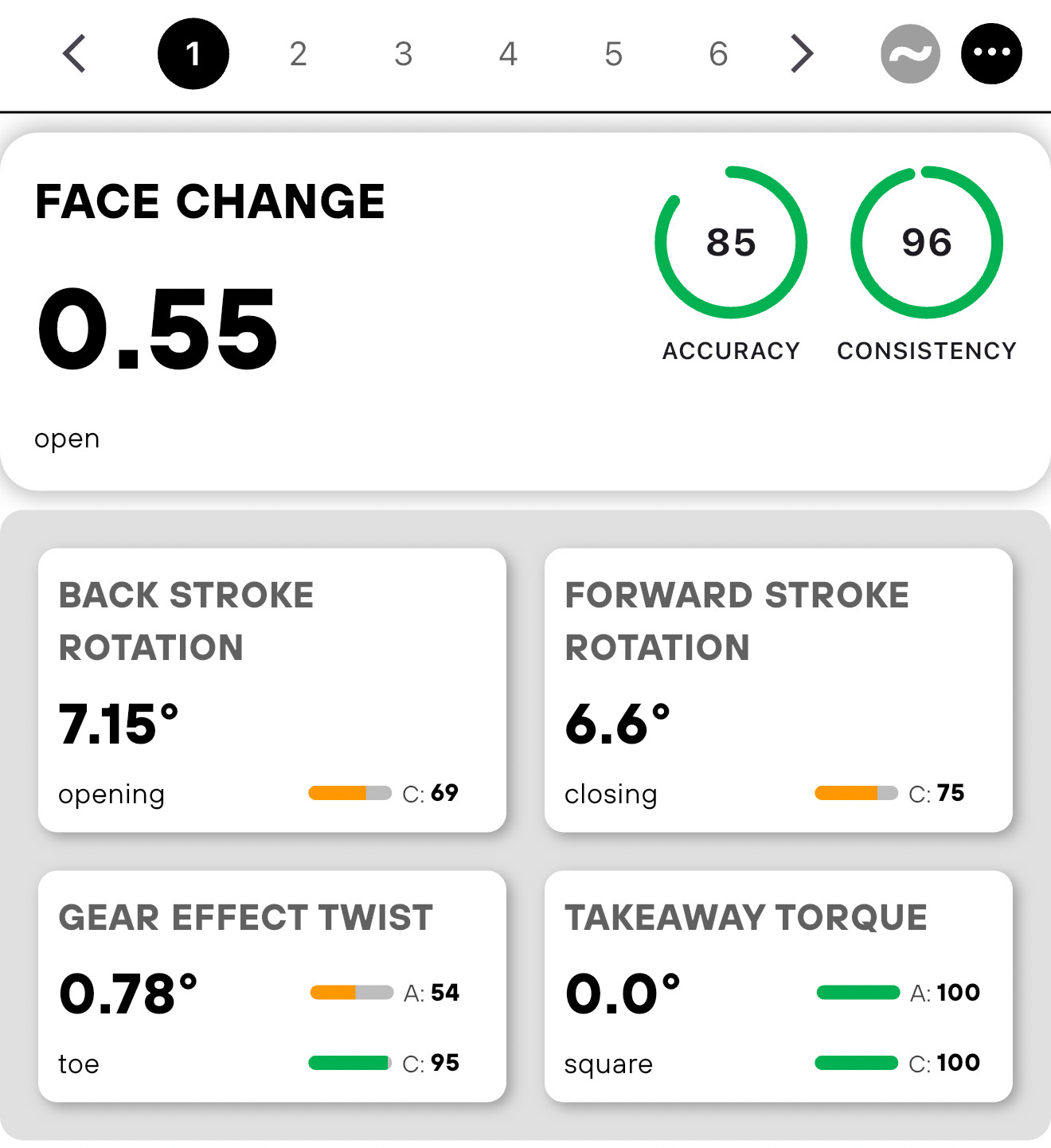
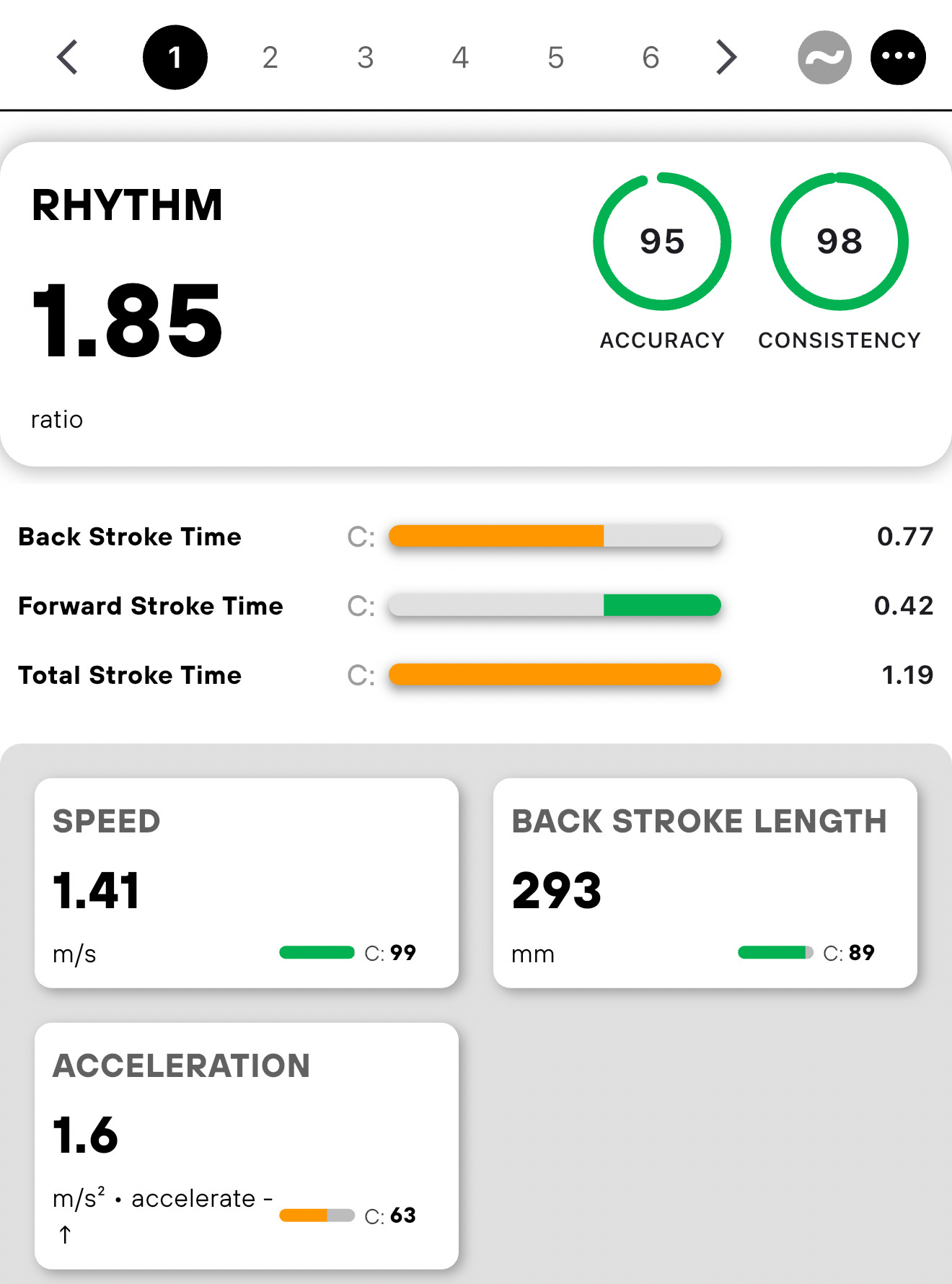
Tempo was also good and, again, very consistent. As I mentioned earlier, I thought this putter felt lovely to swing, and I think that’s reflected in the rhythm data.
The slightly more upright lie angle of 71° appeared to suit me, with very little manipulation during the stroke. The same can’t be said for shaft lean, though, where I appear to be trying to deloft the putter from its stated 4°.
It would be interesting to know whether a professional fitter could adjust the loft on this style of neck. Otherwise, at 33” and 71°, it looks like a pretty good fit.
Conclusion
I’ve waited a long time to test this putter, and I’m really pleased to say that it didn’t disappoint. In fact, I was surprised by just how much I liked it and how well it performed. Taking a test putter out for a counting round of golf isn’t something I often do either, which says quite a lot about the confidence I had in it.
It also reinforces my belief that the second-hand market can be a rich source of excellent value putters if you know what you’re looking for. In this case, I’d actually choose the older Scotty Cameron over the newer models I’ve tested, largely because I prefer the feel of its traditionally milled face.
Perhaps the most interesting thing is that, despite all the technological developments of the past eighteen years, I don’t feel as though I’m sacrificing anything by using this putter. Quite the opposite, in fact. I enjoyed it so much that I’m seriously considering making Martin an offer for it.
I did warn him that he might not get it back!
Fit verdict (for me)
Would I game it tomorrow? Yes, and I’ve already used it in a counting round.
What would I change? Potentially the loft, if that can be adjusted with this style of neck.
What have I learned? This is a very nice older putter. It provides me with everything I liked about the SeeMore mFGP and the Bettinardi BB-28, but in a shape that I like and with a feel that I prefer.
You can find all my other putter reviews by following the link below.
If you’ve enjoyed this review, please give it a like. It helps more golfers discover The Club House.
And if you enjoy independent, real-world testing of golf equipment, along with the occasional exploration of the psychology and philosophy of the game, why not subscribe? It’s free, and you’ll get new reviews and articles delivered directly to your inbox.
Links:
Full testing framework: here
All my other putter reviews: here
Interesting review Keith! Wondering if it might have a counterweight in the butt end?