

Introduction
I really like the putters in the Ping PLD range, but only a small number come with a flow or slant neck. The Oslo 3 is influenced by Tyrell Hatton’s putter, but has the Anser 3 neck, rather than his double-bend shaft. In an ideal world, I would have tried the Oslo 4 model as its slant neck is theoretically better suited to my strong arc stroke
I found this one in the second-hand store at Auchterlonies and was able to take it away to run my tests. Will I be taking it back, or will it be going in the bag?
First Impressions
Other than the slightly funky neck, this is a fantastic-looking putter. I would happily put it up against any fully milled putter I’ve seen from other manufacturers. The face milling is particularly nice, and I can’t wait to discover how it feels.


It also looks great behind the ball, and despite not generally liking long alignment lines, I thought this one was ok. In some regards, the shape reminds me of the Scotty Cameron Monoblok 6.5 that I reviewed last year (and still think about today!).
This is a seriously heavy putter, and that’s important to note in the review. Forged from 303 Stainless Steel, the head alone weighs a hefty 375g, with the full putter tipping the scales at 590g. That’s the same weight as the Scotty Cameron Phantom 11R OC that I reviewed recently. But being conventionally balanced, the Ping swings very differently, and that weight is very noticeable.
It is fitted with a Ping PP58 Midsized Blackout grip, which feels lovely in my hands. There was another one in the shop with the SuperStroke grip from the Scottsdale line, but I didn’t like that as much. The PP58 felt immediately comfortable.
Specification (as tested)
Total weight: 590g - heavy
Head weight: 375g
Swing weight: F4
Length: 35”
Loft: 3° (+3°/-2°)
Lie: 70° (+/-4°)
Toe Hang: Low, more of a slight arc model
Grip: Ping PP58 Midsize
Ping offers good adjustability, other than length, where it appears to only come at 35”.
Protocol Snapshot (How I Tested It)
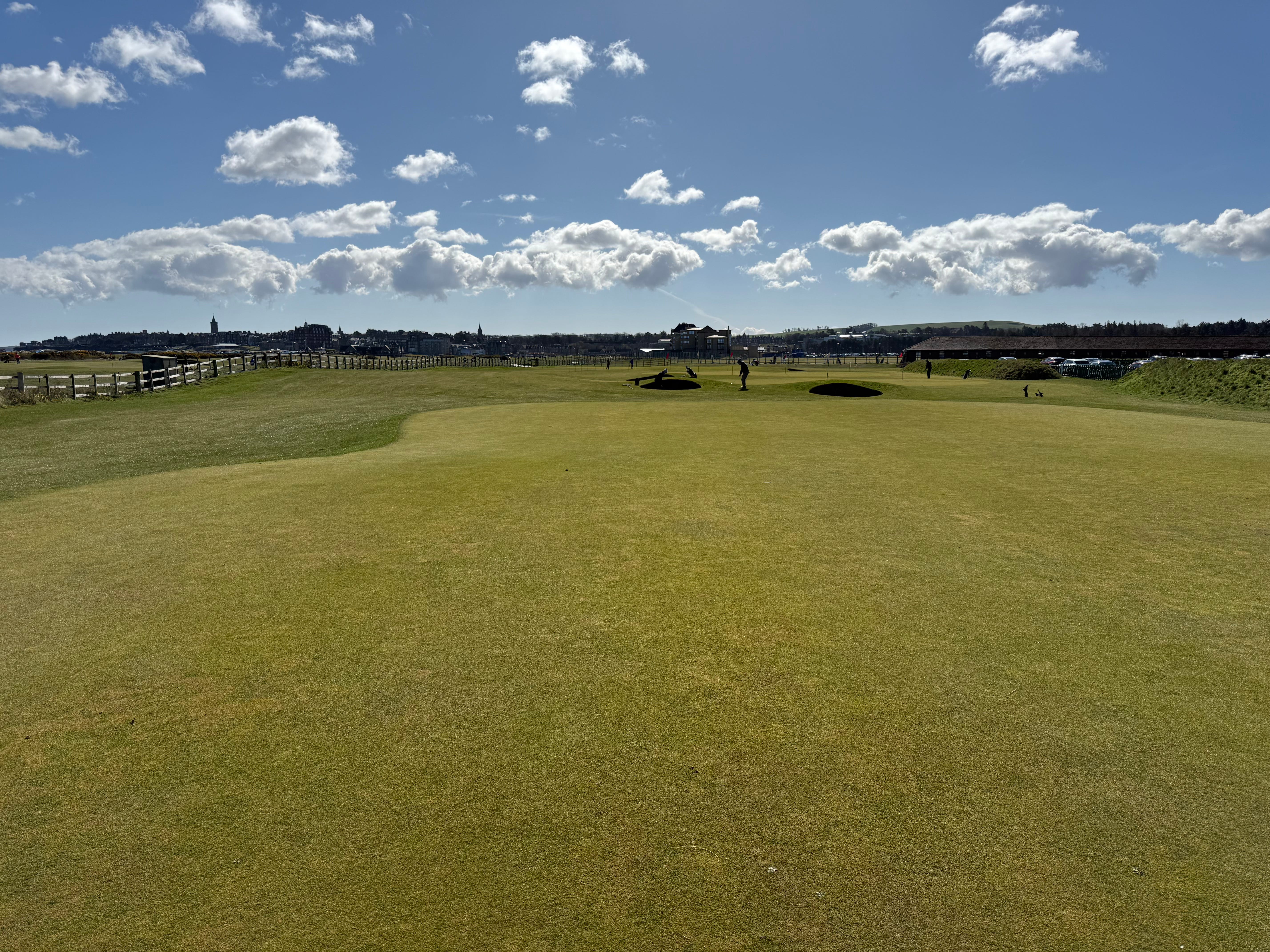
Surface: The old Eden green at the St Andrews Links Academy. An excellent, mature putting surface, with lots of variety on offer.
Conditions: A lovely March afternoon. Spring seems to be on the way, finally, and the green was rolling nicely.
Make Test: 6 putts x 3 reps from 3, 6, 9, 12, 15 ft
Lag Test: 40 ft to 3 ft - uphill and downhill - run once
Start Line: Gate drill (two tees at 18 inches ahead, gate only just wider than a ball)
Benchmark: SeeMore Nashville mFGP
Full testing framework: HERE
How Did It Perform?
Notes
I really wanted to like this putter, but I struggled with the weight. Pace control was very difficult, either racing putts by the hole or leaving them too short. It did improve as I got used to it, but not enough. Perhaps I need more time with it? If you can handle the weight of this putter, then there is a lot to like about it.
As mentioned earlier, I would have liked to try the Oslo 4 model, but given that it is the same weight, I suspect I would have had the same issues. The centre-shafted version is a bit lighter, and that would also be interesting to try.
The length was also a bit of an issue, but too long is better than too short, as you can at least grip further down.
Pros and Cons
Looks (+ve): Now, mid-mallets are something of an acquired taste, but I really like the shape of this putter. Also, the finish is excellent quality, and I’ve already mentioned the superb face milling. It is an expensive putter, but you can see the quality.
Grip (+ve): Have I stumbled across a new favourite grip? I really liked the size and feel of the PP58 fitted to this putter.
Headcover (+ve): Nothing fancy, just a good quality cover that will protect the head well and stay secure in the bag. I never think white is a good colour for something that will often be dropped on the ground, though.


Aim/Alignment (+ve): Like the Monoblok 6.5, this is a mid-mallet shape that I am comfortable with. It would be interesting to customise it and have a top line rather than the flange line, but in this case, I generally found it easy to focus on the face and didn’t get overly distracted by the line.
Feel (+ve): I was looking forward to hitting this putter, and I certainly wasn’t disappointed when I finally did. It feels great off the face and provides a lot of feedback on the quality of the strike.
Sound (neutral): When struck well, there is a very distinctive ping sound at impact. It’s not unpleasant, but it is quite high-pitched and won’t be to everyone’s tastes. It wouldn’t be a deal-breaker for me.
Pace Control (-ve): This was the biggest letdown for me. I simply couldn’t get the hang of it during testing. It definitely felt too heavy, and I never felt in control. A lot of my putts were hit on my target line, but the pace was often too fast, and the ball didn’t take the anticipated break. I could possibly adapt to that, given more time.
Performance overall (-ve): The issues with pace control let this one down. I don’t know if the Oslo 4 with the greater toe hang would have made any difference here, as the weight is the main issue. I just found it difficult to swing and definitely appear to have a preference for lighter putters. Interestingly, I found the Phantom 11R OC totally different, despite being the same weight. Pace control was the strong point of that putter, but zero-torque does swing differently, and it didn’t feel as heavy as the Ping did. Maybe I need a hybrid of the Ping and the Scotty!
Price (neutral): With an RRP of £450, this is a fairly expensive putter. However, I found this second-hand example for sale at only £275 (plus an extra 10% off for Easter), and I believe that makes it a very good second-hand proposition.
Conclusion
The PLD Oslo 3 is a superb quality putter from Ping, and I was really excited to put it through my testing (I know, I’m a nerd!). I had hoped it would perform better than it did; however, I just couldn’t get used to how heavy it felt and the impact that had on my stroke. The comparison with the Phantom 11R OC is interesting, and I wonder how the similarly weighted Ally Blue Onset would compare. Does the zero/low torque design hide the weight better?
Otherwise, there is a lot to like about this putter. The production quality is superb. The milling is excellent. The sound and feel are just the way I like them, and the PP58 grip might be going on all my future gamers!
However, despite really wanting it to, this putter didn’t work for me. That doesn’t mean I’m going to give up on all PLD putters, as I would still like to try the Anser 4D if I can find one. Although at 365g, that is also a pretty heavy head, which is a common theme for the PLD line.
Fit verdict (for me)
Would I game it tomorrow? No. It’s just too heavy.
What would I change? Lighter, shorter and more toe hang.
What have I learned? This test has confirmed my preference for lighter heads in conventional putters.
If you have a preference for heavy putters like the Oslo 3, then I would love to hear about it in the comments section below. Have you always liked heavy heads? Did it take time to get used to it? What made you go heavy?
If you value independent testing and would like new reviews sent directly to your inbox, then please subscribe. It’s free, and you can cancel at any time.
Links:
Full testing framework: here
All my other putter reviews: here
Good review Keith thanks. Ug heavy putters!!!
Did you ever try a PING Redwood Piper? Double bend shaft but similarly shaped to this- a bit more compact I think ?