
Introduction
I’ve always liked the look of a “double wide” putter. It’s not quite a mid-mallet in proportion, but it’s bigger than a standard blade. When I tried a similarly sized Scotty Cameron Catalina last year, I was surprised at how much I liked it. That head was shaped more like a conventional Anser, while this one is more angular. If you read my post about struggling to aim with an Anser head, it will be interesting to see how I get on with this alternative shape.
Odyssey have had a double-wide blade in their range for many years. This latest iteration is endowed with their new Ai-Dual face insert. I wasn’t a fan of the insert when I tried it in the S2S Rossie last year, so will this head shape and conventional design influence how it feels?
As a player with a strong arc, the double-bend shaft on this model reduces toe hang to only 10°, so it’s not the best natural fit. It also has a counterbalanced shaft, designed to provide more stability to the stroke, which may aid forgiveness on poor strikes, but may also act against my swing tendencies.
First impressions
Sometimes with Odyssey putters, the leading edge could seem a bit thick and clunky, but not this model. The face is really nice and thin. With an RRP of £299 (retail £269), I would expect good quality, and I’m not disappointed.


At address, the white insert was quite visible, and to my eye, that makes it look like it presents a lot of loft. It’s not terrible, but it is a bit distracting. This putter uses the new SL90 steel shaft, which I much prefer to the old StrokeLab shafts. It’s also fitted with the standard Odyssey Pistol grip, which I really like. It’s a classic pistol shape, fits my hands well and feels very nice. I’ll say it quietly, but I prefer it over the Lamkin Deep Etched I’ve used on other putters.
Specs (as tested)
Total weight: 570g (including 20g counterweight)
Head weight: 355g (heavy but not extreme)
Swing weight: D5.5
Length: 34”
Loft: 3°
Lie: 70°
Toe Hang: 10°
Grip: Odyssey Pistol
These specifications are taken from the Odyssey website, while I measured the swing weight myself.
Protocol Snapshot (How I Tested It)
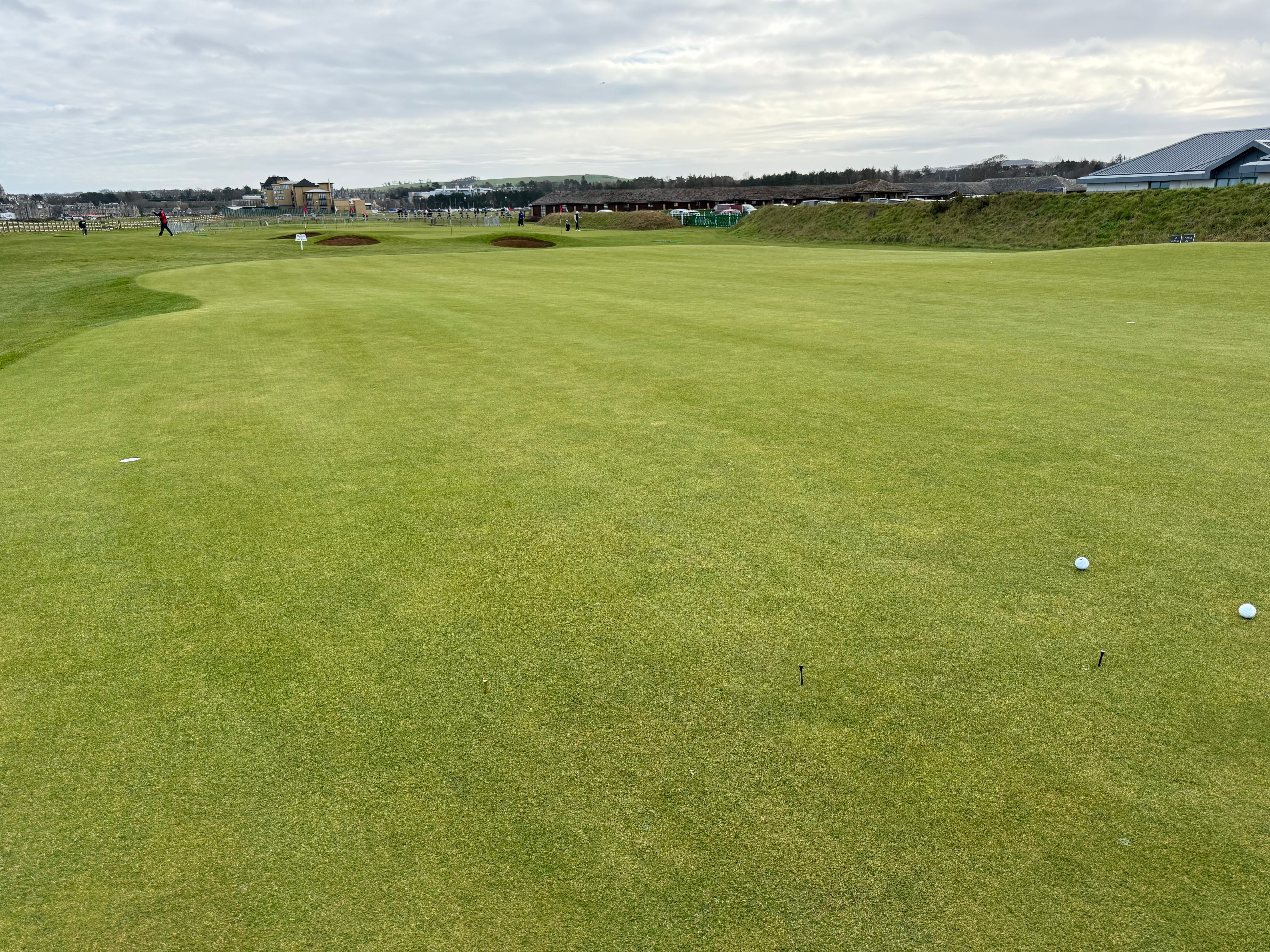
Surface: St Andrews Links Academy, Eden Green
Conditions: Sunny afternoon, but cold. Green was slow but running nicely.
Make Test: 6 putts x 3 reps from 3, 6, 9, 12, 15 ft
Lag Test: 40 ft to 3 ft - uphill and downhill - run once
Start Line: Gate drill (two tees at 18 inches ahead, gate only just wider than a ball)
Benchmark: My current gamer, SeeMore Nashville mFGP
Full testing framework: HERE
How did it perform?
Notes
The Ai-Dual insert takes a bit of getting used to after hitting a fine-milled stainless steel head. This made distance control tricky, so it’s good that the test is run three times with the review putter.
Pros and Cons
Looks (+ve): I do like this more rectangular Anser shape. While it is wider than a conventional blade, I wouldn’t call it double. I have included a photo next to my conventionally proportioned Lajosi blade for comparison. I really like the thin leading edge of the Odyssey. It looks great.
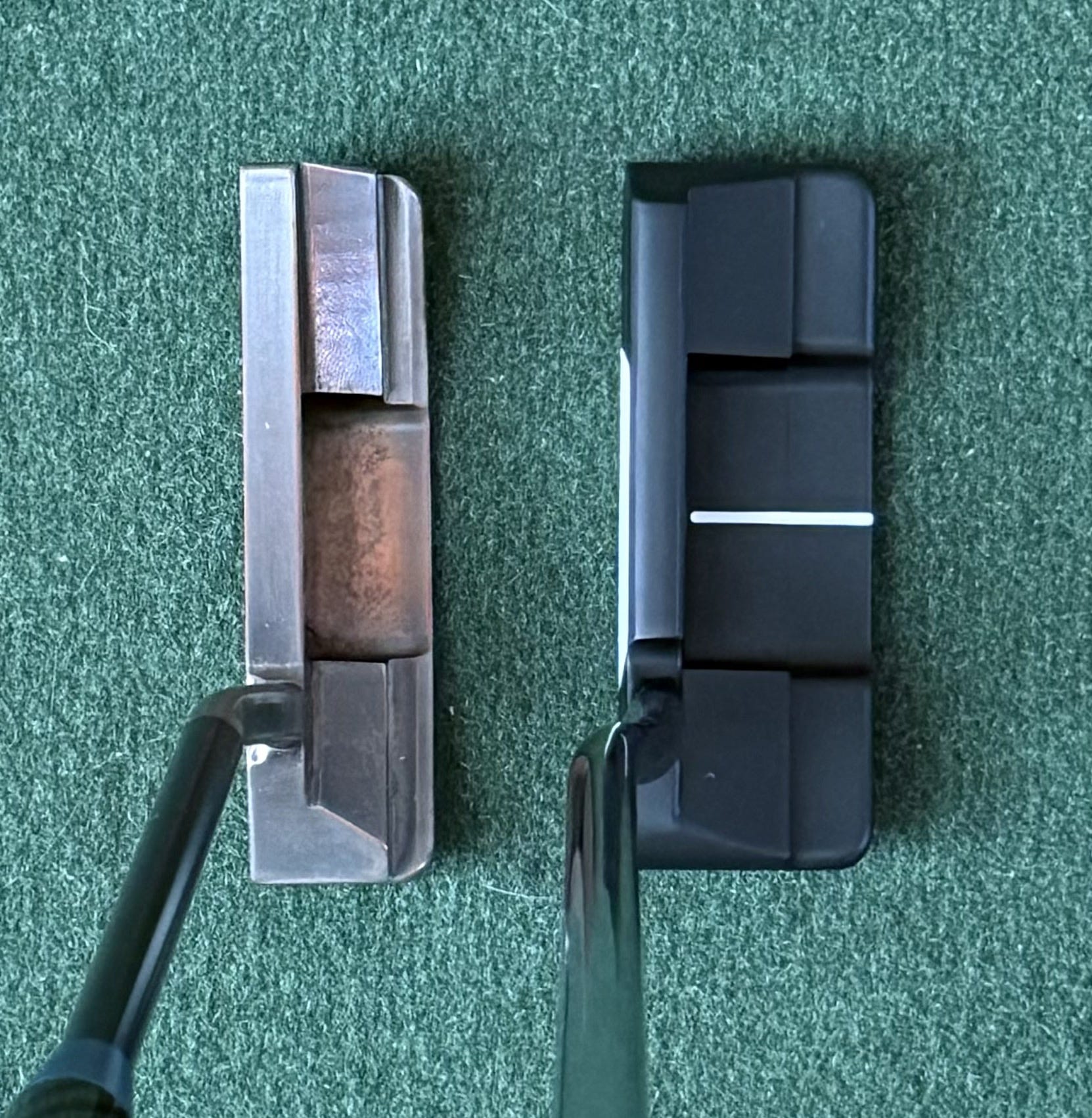
Aim/Alignment (neutral): I definitely found this shape easier to align than a standard Anser, but I did notice myself being distracted by the flange line a couple of times and questioning my aim as a result. It would be interesting to black out the flange line and try again, or even do that in combination with a top line. I’m getting into the realms of custom putter builds there! Mostly, I felt confident that I was setting it square to my target line and could then set myself square.
Feel (-ve): While I thought the insert felt better in this head than it did in the S2S Rossie, I still find it very soft. This is extremely subjective. You may like the sound and feel produced, but I prefer more audible feedback. In comparison to my SeeMore, it just feels a bit dead. If you want to read more about the new insert, you can do so by following this link. Odyssey argue that the counterbalanced shaft helps promote a smoother swing, and I would agree that it does, but I also felt I was fighting the face to a degree.
Pace control (neutral): Despite my comments on feel, pace control improved a little as I became more used to it. I struggled most with the lag test, especially downhill. The “FRD Groove” pattern does appear to improve forgiveness on poor strikes and impart a nice roll, even on less well-hit shots.
Performance (neutral): In isolation, the DW performed well across most tests. It just didn’t perform as well as my SeeMore. The times I became distracted by the flange line are the times I made a less confident stroke. I found it difficult to decide how hard I needed to swing the club, so there was always a bit of mental negotiation going on before every putt. That kills performance.
Headcover (+ve): Odyssey always make good headcovers, and this is no exception. Well-padded and with dual magnets to secure it, it feels safe and solid on the head.


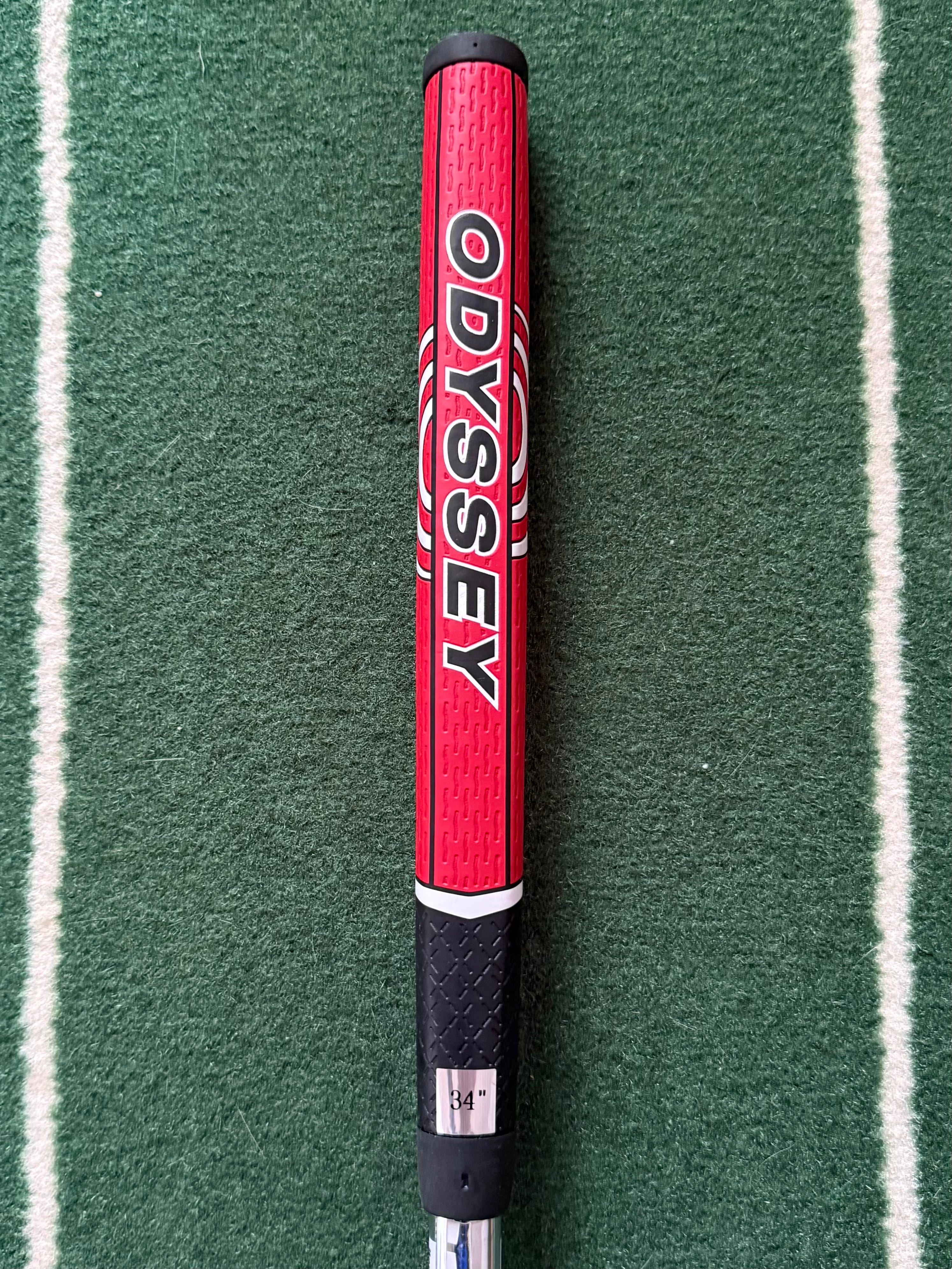
Grip (+ve): I’ve always had a soft spot for some of the Odyssey pistol grips (especially the old Pro model ones), and this is one of the best I’ve tried for a while. I do have small hands and prefer a traditionally sized grip, and this one fits the bill. It’s a similar shape and size to the Lamkin Deep Etched, but it feels nicer to me.
Price (neutral to -ve): Golf equipment is getting more expensive these days, and with an RRP of £299 (£269 retail online), this is firmly in the mid-market space. Odyssey will say you are paying for premium construction and the new face insert, but you need to judge for yourself. Personally, I think it’s a bit expensive, and if you are on a budget, you can find previous-generation models second-hand for considerably less.
Conclusion
I liked this putter more than I expected, and warmed to it further as the test went on. I could make it work for me if I had to, but I don’t think I would ever be fully comfortable with it. Compared to the Anser heads I’ve tried recently, I definitely found this more angular head easier to align. That’s good validation for the arguments in “My Problem With Anser Putters”
The face insert is something you need to try for yourself. It definitely feels different depending on which head it is in, and I have more reviews coming that also use it. I preferred it here over the S2S Rossie. Feel is a very important component for me, and even though it is better, it still isn’t what I look for in a putter.
My fit verdict (for me):
Would I game it tomorrow? No. It was better than expected, and I’m glad I tested it. There are aspects that I liked: shape, quality, grip and aim. I could make it work if I had no other putters available, but ultimately, it fights against my natural tendencies. Close, but no.
What would I change? The insert and the alignment line. I’d like to find a similar, fully milled alternative with a slant or flow neck to try.
What did I learn? I like the shape of the head. Having struggled with aiming traditional Anser shapes, I found this one much easier.
If you like the confidence of a larger head, but don’t want to go all the way to a mallet, and if your stroke suits a double-bend shaft with less toe hang, then this could be a brilliant option. There’s a lot to like about this new generation of double-wide putter from Odyssey. The production quality is great, and it should be high on your test list. If you’ve tried one (even if it’s an older model), I’d love to know how you found it in the comments below.
If you value independent testing and would like new reviews sent directly to your inbox, then please subscribe. It’s free, and you can cancel at any time.
Many thanks to Adam Legg and Auchterlonies for lending me this review putter.
Links:
Full testing framework: here
All my other putter reviews: here
Keith another great review thanks! I know you said this putter is heavy but not extreme - but have you considered that 570 gram total weight is just too heavy? Came out in speed control, no?