
Introduction
In my previous note on the L.A.B. Link 2.1, I said that it was a step forward in terms of material, milling and feel, but not necessarily a more convincing putter for me. In fact, despite the improvements in construction, I was better with the original Link1. That is an important distinction, because with putters, the nicest object is not always the one that performs best or gives you the most confidence.
That made the Link 2.2 the more intriguing of the two new models for me. Thanks again to Adam Legg at Auchterlonies for lending me both putters to test, because having them side by side made the comparison far more meaningful. The 2.2 is smaller, wider and more compact than the 2.1, which immediately raised the question of whether it might solve some of the visual issues I had with the larger head. Could the Link 2.2 make the L.A.B. concept look and feel more natural behind the ball?
First Impressions
The Link 2.2 made a better first impression on me than the Link 2.1. The more compact, wider shape looked better proportioned straight away, and when the two putters were placed side by side, the difference was obvious. The 2.1 looked a little longer and more stretched out, whereas the 2.2 sat behind the ball in a way that felt more settled and balanced.
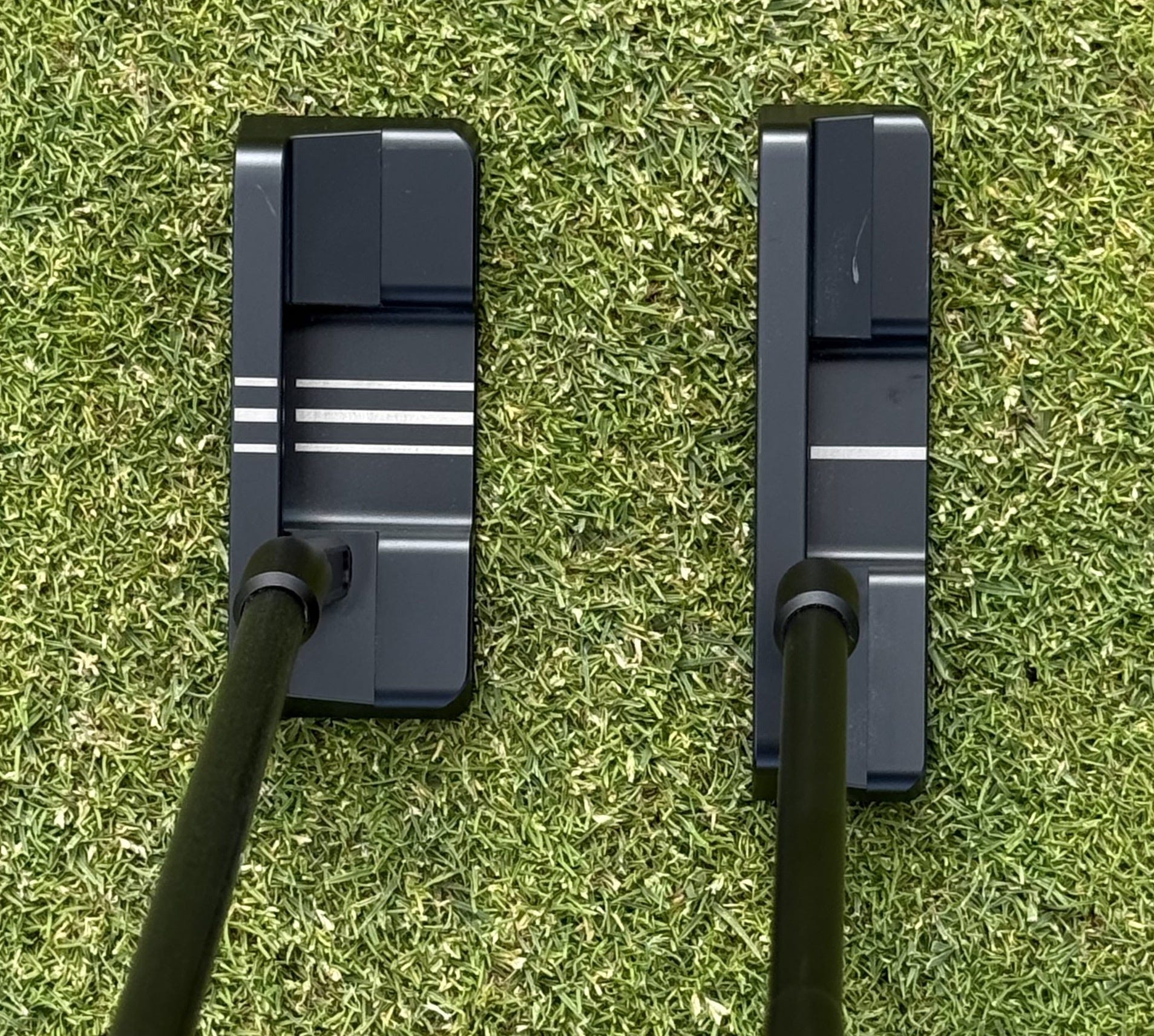
This particular putter was a higher-spec build. It had the heavy head, the upcharge Accra shaft and a Lamkin Deep-Etched grip. I was not sure whether the extra weight would suit me, because I do not always want a putter to feel heavier or more managed. The overall build felt more solid and stable than the 2.1 test putter.


The immediate visual negatives were the neck and the chosen alignment option. The alignment option is not really a criticism of L.A.B., because they offer an unrivalled range of options, but it is important for this specific test. I know that some players like alignment on the leading edge and the flange, but personally, I don’t and prefer either one or the other. As this is a demo putter, I had no say in the alignment lines.
Specification (as tested)
Total weight: 594g
Head weight: heavy option
Swing weight: F8 (heavy head and longer shaft)
Length: 35”
Loft: 2° effective loft
Lie: 71° custom range 65°-74°
Toe Hang: zero-torque
Grip: Lamkin Deep Etched
L.A.B. offer a massive range of customisation options. I would definitely recommend being correctly fitted for length and lie.
Protocol Snapshot (How I Tested It)
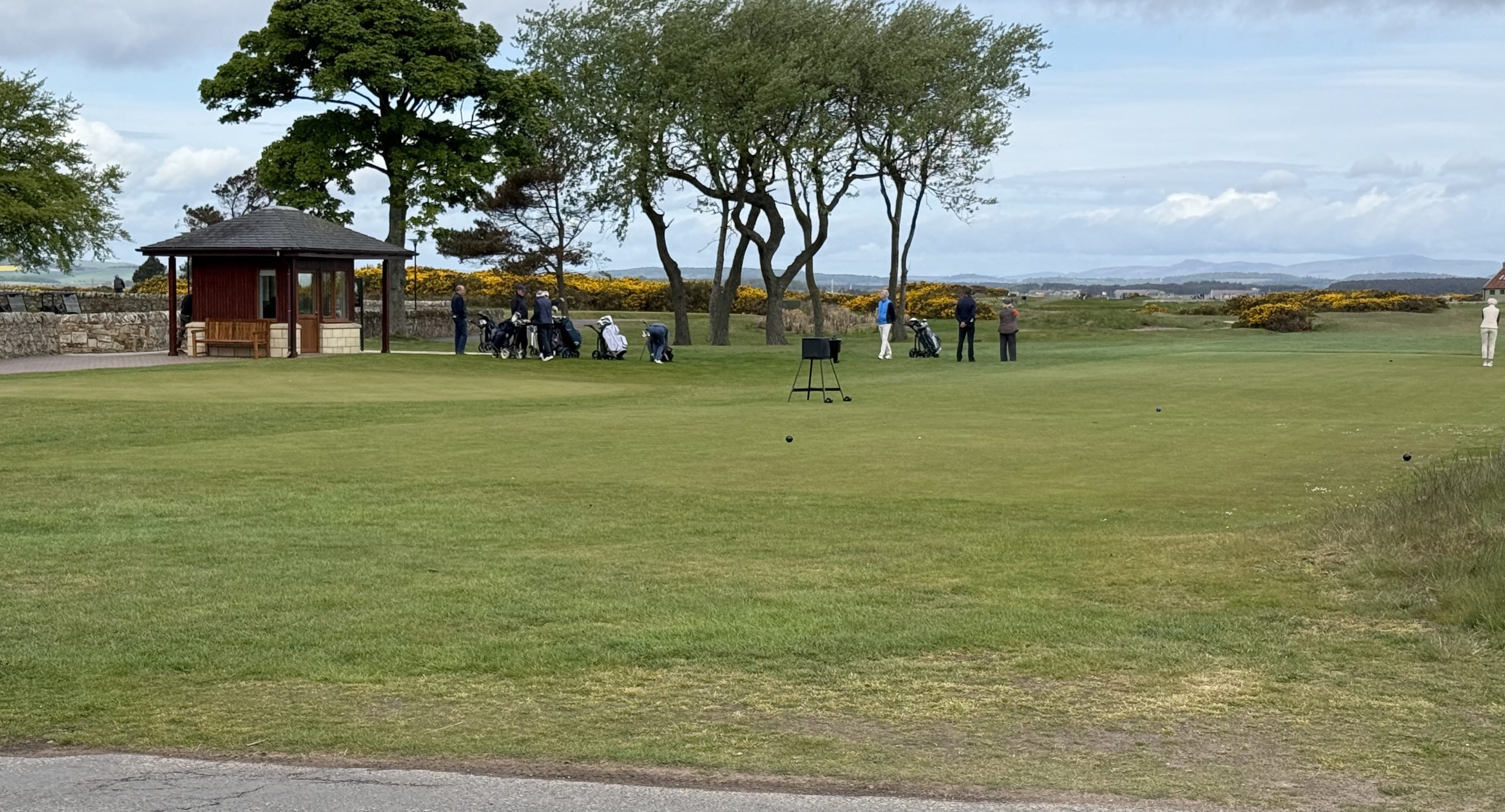
Surface: Old Eden practice green at St Andrews Academy
Conditions: A lovely early June day with warm sunshine.
Make Test: 6 putts x 3 reps from 3, 6, 9, 12, 15 ft
Lag Test: 40 ft to 3 ft - uphill and downhill - run once
Start Line: Gate drill (two tees at 18 inches ahead, gate only just wider than a ball)
Benchmark: SeeMore Nashville mFGP
Full testing framework: HERE
How Did It Perform?
Notes
The Eden practice green at the St Andrews Link Academy is a super place to test putters. It is an original Harry Colt green from before the Eden course was altered to make way for the academy. There is plenty of space for my standard testing, and if it’s quiet enough, it also makes for a really challenging par-2 course.
I came into this test hoping that the Link 2.2 might be the more positive of the two new L.A.B. models for me. After testing the 2.1, I already knew that the new materials and milled face were a step forward, but I was still not convinced by the shape or how the putter sat behind the ball. However, the 2.2 immediately looked like the better candidate. I preferred the head shape, the proportions, and I much preferred the feel of this particular build. If I were judging the two putters purely on shape and feel, the 2.2 would win comfortably.
But putter testing is not just about which one looks better in isolation. It is about whether you can aim it, trust it and make a free stroke. That is where I still had a problem.
Pros and Cons
Looks (neutral): I much prefer the overall shape of the Link 2.2 to the Link 2.1. The smaller, wider head is better proportioned to my eye and sits more comfortably behind the ball. Compared side by side, the 2.1 looks longer and a little stretched, whereas the 2.2 looks more compact and better balanced.
However, the basic visual challenge of this style of L.A.B. putter remains the heel-shafted construction and neck arrangement, which still creates a look that I find difficult. I understand why it is designed that way: the shaft axis has to work with the centre of gravity to achieve lie-angle balance, but visually it does not quite sit right for me.
Grip (+ve): I much preferred the Lamkin Deep-Etched grip to the standard L.A.B. pistol rubber grip I tested on the Link 2.1. Grip choice is obviously personal, but this felt more familiar and comfortable to me. It also helped the overall build feel more premium. There are enough grip options available from L.A.B. that everyone should be able to find one they like.
Headcover (+ve): I thought this standard cover was actually better than the upcharge cover that came with the 2.1. It is very well padded, and the large magnetic closure makes it feel very secure. For a large blade head, this was perfect. Scotty Cameron (and others) should take note of how to do it.


Aim/Alignment (neutral to -ve): I’ve not gone for a straight negative here because part of the issue for me was the alignment option used on this demo club, and that can obviously be changed to anything you want. Given the number of options available from L.A.B., it would be great if they could develop a method that lets you try alternative designs during the fitting process. Edel fittings have done this for years, and it would be an excellent addition for L.A.B.
The neck remained my biggest issue, and I still thought this head looked like it aimed to the left. As with the 2.1, that impacted my confidence and the testing results.
Feel and Sound (+ve): The milled face and 303 stainless steel construction are clear improvements over some of the earlier L.A.B. models I have tried. I think the extra weight helped me to feel the head during the stroke compared to the 2.1. I preferred the more compact blade length and felt that I made better, more centred contact with this model. A good strike obviously helps, but I thought the 2.2 felt much nicer.
A note on the Accra shaft. I think this made a considerable difference to how the putter felt and sounded. It’s obviously subjective, but I thought it was much smoother than the standard steel offering. Would I say it justifies the extra $100? Yes, but I wish it didn’t and would be much happier if L.A.B. fitted a nicer shaft as standard.
Pace Control (+ve): It’s a heavy putter, but my pace control was generally good and better than I have experienced with some other L.A.B. putters. The heavier head did not cause the problems I thought it might. In fact, I found the putter easier to feel during the stroke than with the lighter 2.1 head.
That matters because I have sometimes struggled with distance control in zero-torque putters, particularly when the head feels too detached from my hands. The Link 2.2 did not give me that same problem. The bigger issue was aim and visual trust, rather than pace.
Performance Overall (-ve): Performance was pretty similar to the Link 2.1, so not very impressive. However, this was not a failed test. The putter looked better and felt better than the 2.1 and would be the model I’d choose if I had to.
The aiming issue remained. And for me, that is not a small detail. It shaped the whole test. I could feel the quality of the putter, and I could see why someone else might get on very well with it, especially if the L.A.B. look suits their eye. But I never felt fully comfortable standing over the ball. I do wonder if alternative alignment options could offset the issue with the neck, but unless L.A.B. come up with a way of trying that, I’ll never know for sure.
Price (-ve): At $599 plus an extra $100 for the shaft upgrade, this is a very expensive putter, and I would urge readers to get properly fitted and hopefully get a demo club to take away and try before spending that much money. No putter will ever be a magic bullet for bad green reading or technique, so think carefully.
What does Vertex say?
Vertex testing was done indoors on my putting mat.
Face at impact was 1.4° open and a bit inconsistent. Could that be due to the visual perception that it aims left, so I then compensate in my swing? Tempo was excellent at a 1.9 ratio and extremely consistent, despite inconsistent acceleration.
Lie angle at impact was unchanged from address, which was a positive. However, shaft lean and loft angle showed that I was reducing the lean through the stroke and adding loft even more than I did with the 2.1 model. That’s poor for accuracy and helped explain the poor testing.
Vertex would suggest this is not a great putter for me, but I wonder how much is down to the heavier head and how much is the zero-torque design?
Conclusion
The Link 2.2 was definitely a step in the right direction. I preferred the shape, I preferred the proportions, and I much preferred the feel of this particular build. The heavy head, Accra shaft and Lamkin Deep-Etched grip all contributed to a putter that felt more solid and comfortable than the Link 2.1.
But the same fundamental problem remained. I still felt as though I was aiming left, and once that perception appeared, it affected everything. That is the hardest thing to overcome in a putter test. You can adjust to feel. You can learn speed. You can even get used to unusual looks over time. But if a putter makes you doubt where you are aiming, it becomes very difficult to trust it.
That does not mean the Link 2.2 is a bad putter. Far from it. In fact, of the two new Link models, this is clearly the one I preferred. If you like L.A.B.’s design philosophy and want something more compact than the Link 2.1, the 2.2 may well be the better option. I would also strongly recommend taking advantage of the custom options, because alignment choice in particular could make a huge difference.
For me, though, the putter still did not quite get past the visual test. Better than the 2.1? Yes. Better feeling? Definitely. More likely to suit my eye? Also yes. But did it make me want to put it in the bag ahead of the SeeMore Nashville mFGP? No.
Fit verdict (for me)
Would I game it tomorrow? No
What would I change? The alignment lines. I’d like to try this with a simple dot on the top line.
What have I learned? I prefer the Link 2.2 over the Link 2.1, but the heel-shafted design still creates an aiming issue that I find hard to ignore. The custom options are excellent, and the feel of this build was impressive, but confidence at address matters more than almost anything else.
I’d love to know if you have tried the new Link 2.2 from L.A.B. and what you thought of it. Please leave a comment below.
If you found this review useful, hitting the like button helps more people find it.
If you value independent testing and would like new reviews sent directly to your inbox, then please subscribe. It’s free, and you can cancel at any time.
Links:
Full testing framework: here
All my other putter reviews: here
L.A.B. Link 2.1: here
Helpful review, thanks!