

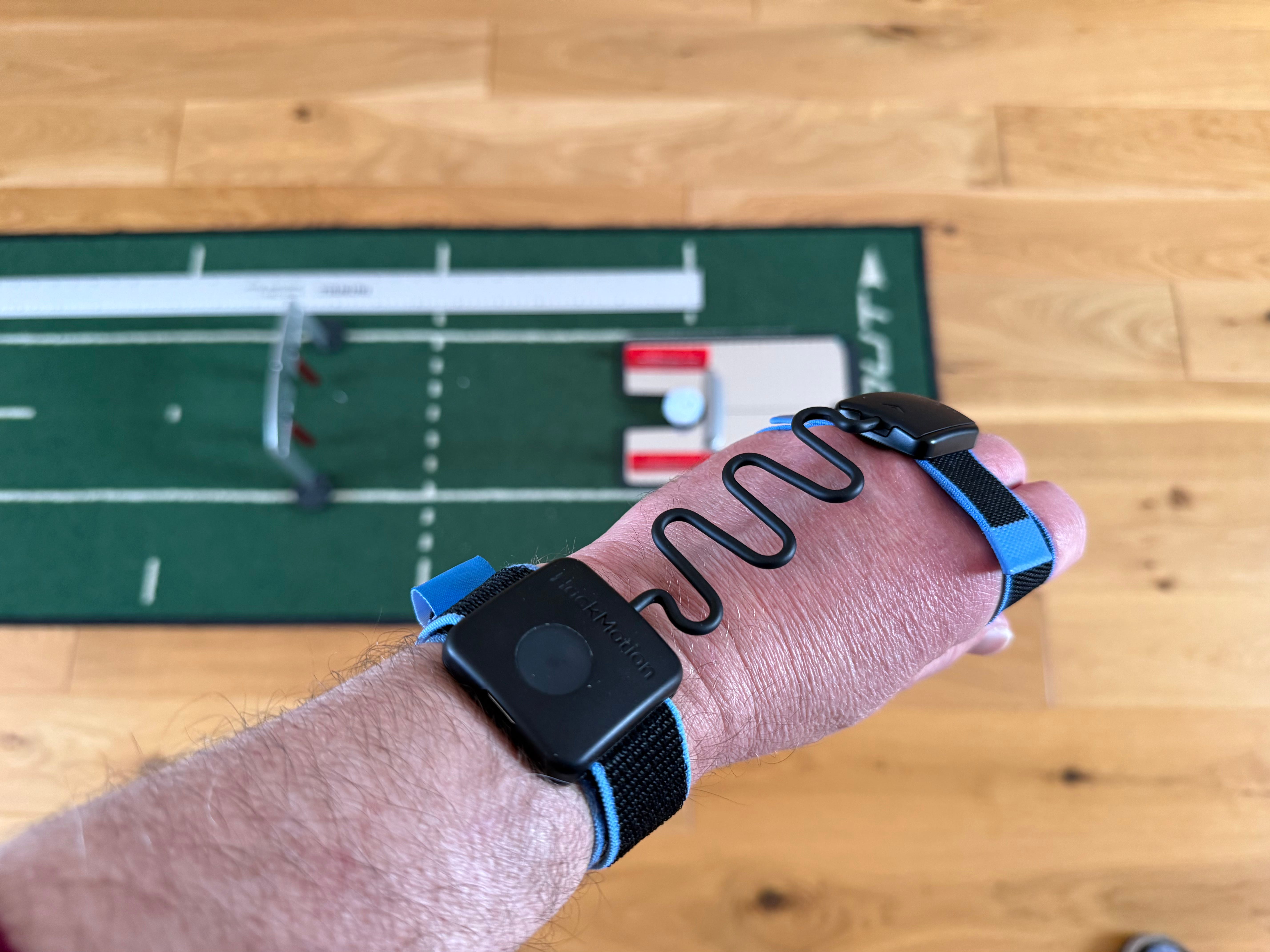
HackMotion is one of the more serious putting training tools I have used. It can show you useful things, but it can also tempt you to care too much about them.
I have mixed feelings about using HackMotion for putting.
Not because it is a gimmick. It isn’t.
And not because it can’t teach you anything. It can.
The difficulty is more subtle than that. A training aid can be intelligent, well-made, and genuinely informative, yet still become slightly unhelpful in the wrong hands, or in the wrong role. That, for me, is where HackMotion sits.
I have used it for a while. I have holed plenty of putts while wearing it. My strokes gained putting in real games, as measured by Tangent, suggest I am already a good putter. And yet, the more I used HackMotion, the more mechanical I became. I found myself paying closer attention to tidying small movements than to rolling the ball where I wanted it to start.
That is the tension at the heart of this review.
HackMotion can absolutely reveal things. I am just not convinced it always improves the one thing that matters most: getting the ball in the hole.
What HackMotion is
This is my own personal unit. I bought it last year from miagolftechnology.com for £265 on a Black Friday deal, then added the putting module direct from HackMotion, for an extra £105. That is a one-off payment with no annual fees involved. Having intended to use it for full swing practice over the winter, my hernia and subsequent surgery have limited my use primarily to putting.
HackMotion is a sensor-based training system that tracks wrist movement and pairs it with app-based feedback. In putting, its purpose is clear enough: measure what the wrists are doing, show how consistent that movement is, and help the golfer build a more repeatable pattern.
That is a serious idea. This is not a toy.
The appeal is obvious. Putting contains movements that can be hard to feel and harder still to see. HackMotion offers clarity. It gives you numbers, traces, drills, comparisons, and the kind of feedback many golfers find reassuring.
In the right hands, that can be useful.
What it is trying to do
The promise is fairly simple. HackMotion is trying to help you understand whether your wrist motion is stable, whether impact conditions are repeating, and whether small changes in movement might explain changes in strike, loft, or face delivery.
That is a perfectly sensible training aim.
To be fair to HackMotion, the point is not that the wrists should be completely frozen. The more sensible interpretation is that they should be controlled, functional, and reasonably consistent. That is a much better starting point than the old idea that all wrist movement in putting is a fault.
So the theory is sound enough.
What matters is what happens when that theory meets actual practice.
What I found using it
This is where my experience became more complicated.
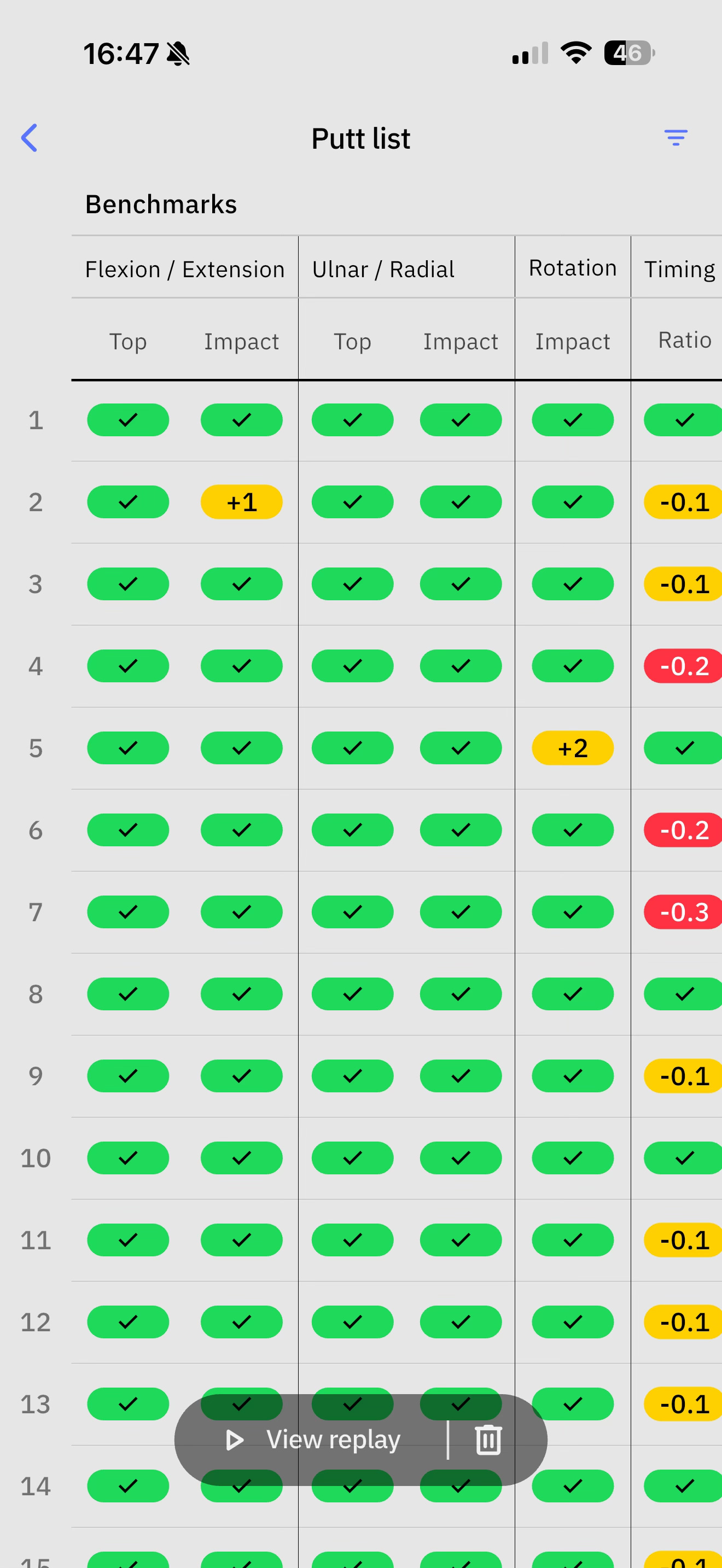
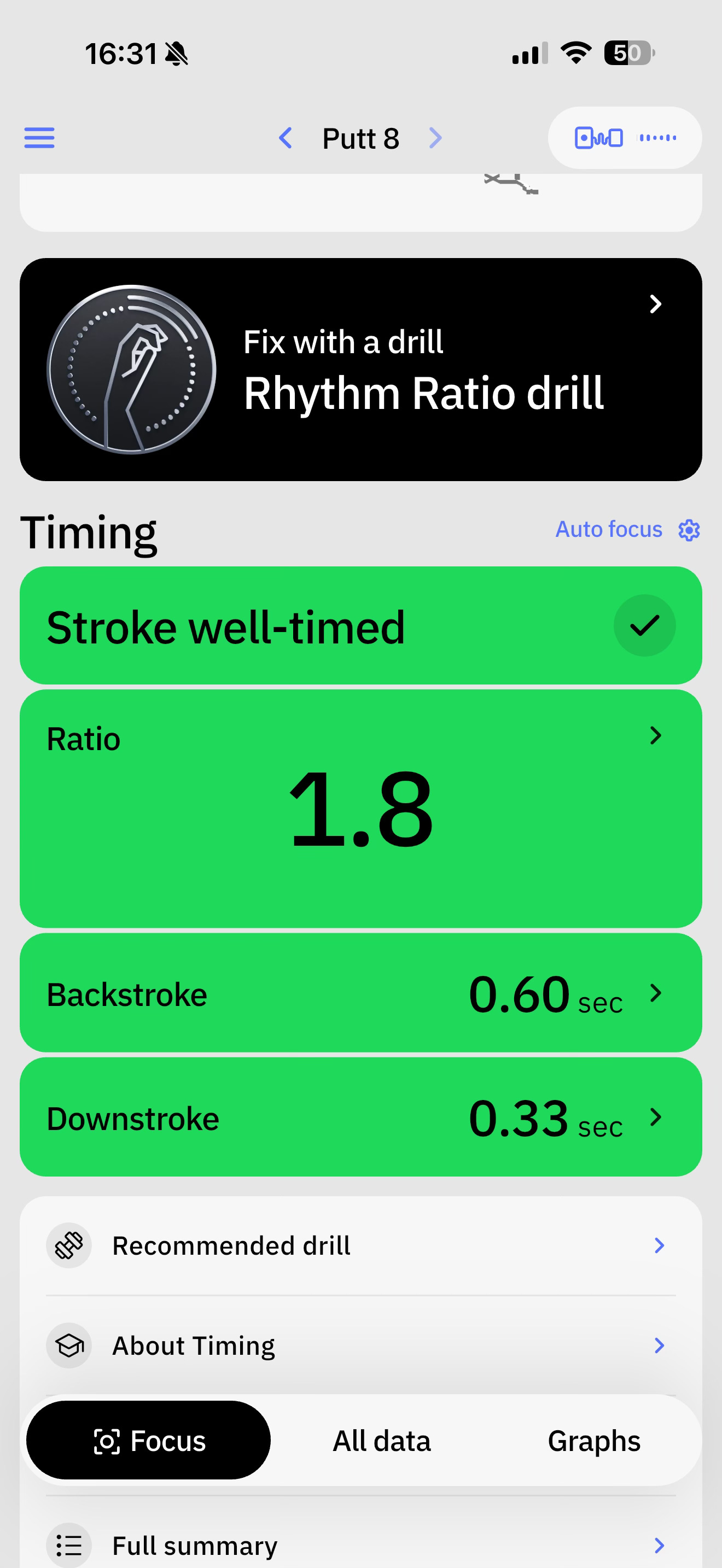
HackMotion did exactly what it said it would do. It showed me things. It made my movement more visible. It gave me more awareness of what my wrists were doing during the stroke.
What it didn’t reliably do was make me practise better.
The more I used it, the more I found myself monitoring the motion rather than rolling the ball. I began paying too much attention to small deviations. I started trying to clean up parts of the stroke that may not have needed cleaning up at all. I became a little too careful, a little too managed, a little too mechanical.
In other words, the device became very good at showing me movement, and much less good at telling me whether that movement was actually hurting anything.
When useful feedback becomes intrusive
This, for me, is the central problem with HackMotion in putting.
A precise tool can make harmless variation look like a flaw. It can create the sense that because something is measurable, it must be important. In a full swing, golfers often make that mistake. In putting, I think it is even easier.
Because putting is so small, so exact, and so easy to over-manage.
HackMotion pulls your attention inward. Sometimes that is exactly what a player needs. If you have no idea what your wrists are doing, or if you have a genuine delivery issue that keeps reappearing, a tool like this can offer a useful explanation.
But if you already putt well, and especially if you learn best from task-based feedback, that inward pull can become slightly corrosive. The session starts to revolve around movement quality rather than ball behaviour. The trace becomes the standard. The ball becomes secondary.
Sinking nine putts in a row and being told there were problems with every one of them is where I began to lose patience with it.
The problem, for a naturally arcing stroke
There is another layer to this in my case.
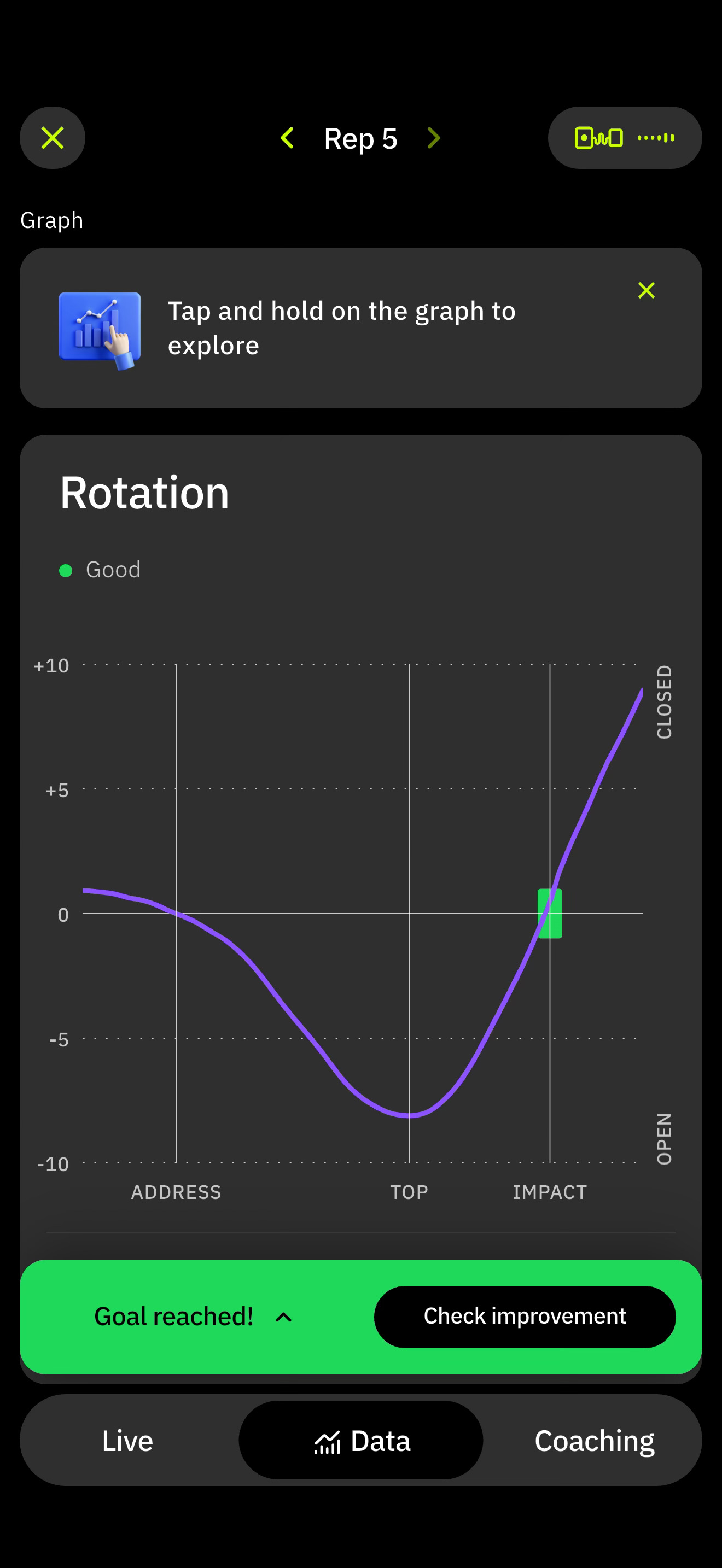
I know that I have a strong natural arc to my putting stroke, and I do not want to fight that. More importantly, if the putter is returning in a repeatable, playable way, I should not need to.
That is where HackMotion began to feel slightly at odds with me.
Not because it explicitly says an arcing stroke is wrong. That would be too crude. But there were times when using it made me feel as though my task was to neaten the motion beyond what the ball was actually asking for. It encouraged a kind of quietening and organising that may look attractive in the app, while not necessarily helping the putt itself.
That is a dangerous swap.
A natural arc is not a defect. It is only a problem if it creates a problem. If the ball is starting online, if the face is returning properly, and if the putts are going in, then a training aid needs to be careful not to recast a functional pattern as something untidy that ought to be corrected.
That, for me, is the line HackMotion can blur.
Why I trust real drills more
My preferred feedback for putting is much simpler.
A start gate tells me whether the ball started where I intended.
A putter-head gate tells me whether I am returning the face as I think I am.
A chalk line or over-line gives me a visual reference.
Then the ball tells me the truth.
I like that sort of practice because it is external, honest, and difficult to argue with. It keeps the task in front of me: start line, face, strike, pace, target.
That is the sort of feedback I trust most.
HackMotion can add something to that, but for me it works best as a supporting voice, not the main one. The moment it becomes the loudest thing in the session, I start listening to the wrong questions.
How I would use it now
For me, the best role for HackMotion is as a diagnostic tool rather than a constant companion.
That is the distinction I wish I had made sooner.
I would begin with proper drills. Start gate. Putter gate. Chalk line. Over-line. A few pace-control putts. A few random putts to holes.
If the ball is behaving, I would leave HackMotion out of it.
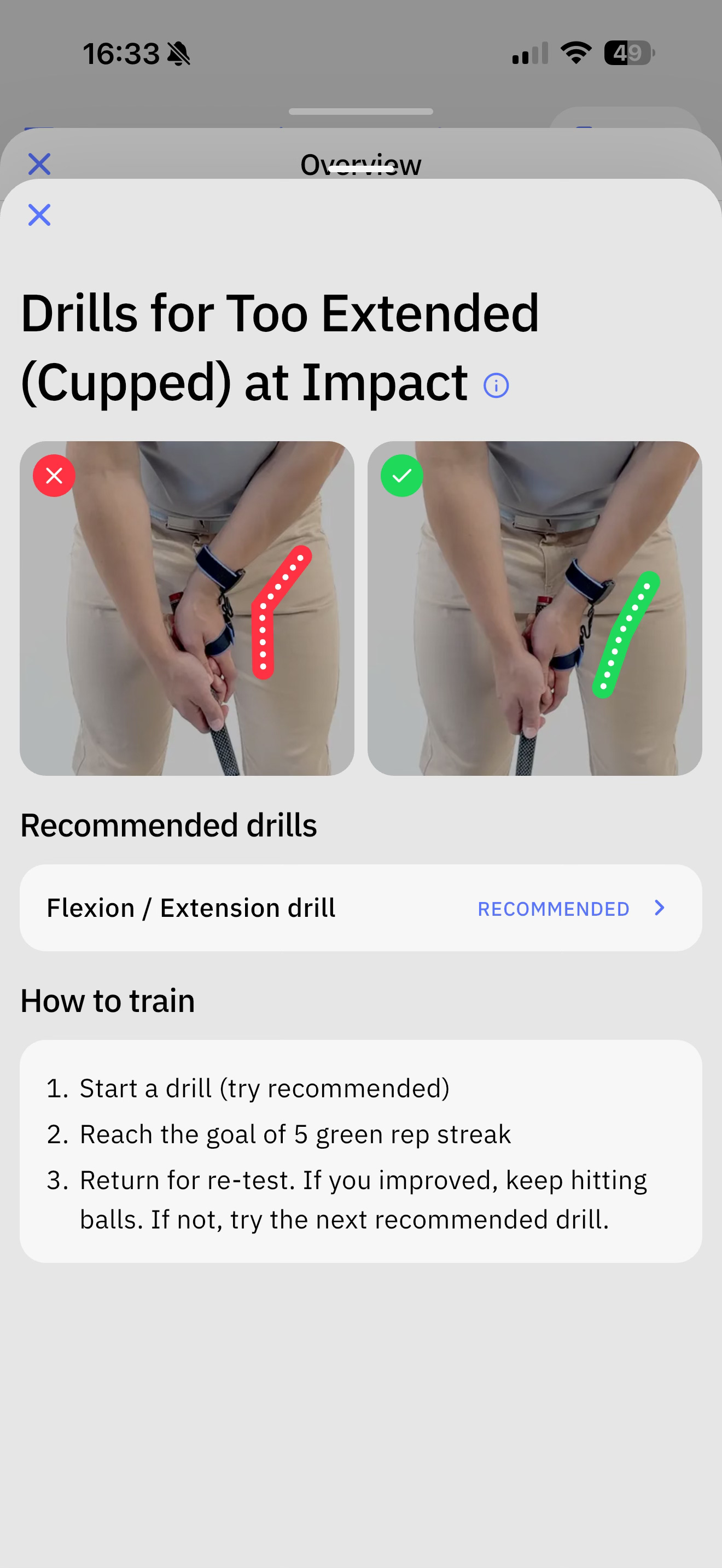
If the ball is not behaving and I cannot tell why, that is when HackMotion begins to make more sense. In that role, it can help explain a pattern rather than invent one. It can help check whether something has drifted, without demanding the whole session revolve around the sensor.
Used that way, I can see the value in it much more clearly.
I think the same principle also applies to using it for the full swing, and I’m reminded of the aphorism that “perfection is the enemy of good”. My full swing experience with the sensor is limited, but the same risks apply (certainly for the way my brain works).
Who it may suit better than it suited me
I can still see why some golfers would enjoy HackMotion.
It should suit the golfer who likes measured feedback, enjoys structured practice, and feels more confident when movement is being made explicit rather than left to instinct. It may also suit the player who has a clear technical issue, little awareness of what the wrists are doing, or a coaching project that benefits from another layer of objective feedback.
For that golfer, HackMotion may feel clarifying.
Where I would be more cautious is with the golfer who already putts reasonably well, already responds to task-based drills, and is prone to becoming a little too analytical, the sort of player vulnerable to paralysis by analysis. That player may find HackMotion useful in small doses, but risky in large ones.
Not because it lacks value. Because it can become too persuasive.
Should you try it?
Possibly, yes.
But I would not recommend it in a blanket way.
If you want a more technical understanding of your putting stroke, and if you have a genuine issue that ordinary drills are not explaining, HackMotion is a credible and serious product. There is clearly real thought in it.
But I would be more guarded if you already putt well and know that your best putting comes from reacting to the task rather than supervising the motion. In that case, HackMotion may still help you, but only if it stays in its place.
That place, for me, is not as the ruler of practice.
It is as an occasional interpreter.
Final verdict
HackMotion is impressive. It is informative. It is clearly more than a gimmick.
It is also, in my experience, very easy to give it too much authority.
As a diagnostic tool, I can see the case for it very clearly. As a regular companion in putting practice, I found it too easy to let it overrun the skill and turn a good session into a slightly over-managed one.
That was my issue with it.
Not that it failed to show me things, but that it showed me so much I started caring about the wrong things.
For some golfers, that will still be a useful bargain. For others, especially those who putt best when their attention is outside the body rather than inside it, HackMotion may need a much shorter leash.
My own conclusion is fairly simple.
Use it to explain.
Do not let it govern.
Have you tried HackMotion for putting, or found yourself overthinking a training aid that was supposed to help? I’d love to hear your experience in the comments.
And if you enjoy thoughtful reviews of golf gear, practice tools, and what actually helps you play better golf, you can subscribe below.
Links:
HackMotion website: here
Hub post for On The Green: here
The Club House welcome page: here
Well done Keith. As soon as you let the system descrube optimal, you are asking for a conflict.
I think you have hit the nail on the head there Keith. Too much information causing a shift in focus from the result to the mechanics. I have a tendency to get stuck focusing on mechanics if I'm not careful so I think this would not be a worthwhile purchase for me either.
Your drills which give you the feedback you describe are more than enough to keep the mechanics on track and more importantly keep you focused on rolling the ball into the hole.