

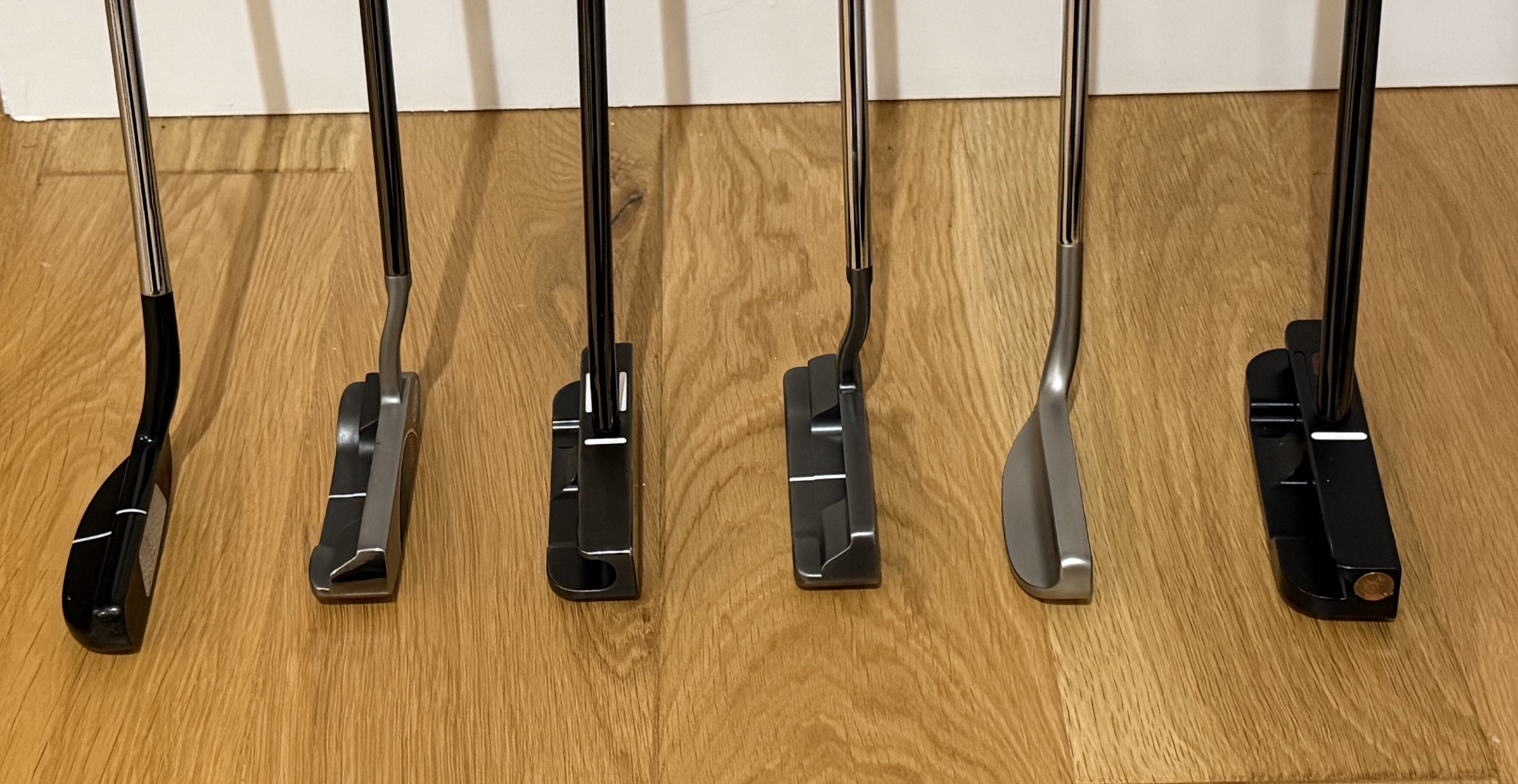
This post is not an argument against buying new. I love trying new putters and doubt I’ll ever get bored with testing new designs. A new putter can be brilliant, especially when you find one that fits, and you commit to it. I’ve reviewed plenty of new putters here on TheClubHouse, but I rely heavily on borrowing demo models from Adam at Auchterlonies. When I want to try something specific, I still have to make the occasional speculative purchase, and the most affordable way to do that is usually second-hand.
A change of putter often brings high expectations. The kind that whispers, “For what I paid for this putter, it better fix things.” That voice can tighten your hands, shorten your stroke, and turn a simple missed putt into instant buyer’s remorse. You are not just rolling a ball anymore. You are assessing whether the purchase made sense.
“For what I paid for this putter, it better fix things.”
A cheaper, second-hand putter can help to quieten that voice, soften expectations, and let the stroke flow with less tension. You stand over the ball with fewer thoughts about the outcome and more attention on pace and start line. Sometimes the biggest upgrade is simply removing the pressure of high expectations.
Early in my golfing journey, someone told me never to buy a second-hand putter because the previous owner had used up all its magic, like a wand with only a limited number of good spells. I smiled at the idea, and also felt that strange pull of superstition. Golf has a way of doing that. The longer I play, the more I suspect the only magic is confidence, and confidence tends to come from clarity, not novelty.
A practical advantage of buying second-hand is that you can experiment and learn without breaking the bank. You can try different head shapes, necks, toe hang, lengths, and grips without feeling locked in. Some you will discard almost immediately. Others may surprise you. But they will all teach you something about your eye, your tendencies, your preferences, and what helps you return the face to where you think it is aimed.
Some of the truth about putting can only be discovered out on the green. A new purchase can perform brilliantly in the studio, then behave very differently on grass. If you are buying new, try to borrow a demo club so you can try it properly on a variety of putts before committing.
Buying second-hand lets you experiment and learn without breaking the bank.
If you get the chance, useful information can be gathered from a putting lesson or fitting, especially with technology such as SAM PuttLab or Quintic. In addition to basics like length and lie, you can also learn what your stroke is actually doing, rather than what it feels like it’s doing. While you may think you have a “straight-back, straight-through” stroke, you might actually find you have a strong arc. Armed with that extra knowledge, you can shop the market (new and second-hand) with a clearer brief.
Price plays a role here. A second-hand putter has already taken a hit from the price paid new, which can make it easier to sell on again without taking much of a hit if it doesn’t work for you. That flexibility changes behaviour. You are more likely to treat the putter as a tool rather than a trophy, and be more open to changing a grip, tweaking length, or simply admitting it is not for you.
Don’t rule a putter out simply because it’s a few years old. There have been real improvements in things like alignment, face design, and materials, but unlike drivers or hybrids, older putters don’t become obsolete overnight. You’re not chasing speed and distance, you’re looking for comfort and confidence.
There is, however, a downside worth acknowledging. The ease of buying and selling second-hand can make commitment harder. It can encourage a flirtatious relationship with putters, where the moment things feel uncomfortable, the club gets the blame. The miss becomes a reason to browse rather than a prompt to look at your tempo, routine, or decision-making. Used poorly, this approach can turn into constant tinkering and a quiet refusal to take responsibility. Used well, it’s a great way to learn what actually suits you.
Alongside the odd fitting and new purchase, this is largely the approach I have taken. Experimenting has taught me more about what suits my eye and my stroke than any amount of theory. Many of my experiments are reviewed here on TheClubHouse, where they hopefully help readers make better-informed decisions.
For me, second-hand putters continue to be a big part of my putting journey, helping me find out what does and doesn’t work. There is no perfect answer, but it is a low-risk way to try things out for yourself.
If you have enjoyed this post and value independent reviews delivered directly to your inbox for free, then please subscribe below. If you have followed a similar putter journey, especially if it led you to find the one, I would love to hear from you in the comments below.
My full putter testing protocol can be found here
I remember years ago buying a Scotty Futura (you know the one that looked like a branding iron!) - I tried it on the club's putting green and found I couldn't miss. Bought it and put it in the bag immediately - it was a good as that trial session showed, inside 10 feet I have never holed out as much. Unfortunately from outside 15' my pace control with it was shocking. From 30' I would probably 2 putt - but the 2nd putt could be a 6-10' one!
It lasted about 6 months until I gave up on it...
Keith pretty neat that you have found a good way to expand the putters you get to test!!!