

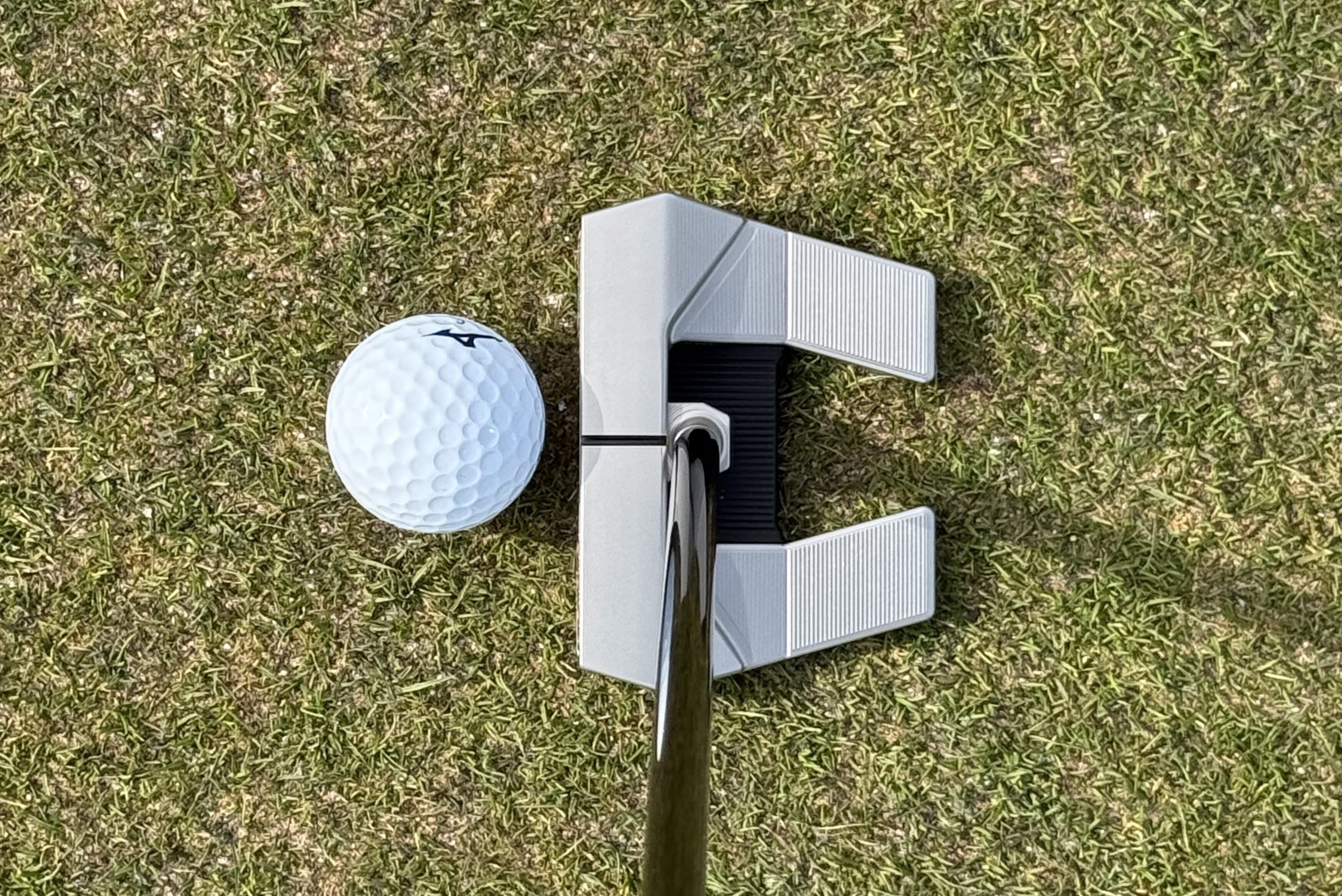
Zero-torque putters are everywhere.
What started as a slightly niche idea has become one of the biggest equipment stories in golf. L.A.B. Golf, Axis1, Odyssey, TaylorMade, PXG and others have all chased a similar promise: make the putter more stable, reduce unwanted face rotation, and help golfers start the ball online more often.
It is a compelling idea. It also makes intuitive sense. If the putter face is the biggest determinant of start line, and if unwanted rotation makes that face harder to control, then surely a putter that wants to stay square should make putting easier.
That is the theory.
But golf is rarely that tidy.
Over the last year or so, some tour players have tested zero-torque or low-torque putters and then moved back towards other shapes. Some have returned to centre-shafted mallets. Some have gone back into familiar Spider-style heads. Some, like Justin Rose, have spent years with torque-balanced ideas before still finding themselves searching elsewhere.
That does not mean zero torque is wrong. It does not mean the technology is a gimmick. In fact, some players have putted brilliantly with these models. Brian Harman won almost immediately with TaylorMade’s Spider 5K-ZT. Michael Kim won on the DP World Tour with the same putter. Plenty of golfers, professional and amateur, clearly find something useful in how these putters organise the face.
But the players who have moved away from them raise a more interesting question:
What if reducing torque solves one putting problem, but not the whole putting problem?
The tour players who tried it and moved back
Rickie Fowler is one of the most interesting examples.
Before moving into L.A.B. Golf putters, Fowler had experimented with heavier, more stable setups, including a face-balanced Odyssey Jailbird Cruiser with a lot of extra lead tape. He then spent time with L.A.B. models, including the DF3 and DF2.1, before returning to a centre-shafted Scotty Cameron GoLo-style prototype that he has apparently had for years.
That is not a move from modern technology back to an old-fashioned heel-shafted blade. It is more subtle than that. It looks like a search for the right balance between stability, weight, tempo and feel.
In an interview about the switch (towards the end of this clip), Fowler talked less about technology and more about tempo, feel, hands, timing and touch. That sounds familiar. He had tested different ways of making the putter feel more stable, but seemed to come back to something that allowed him to feel the head and use his hands in a way that suited him.
Fowler moved back to something that still looks central, clean and face-related, but perhaps gives him a more natural sense of release.
Gary Woodland appears to have followed a similar path, recently moving into a centre-shafted Scotty Cameron GoLo Tour Prototype after using one of Scotty Cameron’s low-torque Phantom OC models. Again, the interesting part is not simply that he moved away from low torque. It is what he moved towards: a centre-shafted mallet with a clear, simple relationship between shaft, face and alignment.
Brian Harman is the reminder that this is not a simple story of success or failure. He put TaylorMade’s Spider 5K-ZT into play and won almost immediately at the Valero Texas Open. And yet, from what has been reported and seen since, he appears to have moved back towards a more familiar face-balanced Spider-style setup. That does not make the zero-torque experiment a failure. It may simply show that a putter can work brilliantly for a week without becoming the putter a player wants to live with forever.
Collin Morikawa, Justin Rose and Dustin Johnson add different versions of the same point. Morikawa has searched across Spider models, flow necks, centre-shafted versions and blades. Rose used Axis1 putters for years, so he is not someone who briefly tried torque-free thinking and rejected it. DJ has moved between L.A.B., TaylorMade Spider and Scotty Cameron mallets.
Different players. Different histories. Same broader lesson.
The most stable putter on paper is not automatically the one that gives a player the best tempo, touch or freedom.
The wrong conclusion
The easy conclusion would be this:
Some tour players are leaving zero torque, so zero torque must be overrated.
I do not think that is right.
The better conclusion is this:
Tour players are testing zero torque because the idea is genuinely useful. Some stay with it. Some do not. The reason is that putting is not only about face stability.
It is about aim.
It is about pace.
It is about how the putter sits behind the ball.
It is about whether the shaft looks connected to the face.
It is about whether the head encourages a free stroke or makes you feel as though you are operating machinery.
More than anything, it is about whether the putter gives you a sense of trust before you move it.
That is the part I find most interesting, because it connects directly to my own experience testing putters.
My own zero-torque experiences
I understand the appeal of zero torque.
I like putters that make the face feel organised. I do not want to feel as though I am rescuing the face through impact. I like a putter that makes the starting direction feel obvious. I can see why a putter that reduces unwanted rotation would be attractive.
But the more putters I test, the more I realise that I am not simply looking for maximum stability.
I am looking for visual trust.
That is not quite the same thing.
My own putting pattern has become clearer over time. I am a face-led aimer. I tend to aim with the leading edge and the topline more than with large shapes behind the ball. If the face looks square quickly, I can settle. If the picture looks busy, awkward or rear-dominated, I start negotiating with the putter before I have even made a stroke.
That is why some putters can make sense on paper and still not work for me.
A high-MOI mallet might be stable, but if the back of the head dominates my eye, I may not aim it well. A face-balanced putter might match one version of my stroke, but if it feels too resistant to release, I may start steering it. A zero-torque putter might help the face behave, but if the shaft sits too far behind the face or the whole thing feels too engineered, I may lose the freedom that helps me control pace.
That last point has become especially important.
In my own testing, I have not found that I need a putter with no rotation. What I seem to need is a putter that looks visually central and face-led, while still allowing some natural flow.
That is a different fit.
It is why I have found certain centre-shafted and near-centre-shafted shapes interesting. It is why the SeeMore FGP idea makes sense to me. It is also why the Bettinardi BB-28 has been a useful diagnostic putter. It gave me a central, face-led picture without feeling locked.
I do not mind alignment help. I mind alignment help that competes with the face.
I do not mind stability. I mind stability that makes the stroke feel administered rather than made.
I do not mind technology. I mind technology that makes me think more.
The issue of onset
One of the more specific things I have noticed is that onset may matter more to me than toe hang.
Some zero-torque mallets place the shaft noticeably behind the face. That may be part of how the design works, but visually, for me, it can make the putter feel as though the face is no longer in charge. The shaft, the centre of mass and the back of the head start to become the story.
I seem to do better when the shaft looks closer to the strike area.
I do not think I am alone in that. It is interesting to see how many manufacturers are now experimenting with zero-torque designs where the shaft has been moved forward, and now with heel-shafted designs too. That seems to acknowledge something important: stability may matter, but so does the way the putter looks when you set it behind the ball.
For me, that does not mean the putter has to be perfectly centre-shafted. It does not even mean it has to be face-balanced. Some putters with meaningful toe hang can still work if the visual relationship between shaft and face feels honest.
That is why I keep coming back to this phrase:
Visually central, functionally flowing.
That, for me, might be the sweet spot.
It is also why the tour examples are so interesting. Fowler and Woodland did not appear to move from zero torque into old-school blades. They moved into centre-shafted Scotty Cameron GoLo mallets. Those putters still offer a central, face-related look. They just do it without necessarily giving the player the full zero-torque sensation.
That feels relevant.
It suggests that the alternative to zero torque is not always a traditional blade or mallet. Sometimes it is a middle ground: a putter that looks simple and central, but still lets the player feel the head release.
Why this matters for ordinary golfers
Most of us buy putters by category.
Blade or mallet.
Toe hang or face-balanced.
Centre-shafted or heel-shafted.
Insert or milled.
Zero torque or standard.
Those categories are useful, but they can also be misleading. A golfer might say they hate mallets when what they really hate is rear alignment. Another might say they need face balance when what they really need is a putter that sits square. Another might say they love centre-shafted putters when what they actually love is seeing the shaft and face in a simple relationship.
That is the trap I am trying to avoid.
The better questions are more personal:
Does the face look square quickly?
Does the shaft look connected to the strike area?
Does the alignment help confirm what I already see, or does it give me a second opinion?
Does the head feel stable without feeling locked?
Can I feel strike and pace clearly?
Does the putter make me want to roll the ball, or does it make me want to manage the stroke?
These are not questions you always answer in one fitting session, or by rolling six putts on an indoor mat. They take time. They take trial and error. They take a few wrong turns, a few putters that make sense on paper, and a few surprising ones that make sense only when you put them behind the ball.
In many ways, that is what this blog has become: a slow process of experimentation, self-fitting and self-discovery. Not because I think every golfer should copy my preferences, but because watching one golfer work through the process honestly might help others ask better questions about their own.
Those questions are not as neat as a fitting chart.
But they may be more useful.
Zero torque is a solution, just not the only solution
I do not think zero-torque putters are going away.
Nor should they.
They solve a real problem for a lot of golfers. If a player struggles to control the face, aims better with the shaft in that position, and feels more confident when the head resists twisting, then the technology can be genuinely liberating.
But I also do not think zero torque should be treated as the end of the conversation.
A putter can be more stable and less suitable.
A putter can be technically clever and visually wrong.
A putter can work brilliantly for a week and still not become the one a player wants to live with.
That is not because golfers are irrational, although we often are. It is because putting is a strange blend of geometry, feel, memory and nerve.
The putter has to do more than behave.
It has to persuade you.
That is what I take from the tour switches. None of them proves that zero torque is wrong. They prove that putter fitting is still personal, even for the best of the best.
Where I am now
My own conclusion is not that I should avoid zero torque.
It is that I need to be careful about what part of zero torque I am responding to.
That is one reason the two BGT putters were such a useful comparison. They came from the same zero-torque family, but presented the idea in two very different ways: one as a blade, the other as a mallet.


If I like a zero-torque putter because the face looks organised, the shaft feels close to the strike area, and the head gives me confidence without clutter, then it could absolutely work. That was closer to my experience with the BGT Blade.
If I like the idea of zero torque but the actual putter makes the face feel distant, the head feel rear-led, or the stroke feel too managed, then it probably will not. That was closer to my experience with the BGT Mallet.
That is why I keep coming back to my own putting rule:
See the face. Trust the picture. Let it release.
For me, the best putter is unlikely to be the one that simply removes the most rotation. It will be the one that gives me the clearest picture and the freest stroke.
Sometimes that might be zero torque.
Sometimes it might be centre-shafted.
Sometimes it might be a conventional mallet with the right neck.
Sometimes it might be something that makes no sense on paper but looks perfect behind the ball.
And perhaps that is the real lesson from the tour players who have tried zero torque and moved back.
The best putter is not the one with the most convincing theory.
It is the one that lets you trust what you see and feel.
Thanks for reading The Club House. This post pulls together a few different putter thoughts and experiments, but the bigger theme is one I keep coming back to: finding the right putter is rarely as simple as choosing a category.
More broadly, this site is a place for honest, independent golf equipment reviews, self-fitting experiments, and the occasional detour into the psychology of the game. It will probably always have a bias towards putters and putting, but not exclusively. If that sounds interesting, please consider subscribing.
Further reading
If you want to understand how I test equipment, and follow the wider review archive, these are good places to start:
My testing framework
How I try to make equipment reviews fair, consistent and useful for ordinary golfers.On the Green
The home for my putter reviews, putting tests and thoughts from the practice green.
Interesting post Keith thanks.
My guess is some tour players try zero torque because it SOUNDS useful - then find it isn’t for them.