

After testing five new 2026 drivers against my Titleist GT2, there was one obvious follow-up still to come.
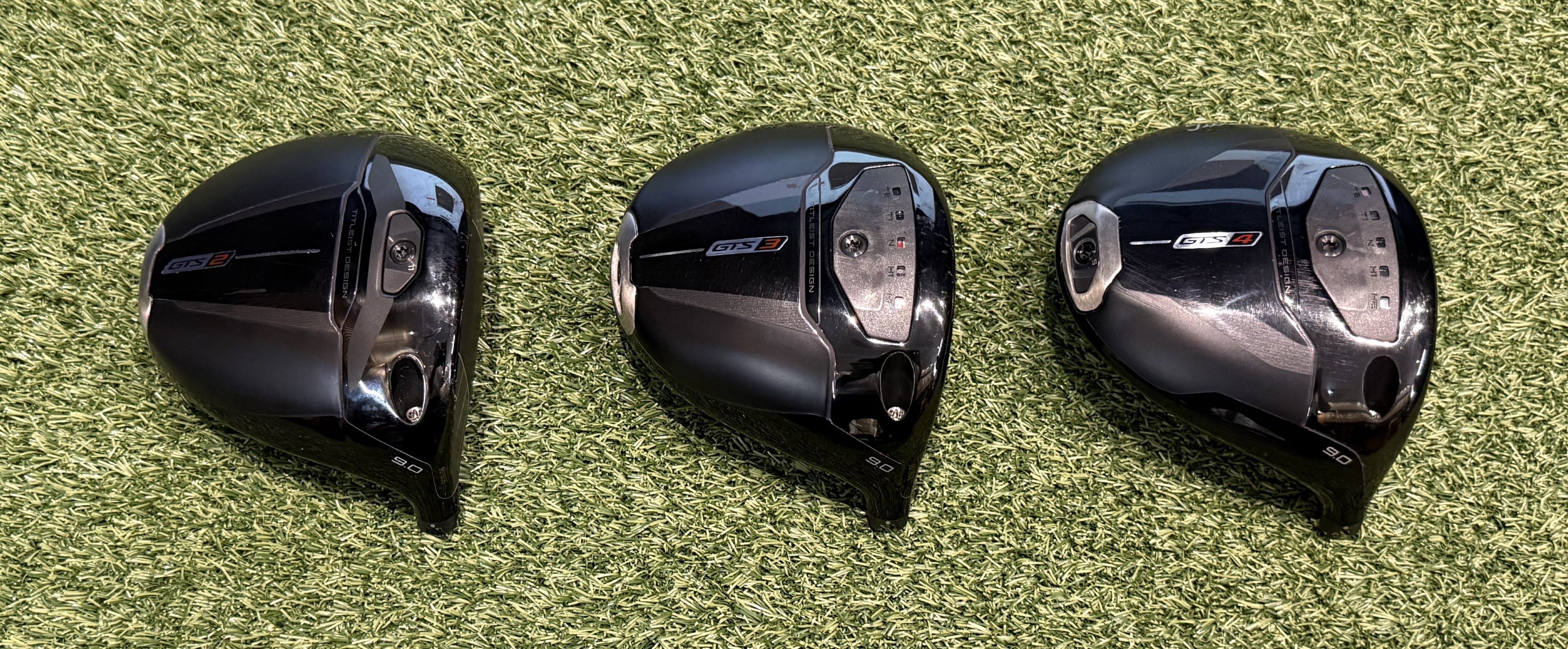
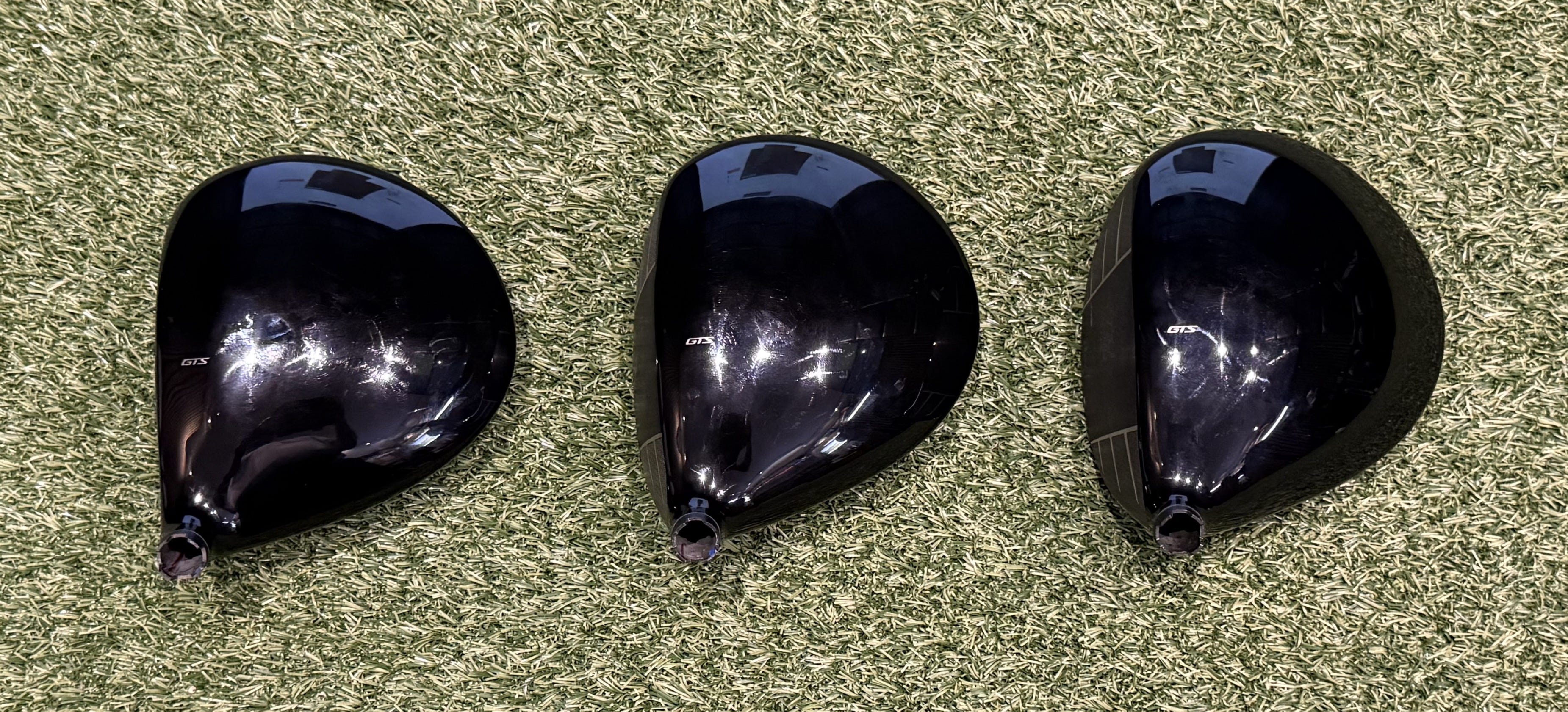
The new Titleist GTS range.
That earlier driver test was not a fitting. It was a comparison. Since then, I’ve also done a more detailed follow-up with Callaway and bought the Cobra OPTM Max-K to test properly on course. The wider driver search is still moving, but the method is the same: try them against my gamer first, see if anything is interesting enough to justify the next step, and only then think about a proper fitting.
So this session had a very simple purpose: try the new GTS2, GTS3 and GTS4 heads against my GT2, using my current shaft, and see if anything stood out.
How we tested them
The session was with Adam Legg, master fitter at Auchterlonies of St Andrews, using their TrackMan studio. It was relaxed and informal, partly because Adam and I know each other well, and partly because he knows my swing well. That helps. The numbers are useful, but they need a bit of context.
This was a head-only comparison, using my current Fujikura Ventus Red 5S Velocore+ shaft throughout. That made the test cleaner. Same shaft. Different heads. Current gamer as the benchmark.
My GT2 is a 10 degree head, set flat, and I’m now using a JumboMax Zen Lite Extra Small grip (one size up from standard jumbo). My usual bad shot with driver is a low-toe snappy hook, so I’m always looking for a driver that gives me enough forgiveness without feeling too shut or too hard to manage.
The GT2 baseline
I warmed up with my 7 iron before moving to driver and establishing a baseline with my GT2. The starting numbers were:
Club speed 92.8mph
Ball speed 137.5mph
Launch 15.6°
Spin 2829rpm
Those are not bad numbers, but my current swing with the GT2 is a bit high in launch and spin. Not dramatically so, but enough for Adam and me to notice. It also reflects what I’ve been seeing on the course and suggests there might be a little too much dynamic loft in the delivery.
That could be down to a few things. Grip, posture, balance, orthotics, injury compensation, or simply the normal movement of a golf swing over time. I’m more stable through my feet now and more balanced at the finish, but I can also get a bit steep, especially with irons. I don’t want to overplay any of that, because this was not a swing diagnosis. It was just useful context for the test.
The GT2 was still performing well, but the numbers suggested it was worth checking whether the new heads could give me a better window.
The GTS range
Before getting into the individual heads, it is worth saying that all three look like proper Titleist drivers. That is a compliment. They are clean, classic and very good looking, both at address and in the bag. If you are expecting a dramatic visual change from GT to GTS, that is not really what this range is about. The GTS heads feel more like an evolution of the Titleist look than a reinvention of it, and I suspect most Titleist players will see that as a positive.
I’m not going to turn this into a full technology breakdown, because Titleist explain the construction and model differences far better than I can on their own site. The headline is that the GTS range builds on the GT family rather than ripping it up and starting again, with the new Split Mass Frame, Speed Sync Face and more adjustable weighting giving fitters more ways to fine-tune launch, spin and forgiveness. If you want the full technical explanation, Titleist’s own GTS page is the best place to start.
Titleist GTS2
The GTS2 is the “everyman” head in the range. It should suit the widest group of golfers and will probably be the safest starting point for most fittings. It is there for golfers who want speed, forgiveness and launch without feeling as though they are being pushed into something too demanding. Compared to my GT2, the new model now has front and rear weight adjustability, rather than only rear. That gives fitters more flexibility to manage spin and forgiveness.
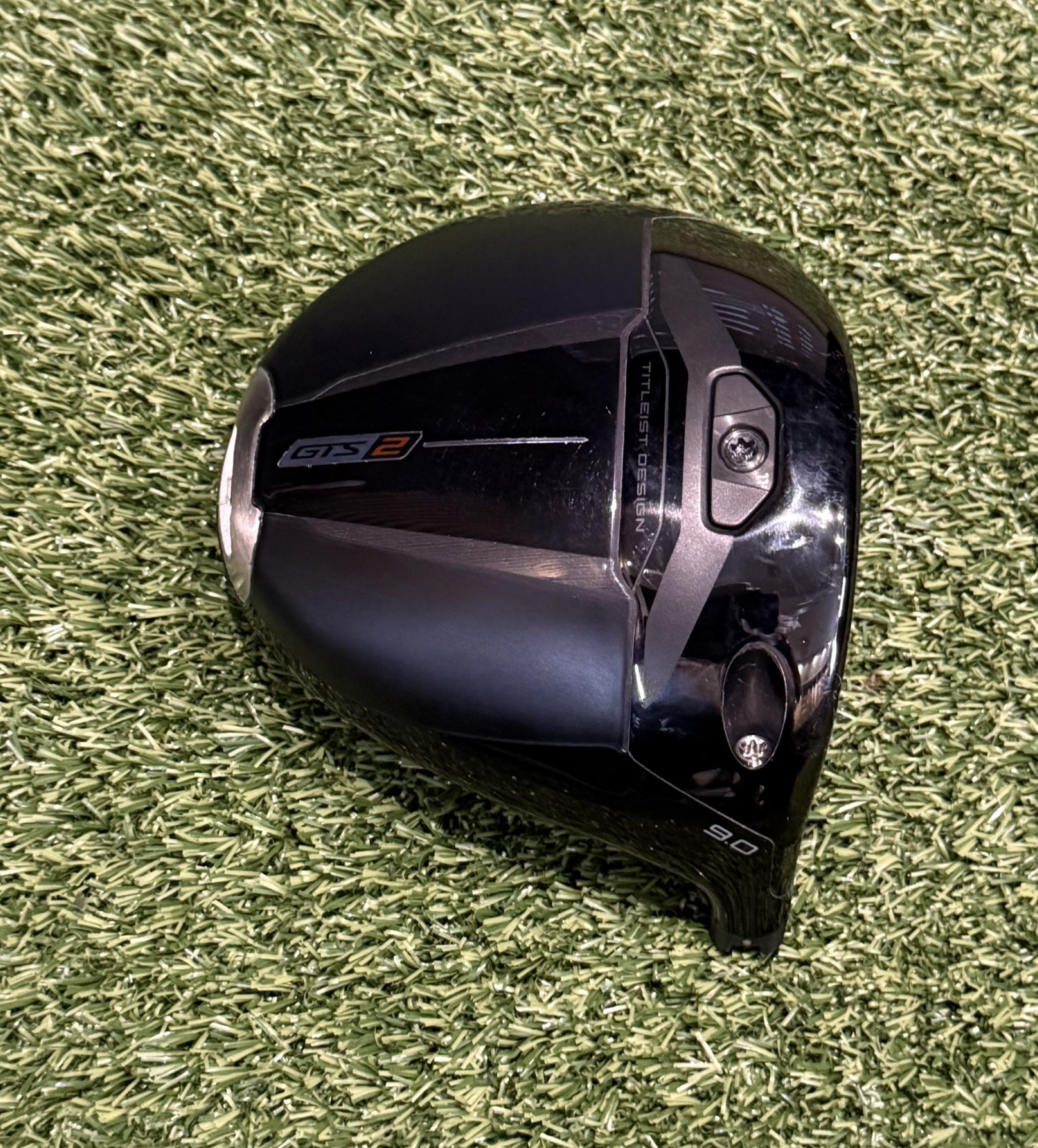
We started with the GTS2 in a 10 degree head, but moved quickly into the 9 degree version because the 10 degree head was spinning too much for me on the day. That made sense given the GT2 baseline. I was not short of launch, so the obvious aim was to bring the spin down.
The GTS2 9 degree did that.
Club speed 92.1mph
Ball speed 135.3mph
Launch 13.5°
Spin 2474rpm
That was the lowest spin number of the session. The head felt good, and while it may have been a little louder than my own GT2, it wasn’t dramatically so. The feel was solid, familiar and very much within the Titleist driver family.
The issue was that the lower spin came with lower launch, slightly lower ball speed and looser dispersion. It did part of what we wanted, but it did not do enough overall to make me think it was a clear improvement over my current driver.
Titleist GTS3
The GTS3 was the most tempting of the new heads.
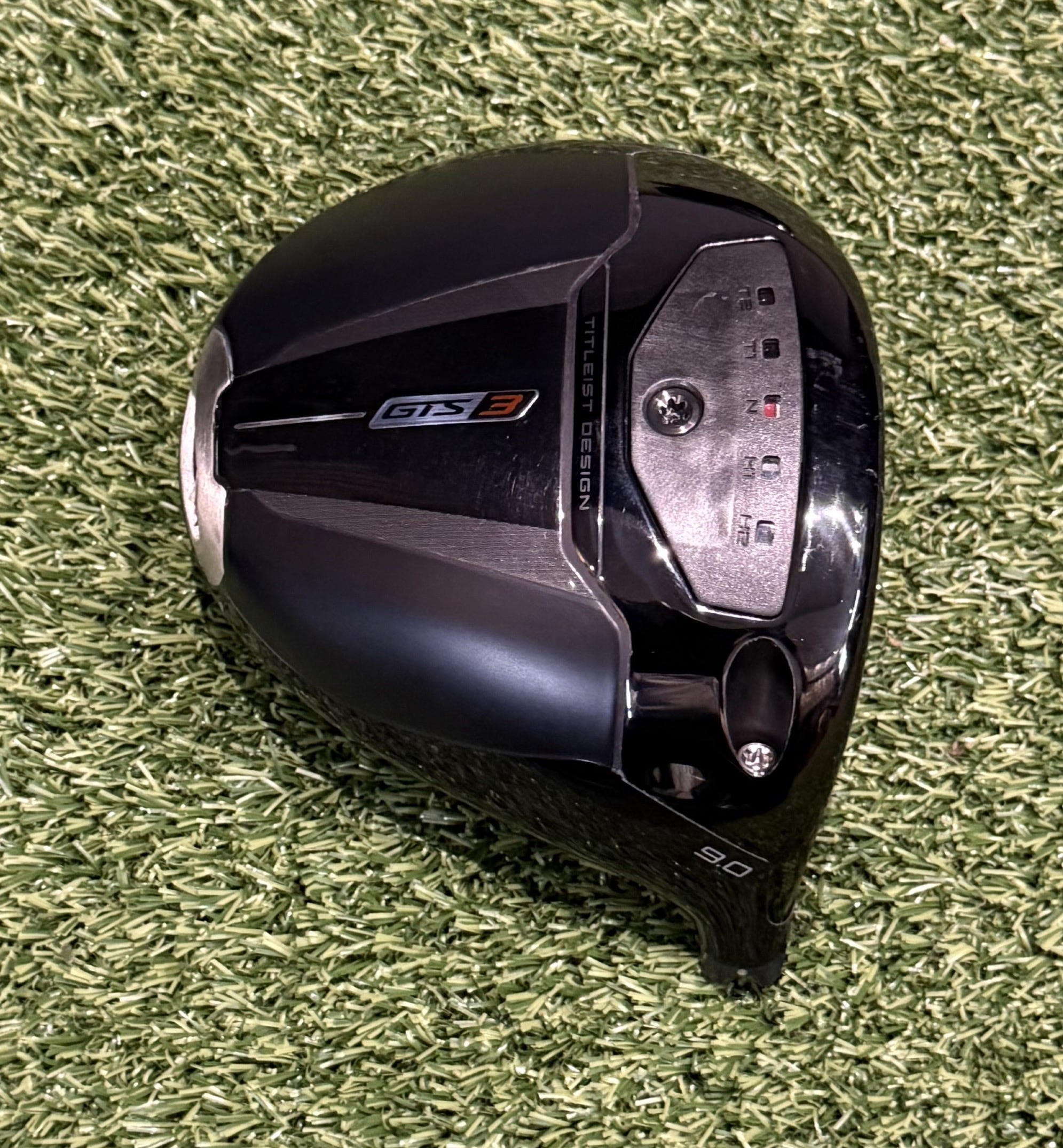
That probably should not be a surprise given my original Titleist fitting was for the GT3. It is the more compact, lower-spin, better-player option, and on numbers it was the strongest challenger to my GT2.
Club speed 92.1mph
Ball speed 136.1mph
Launch 14.4°
Spin 2678rpm
Ball speed was close to my GT2, launch was in a sensible window, spin was lower than my original GT2 setting, and dispersion was the next best of the group. If one of the GTS heads made the strongest case, it was the GTS3.
But I’m also conscious of my history with the GT3. When I swung well, the GT3 was excellent. The problem was that I had to swing well. It could produce the best results, but it was hard work when I was not quite on top of my swing. That was the reason I moved from GT3 into GT2 in the first place. I wanted more help.
In a fuller fitting, with shafts and settings included, the GTS3 would probably be the first new head I would want to explore properly. In this head-only comparison, though, it did not stand out enough to make me change immediately.
Titleist GTS4
The GTS4 may be the most interesting head in the range, even though it was the one that worked least well for me.
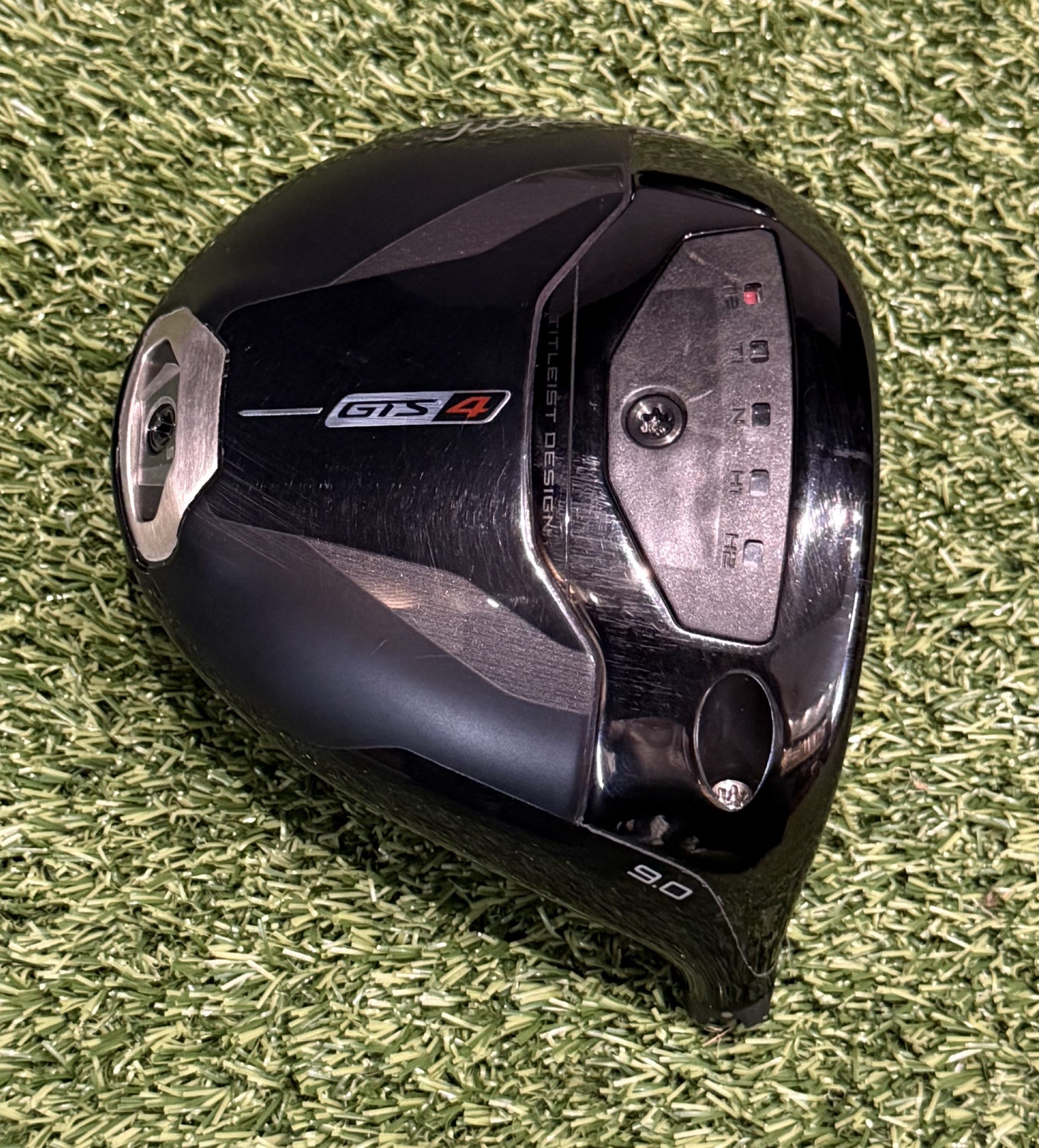
Historically, the “4” head in the Titleist line has been seen as the low-spin monster. Not impossible to play, but definitely aimed at a narrower group of golfers. Adam described the new GTS4 as something closer to a middle ground than the previous version. It now has more weight adjustability than the old GT4, and he has been surprised by how popular it has been and how many players have fitted well into it.
That made me curious.
Unfortunately, I struggled with it almost immediately. The GTS4 has a slightly different shape and, to my eye, appeared to sit somewhere between neutral and closed. That is not a criticism of the head. Plenty of golfers may like that look. My preference is different. I like a driver that sits neutral to fractionally open, and once I had seen the GTS4 as a little closed, I found it difficult to commit to the shot.
The numbers reflected that.
Club speed 89.8mph
Ball speed 134.6mph
Launch 14.1°
Spin 2559rpm
I’d be careful not to judge the GTS4 too harshly from those numbers. I don’t think I gave it a fair emotional audition. Once a driver does not look right behind the ball, I don’t swing freely, and the result tells you as much about confidence as it does about performance.
That is part of testing too. A club can be technically excellent and still not suit your eye.
Going back to my GT2
After testing the new heads, we went back to my GT2 and adjusted the loft down to 9.25° while keeping it flat. This was not the original purpose of the session, but it became the most useful outcome.
Club speed 91.2mph
Ball speed 136.3mph
Launch 16°
Spin 2660rpm
The spin came down from 2,829rpm to 2,660rpm, while launch stayed healthy at 16°. Club speed and ball speed were fractionally down, but that is normal within a hitting session and not something I would overanalyse.
The bigger point was dispersion. Both versions of my GT2 were the tightest of the group, which is hard to ignore when you are comparing drivers rather than chasing one isolated number.
One slightly better number from a new head is interesting, but a tighter pattern from the club already in the bag is harder to dismiss.
That does not mean I fully trust the GT2. If I’m being honest, I have always slightly struggled to trust my Titleist driver. It can produce some fantastic drives, and when I’m swinging well it is a very good fit, but I still feel as though I need to be on top of my swing to get the most from it. The GT2 has helped compared with the GT3, but it has not completely removed the feeling that the driver is something I need to manage.
Still, in this test, it remained the strongest all-round option.
The numbers
The TrackMan report from the session does not include carry or total distance, so I’m not going to pretend this was a distance shootout. That would be the wrong way to frame it anyway. This was a head-only comparison using my existing shaft, and the more useful numbers were club speed, ball speed, launch, spin and dispersion.
The GTS2 lowered spin the most, but gave up launch, ball speed and dispersion. The GTS3 was the best of the new heads for me and probably the one with the most potential in a proper fitting. The GTS4 is difficult to judge because I never settled over it.
The adjusted GT2 did not win every individual number, but it gave me the best blend on the day: launch, spin, familiarity and dispersion.
That is why it stayed in the bag.
Who should look at the GTS range?
If you are already in a current GT driver that has been properly fitted, the new GTS heads may not blow it out of the water. That was my experience. There was not enough difference on the day to justify changing, especially when my own driver still produced the tightest dispersion and could be improved with a small loft adjustment.
That does not mean the GTS range is disappointing. Far from it. I think the bigger gains will be there for golfers coming from TSR, TSi or earlier Titleist generations. If you are looking for a new driver, these should be on your demo list.
Drivers have been close to the legal limits for years, so the gains are not always about a jump in centre-strike ball speed. The improvements now are more often about forgiveness across the face, aerodynamic efficiency, easier speed and better fitability.
That last point is probably where the range excels. The GTS2 should work for a wide range of golfers. The GTS3 offers a strong better-player option. The GTS4 seems to have become more playable and adjustable than the old GT4. As a range, it makes a lot of sense, and there is something there for every player.
There were differences between the heads. Some were visual, some were in feel and sound, and some showed up in the numbers. That is exactly why this kind of comparison is useful before committing to a full fitting.
Verdict
In the end, none of those differences added up to enough of a performance gap to make a more comprehensive GTS fitting feel like the obvious next step. Some golfers will always want the latest models, and I can understand that. But the best result for me was actually a small adjustment to the gamer: down to 9.25 degrees and still flat. So, for now, the GT2 stays in the bag. Not because it is perfect, and not because the GTS heads were disappointing, but because none of them beat it clearly enough in this comparison.
If you’ve tested the new Titleist GTS drivers, I’d be interested to hear what you found. Did one of them clearly beat your current driver, or did you end up where I did, with a small adjustment rather than a full change?
As always, if you enjoyed this post, please like, subscribe, and share it with someone else who is trying to make sense of the new driver releases without getting carried away by the launch hype.
Further reading
Why Do We Keep Buying New Drivers? Here
Five New Drivers for 2026: Here
Cobra OPTM Max-K: Here
Callaway Quantum Fitting: Here
Note, this session was conducted before I started my speed training sessions. In fact, it was one of the things that convinced me to do them!
Lots of effort Keith thanks!
You might also consider quoting Smash Factor numbers when you do these tests.