

Introduction
After recently reviewing the new Spider Tour X and Spider Tour V, I jumped at the chance to be fitted by the TaylorMade tour fitter when he visited St Andrews. My own testing had suggested that the Tour V could be a good fit for me, so I was interested to see whether their fitting process would reach the same conclusion.
My friend Hector and I both had appointments, which also gave me the chance to observe his fitting before going through the process myself.
The fitting was originally due to take place on the excellent putting green at the Fairmont, just outside St Andrews. Unfortunately, the weather intervened, and we moved indoors to the Auchterlonies fitting studio instead. The fitting process itself was largely unchanged, although it would have been even better to see how everything translated onto the putting green.
Our fitter was Bradley Rowntree from TaylorMade.
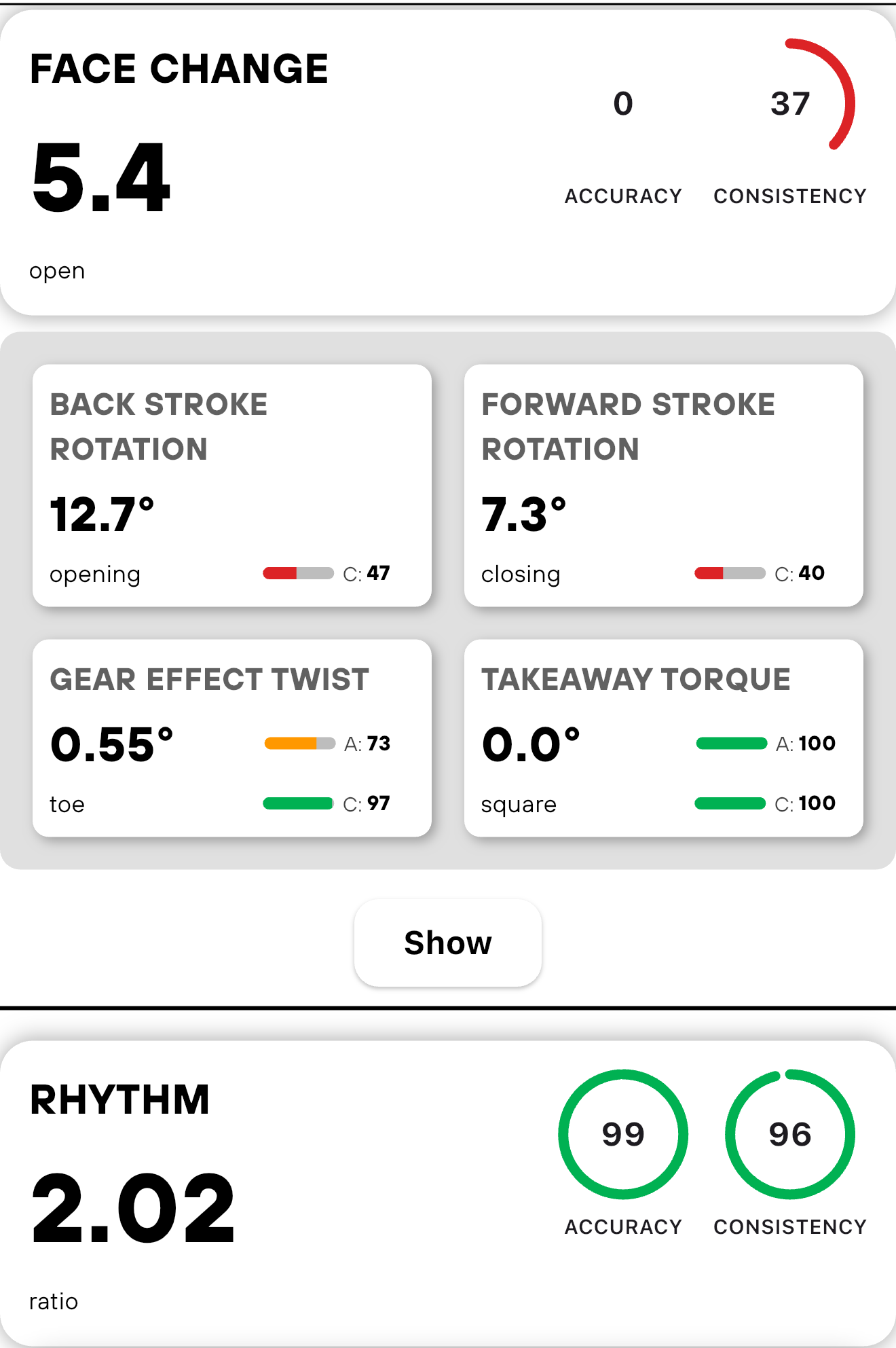
Auchterlonies have also recently installed an excellent putting platform in the main store, so while we were waiting, I got Hector to roll a few putts using my Vertex sensor. As regular playing partners, we have long known that he tends to aim left with his Spider Tour and then essentially cut across the ball with his stroke.
Despite having a very consistent rhythm, his face at impact can be inconsistent, as demonstrated by the Vertex data below. You can see he opens on the backswing and never manages to close it again on the forward stroke. It would be interesting to see how that shows up during the fitting.
The Process
As a putter nerd, I was fascinated to watch the fitting as an observer before becoming the participant. The session promised “Tour-level fitting” and a custom putter that you could take away on the day.
Regular readers will know that I have worked with several people, particularly Bruce Rearick, to gain a better understanding of my own preferences and biases when it comes to putter fitting. Inevitably, certain parts of the process prompted some discussion between Bradley and me, although I tried to stay out of Hector’s fitting as much as possible and let Bradley do things his way.
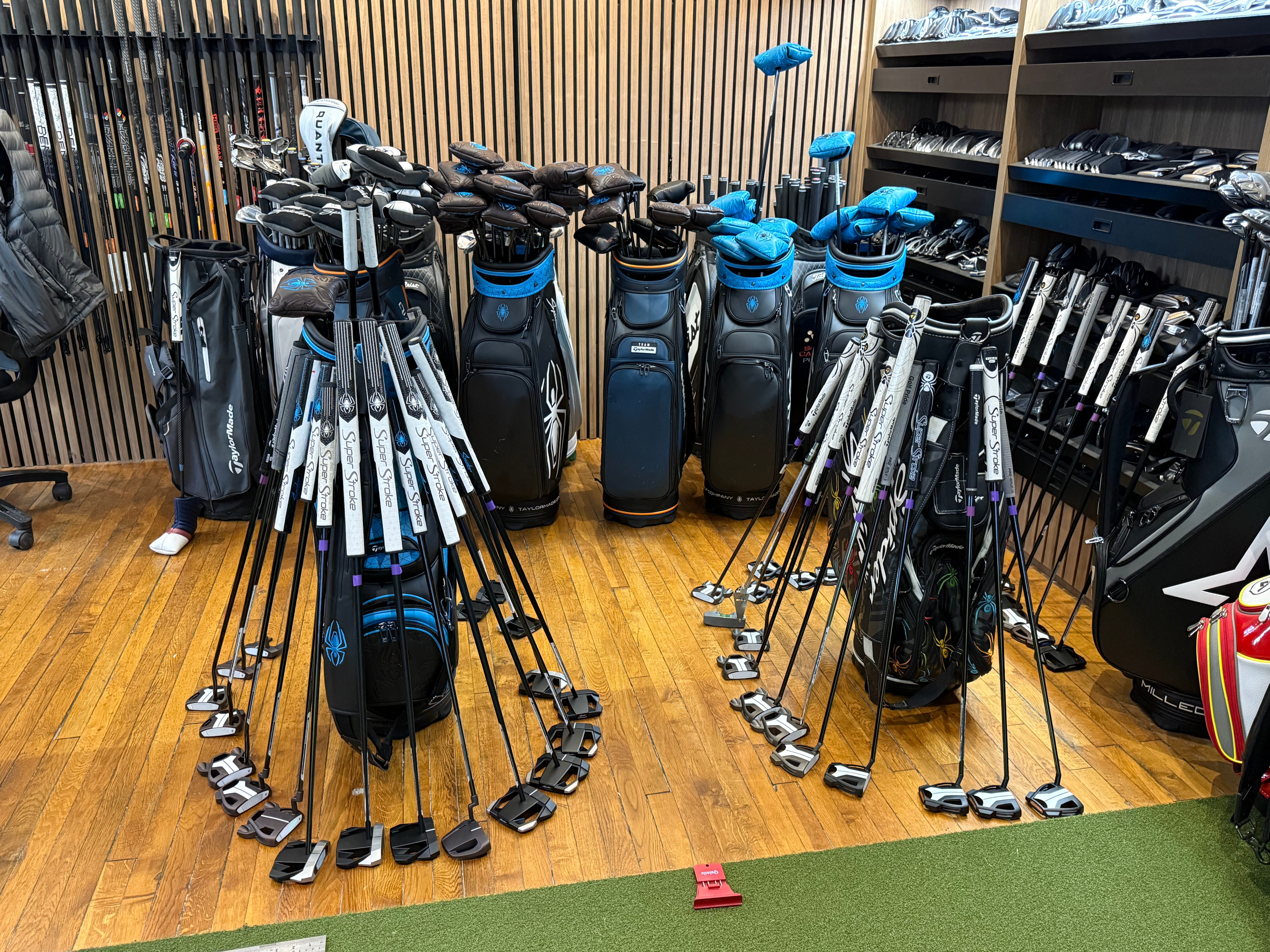
One thing worth mentioning is that this was predominantly an observational, trial-and-error fitting rather than a technology-led one. Capto was used to examine ball roll and help assess loft requirements, but much of the process came down to watching the player, changing variables and looking at the outcome.
Bradley and I also agreed on one thing immediately: neither of us particularly likes the weight of the SAM PuttLab sensor attached to the putter, as we both feel it can influence the stroke.
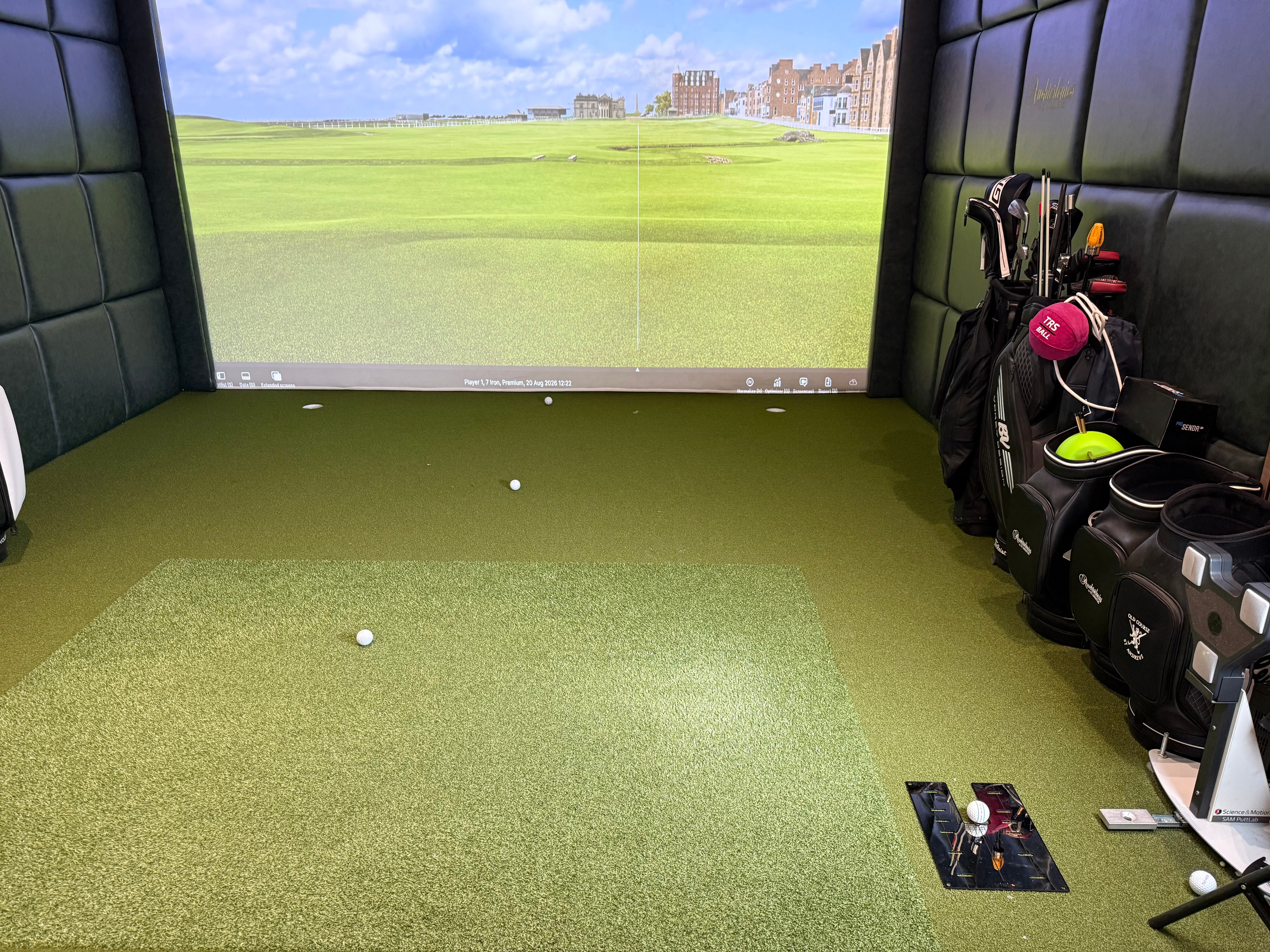
Own putter test. Bradley starts by asking you to roll some putts with your current putter while he observes your set-up and stroke.
Laser aim test. After watching Hector hit a few putts, Bradley used a putting laser to show just how far left he was aiming at address. The line on the ball also made the effect of his open face at impact very obvious, with the ball appearing almost to have slice spin.
Observations. Hector uses a line on the ball when setting up. Bradley noticed that he was struggling first to align the ball and then to square the putter correctly to that line. He pointed this out, although there wasn’t an immediate solution. We discussed dominant eye and the effect that can have on aim, then experimented with a few changes. Those improved Hector’s static aim, but didn’t significantly change the stroke itself.
Alternative putters. Bradley felt that the Tour X should suit Hector better than his existing Spider Tour, thanks to its slightly lower MOI and more forward centre of gravity. It immediately appeared to work better with his stroke and, importantly, he was no longer leaving the face as open at impact.
First win.
Length and lie. Bradley then used an adjustable fitting putter to assess Hector’s preferred length and lie. This was one area where we had slightly different views on the process. Bradley asked Hector to take his stance and tell him when he felt comfortable, then used a putting mirror to check his eye position before making some adjustments to posture.
To be clear, he wasn’t advocating that Hector needed his eyes directly over the ball.
My preference would be slightly different. I would first have Hector establish the posture and head position from which he sees his intended line most accurately, and then fit the putter around that. As a check, we tried that approach too. Interestingly, the resulting specifications were almost identical.
Second win.
Fine-tuning the putter. This is where the TaylorMade fitting really differentiated itself from most others I have experienced. Bradley had a large selection of ungripped putters with him, allowing Hector to choose the head and colour he preferred before having the length and lie altered to his exact requirements.
They then experimented with grips to see how those affected his stroke. The standard SuperStroke appeared to encourage him to grip the putter too tightly, while he performed considerably better with a Golf Pride Green Star cord grip.
Third win.
Weight. This produced another interesting discussion. Bradley believes many modern putters are too light. I tend to think they are too heavy. Ultimately, we agreed that it is largely personal preference. The important thing was that Bradley could change the head weights and assess the effect rather than simply accepting the stock configuration.
Loft. Finally, the Quintic phone app was used to look at impact and launch conditions before adjusting loft accordingly.
Hector walked into the session with a Spider Tour and left with a Spider Tour X.
On paper, that might not sound like a dramatic change, but the Tour X clearly suited his stroke better and was producing excellent results in the studio. He also left with some things to work on around alignment and dominant eye.
I will no doubt be cursing his improved putting in future games.
What About My Fitting?
My own fitting was rather less dramatic.
When I went through the laser test, my aim split the middle of the hole. I then rolled ten putts to almost the same spot. My tempo was good, and Bradley could see no obvious issues with my stroke.
Using Capto, he felt he might reduce the loft on my Lajosi from its current 3° to around 2°, but he was reluctant to change anything because the putter was already working so well.
In other words, the fitting was doing what a good fitting probably should: not finding a problem where one didn’t exist.
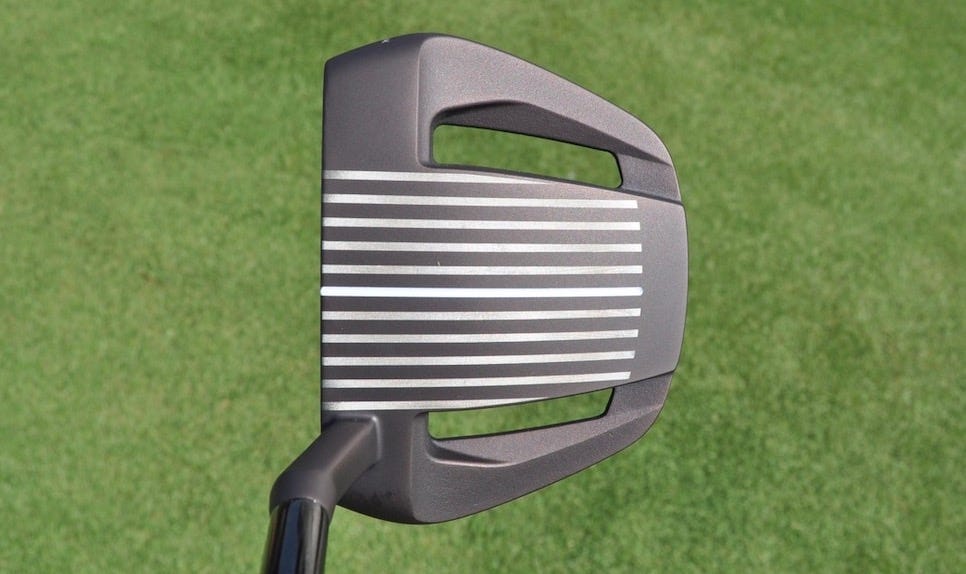
The only putter in the Spider range Bradley thought could get close to my Lajosi was the Tour V.
The same conclusion I had reached during my own testing.
We tried to build one as close to the specifications of my Lajosi as possible, although we couldn’t quite replicate it. Even so, I liked what we produced and still see considerable promise in the Tour V head.
If I’m being particularly critical of my own putter, the one thing I might change is the face milling. When I ordered the Lajosi, I probably should have specified something slightly shallower. During my Tour V review, I felt that I controlled pace exceptionally well with it, and the firmer TaylorMade insert may have played a part in that.
Bradley is now going to see whether he can source a more customised Tour V that gets closer to my preferred specifications. In reality, it’s probably too much to ask, but if he can manage that, it should make for a much more meaningful comparison against my gamer.
Conclusion
I didn’t leave Auchterlonies with a new putter.
Hector did.
And in some ways, those two outcomes probably say more about the fitting than if we had both walked away with new Spiders.
Hector arrived with some identifiable issues in both aim and face control. Bradley was able to find a different head, alter the specifications, experiment with grip and weight, and build something that clearly worked better for him.
With me, there was very little to fix. Rather than forcing a change, Bradley effectively confirmed that my current putter suits me extremely well, while also identifying the Tour V as the one Spider model most likely to offer a genuine alternative.
That feels like a pretty good fitting experience.
The ability to adjust head, length, lie, loft, weight and grip, then build the finished putter there and then, is what really separates this from simply trying a few models in a shop. If you get the opportunity to experience one of these TaylorMade fitting sessions, I would thoroughly recommend it.
My thanks to Adam Legg at Auchterlonies for organising the fitting, and to Bradley Rowntree from TaylorMade for taking us through the process.
If you enjoyed this fitting experience, you can read my full reviews of the TaylorMade Spider Tour X and Spider Tour V. If Bradley manages to source the more customised Tour V we discussed, there may yet be another chapter to this story.
Subscribe to The Club House so you don’t miss it.
Further reading
Putter testing framework: here
All putter reviews: here