

St Andrews is a place where tradition usually leads the conversation. Grass, wind, history. Golf as it has always been played. Which is why it feels quietly intriguing to find myself in a lesson that’s less about copying positions and more about exploring what modern technology can genuinely add to the way we learn the game.
This is an update to the post I wrote last year on thoughtsfromthetrain.com. I have removed many of the personal swing-specific things Freddie identified and focused more on how technology was used to enhance the experience.
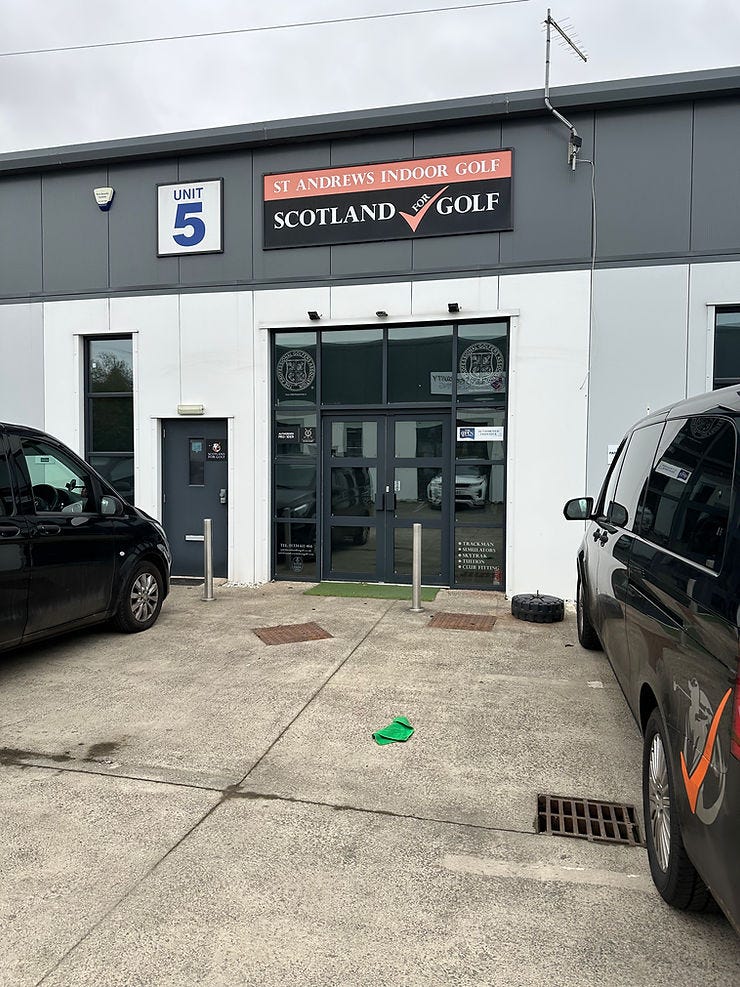
At the Centre of Golf Excellence, situated in the Bassagaurd business park, only a short walk from the centre of town, that exploration starts with Sportsbox AI — a motion-capture system that builds a fully interactive 3D model of your swing. Rather than relying solely on video or ball-flight numbers, it focuses on how your body actually moves: sequencing, rotation, and weight transfer. No sensors, no wearables. Just a phone or iPad, some smart software, and a surprisingly clear picture of what’s really happening.
“Instead of being told what my swing looks like, I could finally see how it moves.”
The Centre itself isn’t a traditional range or studio. Inside are 3 Trackman-4 simulator bays that can be used individually or with friends, coaching spaces, and fitting facilities. They are also a fitting centre for Wilson clubs. Wilson has developed an AI fitting system using Blast Golf that I would be very interested to return and review.
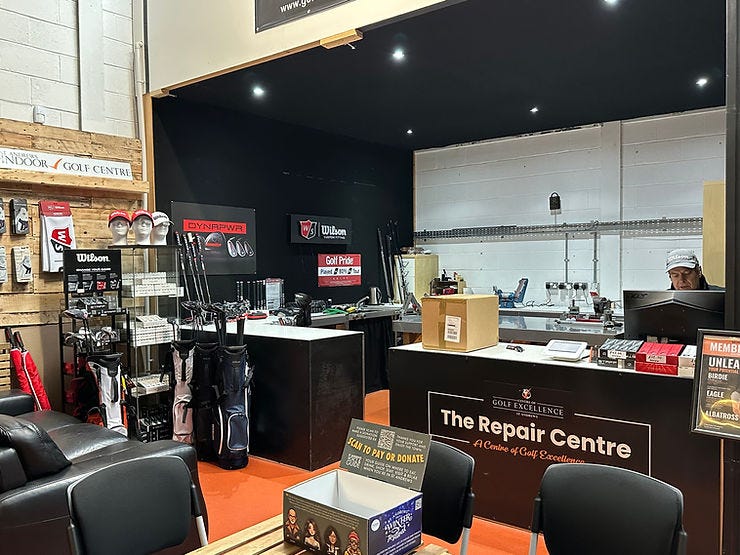
My session began with a conversation with my instructor, Freddie Lawrence. What was I working on? What did I feel was happening in my swing? As a golf nerd, I’ve long been fascinated with the biomechanics of the golf swing. In particular, in my own swing, I’ve wanted to explore how I transition from backswing to downswing. Do I load into my lead side effectively? Do I rotate in the correct sequence? Am I maximising my power, or do I have room to improve? Once we had established my priorities, we then moved to hitting shots, gathering Trackman data and exploring Sportsbox.
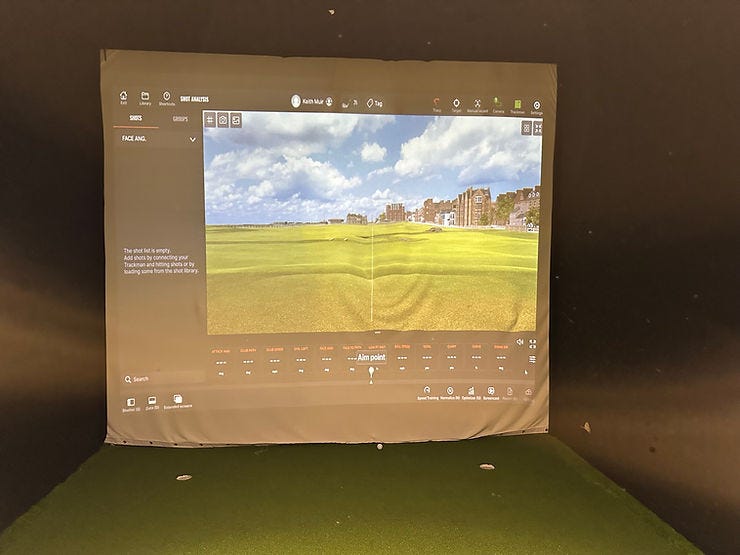
What struck me almost immediately was how the technology reframed the lesson. Instead of chasing ideal positions or rehearsing moves, the focus shifted to cause and effect. Why does a miss show up? Where does the movement break down? What’s actually happening between backswing and impact?
“The technology didn’t replace the coaching — it gave the coaching sharper edges.”
Seeing my swing rendered as a skeletal model made certain habits impossible to ignore. Things I’d always felt — getting stuck, losing sequence, hanging back — were suddenly visible in a way that video alone had never quite managed. To say I was impressed by what you can do with an iPad would be an understatement.
The 3D model also helps your instructor to show you things that are difficult to describe. As a visual learner, I particularly liked this aspect of Sportsbox. It was comforting to see that my swing was actually in good shape and only needed modest tweaking rather than wholesale change. But those modest tweaks have the potential to yield big results.
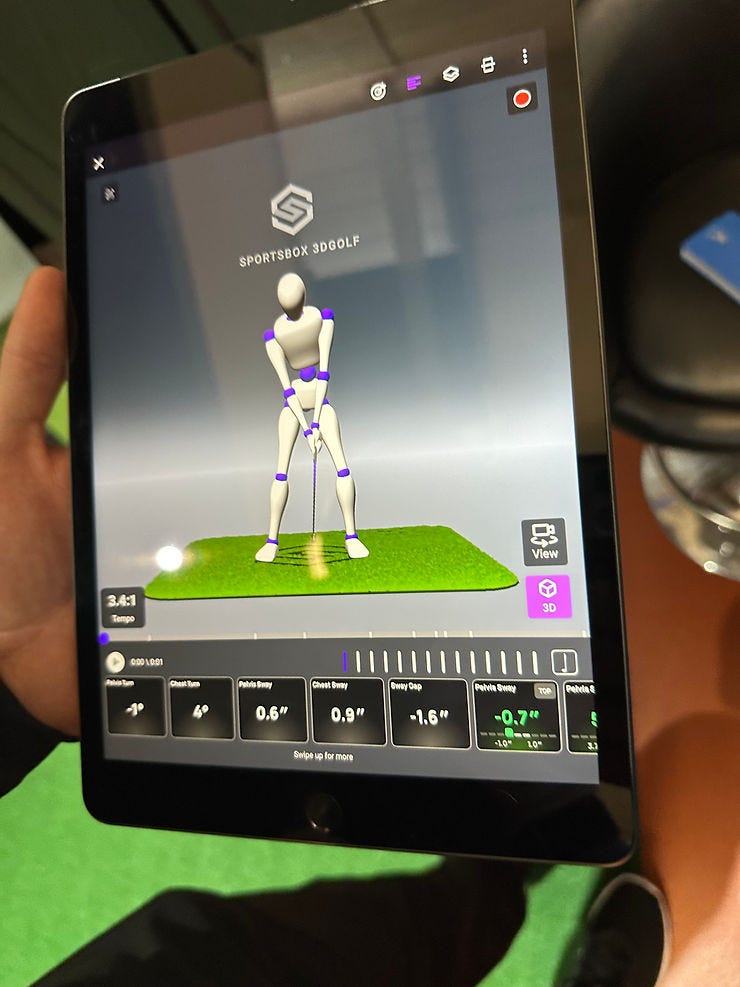


The clarity given by Sportsbox made the changes easier to accept. When you can see how one small adjustment influences everything that follows, the lesson becomes collaborative rather than corrective. I wasn’t being told what to fix; I was being shown why something mattered and then how to improve it.
“The technology didn’t replace the coaching — it gave the coaching sharper edges.”
Carrying that through to the rest of the session, Freddie demonstrated how I should work on the specific areas identified. Trackman numbers added context, drills reinforced the movement changes, and everything felt connected rather than layered on. Importantly, none of it felt rushed. The technology was there to support understanding, not overwhelm it.


Afterwards, I received a follow-up summary outlining the key takeaways and drills. It’s so easy to forget the instruction after the lesson, and that kind of detail makes it far easier to practice with purpose rather than guesswork.
What stayed with me most wasn’t a specific swing thought or data point, but a broader sense of how golf lessons are evolving and how technology can help you get more out of them. Innovations like Sportsbox AI don’t promise quick fixes or perfect swings. What they offer is a greater understanding — a clearer explanation of why things happen, and a better framework for improving them.
In a town defined by history, that felt like a thoughtful step forward. Not replacing tradition, but quietly supporting it. And for a golfer who’s spent years chasing feels without fully understanding them, that alone made the experience worthwhile. Old Tom Morris might be turning in his grave, but I think Young Tom would have embraced this wholeheartedly.
If you enjoy thoughtful writing about golf — equipment, places, people, and how we learn the game — please subscribe to the newsletter. It’s free, and new posts will land straight in your inbox.
Links: