

I’ve started a series of four speed lessons with James Tait, and the first one was about setting a baseline. Not the number I hope to be working from in a few months. Just an honest starting point before the real work begins.
For those who don’t know him, James is a professional long driver and speed specialist based in St Andrews. He was previously gear editor at Bunkered, where he reviewed equipment and appeared regularly in their video content, but he also competes seriously in long drive. He finished third at the 2023 World Long Drive Championship, had the longest drive of that tournament at 452 yards, and has now won seven times in Europe, including twice this year. His own ambition is to win the World Championship
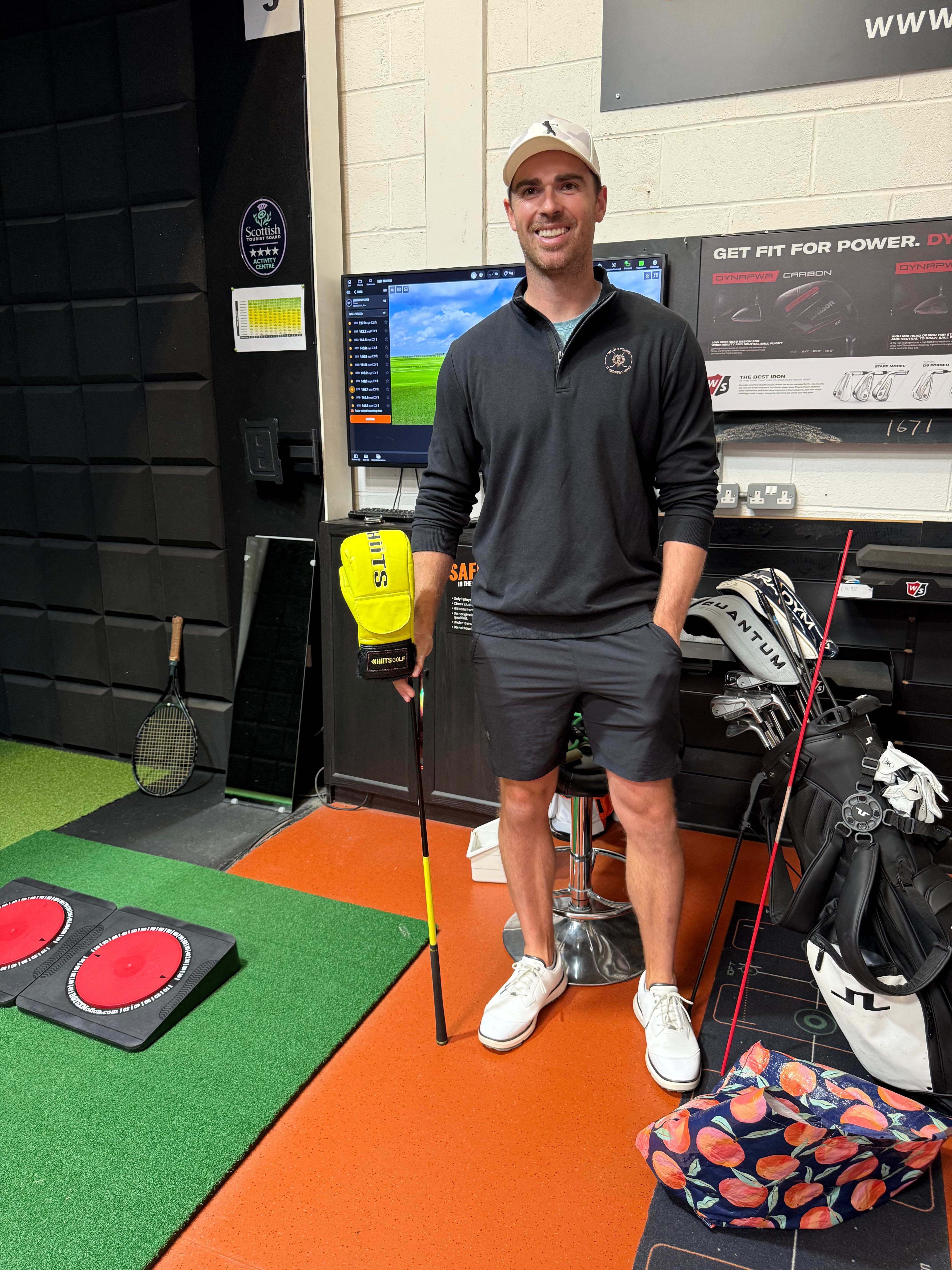
I’ve known of James for a few years and used to see him at The Duke’s when he was reviewing equipment. Earlier this year, he went independent and started advertising speed training sessions on social media, working out of the Golf Centre of Excellence. I also knew Freddie Lawrence, another professional there, so before booking anything I checked in with him.
Freddie’s response was useful because it was balanced. He was very positive about James, both as a person and as a coach, but also made an interesting point of caution. In Freddie’s view, a lot of people can gain speed in a first session simply by being encouraged to hit it harder and add a few power moves. The real question is what happens after that. Can the speed be developed? Can it be made safer? Can it become usable?
That was the caveat I needed.
I’m not trying to become a long drive competitor. I’m 57, not 27, and I’m acutely aware of the need to manage my body and accept its limitations. I want to swing faster, but not by pretending I’m younger than I am or ignoring what my body is telling me. The point is not to chase speed at any cost. It is to find out how much more speed is available without making myself less able to play.
I have always been pretty efficient with driver, but I’ve never felt I’ve fully tapped into what I might be capable of producing. My iron numbers have often suggested that I underperform a little with the longer club, which is part of what makes this experiment interesting. Is the driver really limited by my body, or am I failing to access something that is already there?
I’ve also been aware of distance gradually slipping as the years pass. It has not been dramatic, and it would be easy enough to explain it away as age, caution, technique, or the simple habit of trying to keep the ball in play. But in this first lesson, my starting driver speed topped out at 94mph. That gave us a proper baseline. Not a guess. Not a memory of what I used to do. A number to work from.
Warming Up, And A 7-Iron Surprise
We started by warming up with wedges before moving into some 7-irons. James quickly helped me add around 10-15 yards of carry. That surprised me, not just because of the extra distance, but because it didn’t feel forced. If anything, it felt easier.
The change came from something simple, and annoyingly familiar. James got me to move my hands higher, which is a recurring problem for me and something I have worked on before. In theory, that should help me make a better shoulder turn, and in practice it seemed to free up the swing without asking me to swing harder.
It was an early reminder that more speed does not always have to feel like more effort.
ROTEX, Driver And HiiTS
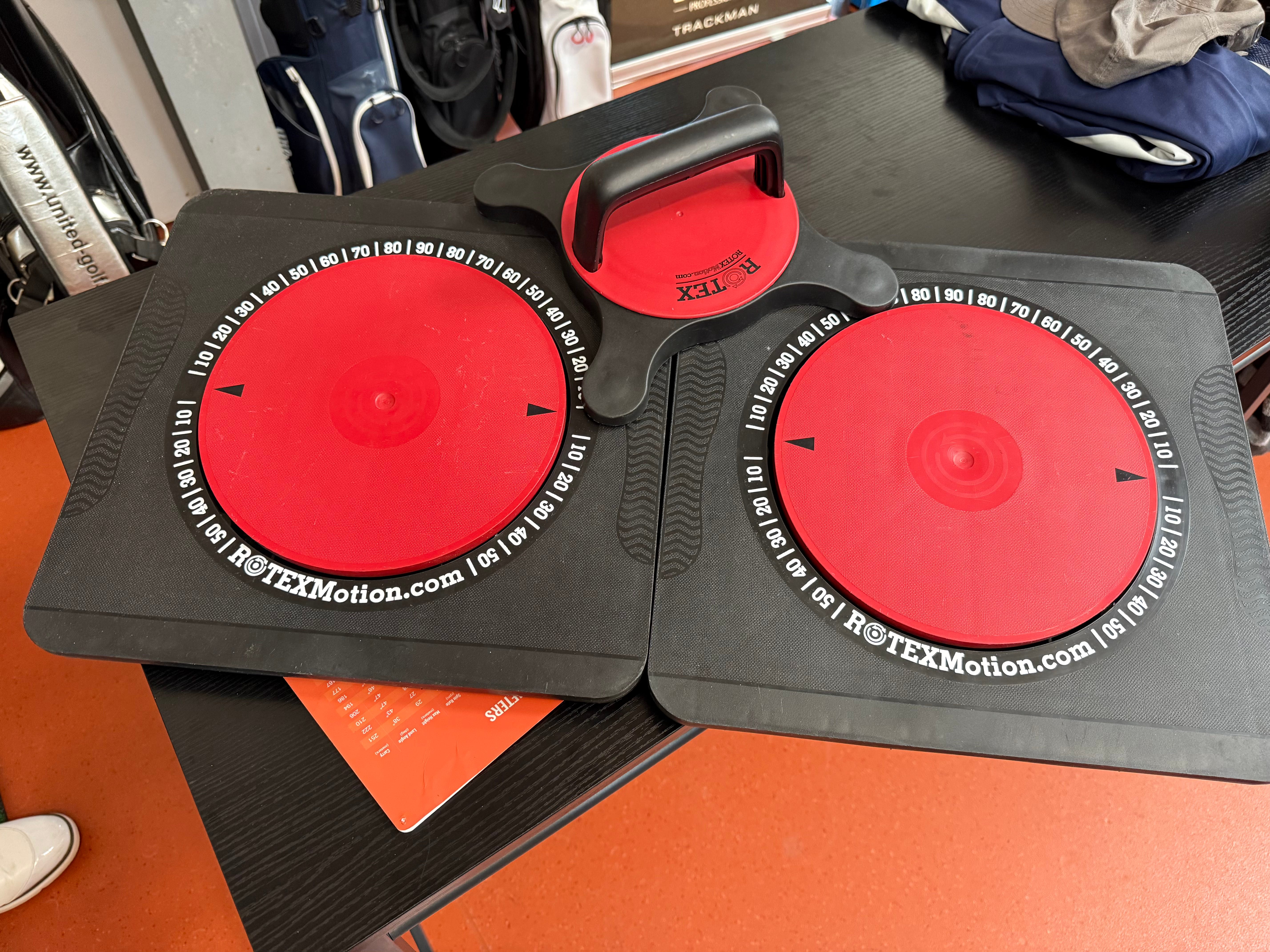
After the 7-iron work, we moved into the ROTEX stretching. I’ve got a pretty good daily stretching routine and I’m generally fairly flexible, so I wasn’t expecting this to be the most revealing part of the lesson. But this was different. It was mainly about rotation, sequencing, and separating movement between the torso and hips. The interesting part was not whether I could get into the positions. It was whether I could use those positions properly in the swing
We then went back to the driver to test the speed again before moving into the HiiTS work. The process was simple: light, middle, heavy, then repeat, recording the maximum swing speed each time. The idea was not to hit perfect golf shots. It was to create speed, feel the difference between the weights, and see how much speed could be accessed while still hitting a ball.
Only after that did I go back to my own driver. That is when I reached 100.2mph, up from a starting best of 94mph. With the HiiTS driver, I had been faster again, reaching 103.5mph
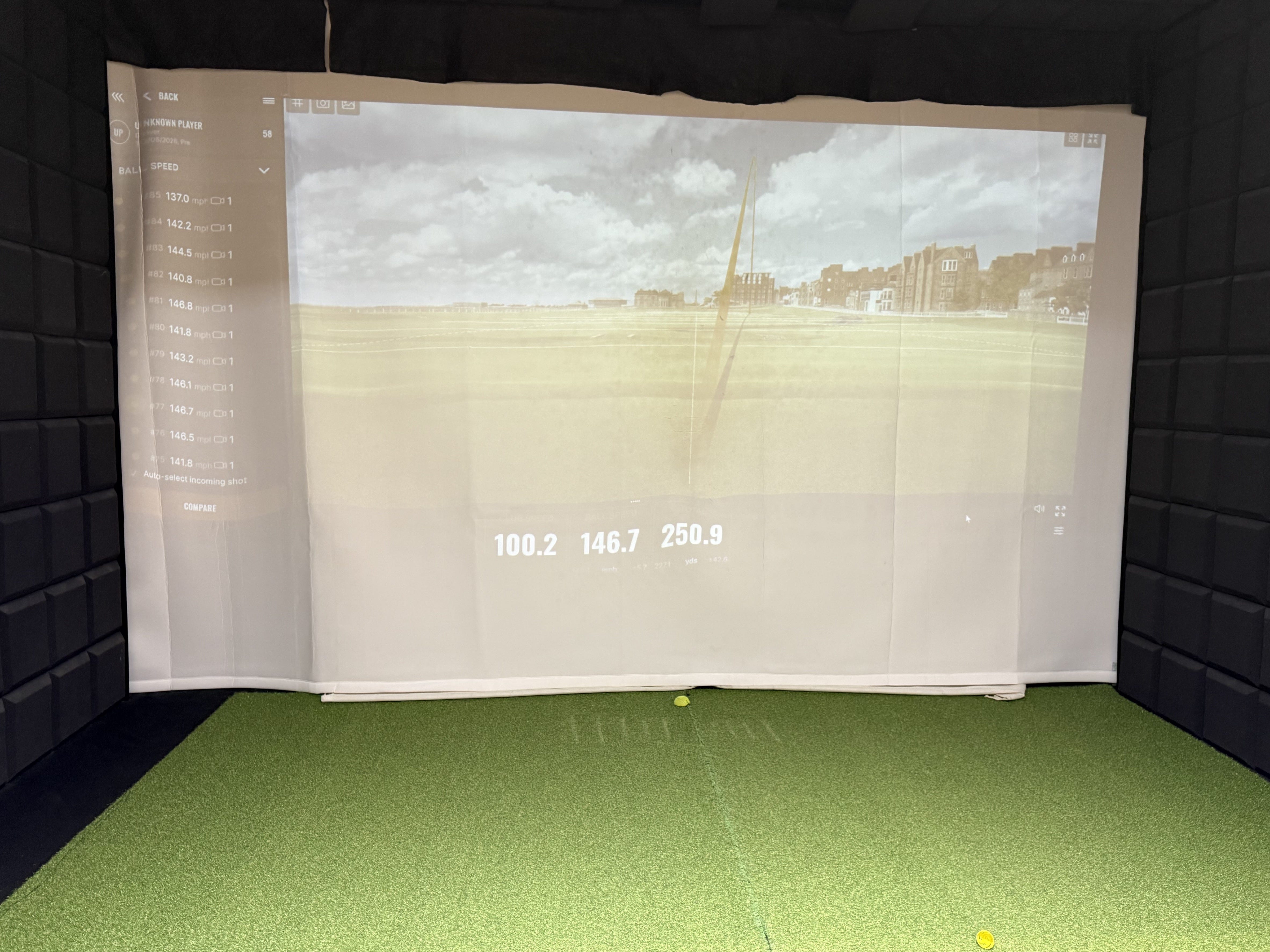
Those numbers got my attention, but I’m being careful not to overstate them. One fast swing in a lesson is not the same as taking it to the course, and it is definitely not the same as cruising at that speed. But it does suggest that 100mph is not some distant memory from a younger version of me. It is still there. The issue is whether I can access it more often, more safely, and with enough control for it to be useful.
James talked about lifting the ceiling speed to improve cruising speed, and that idea makes sense to me. If I want to cruise at 100mph with driver, then my maximum probably needs to be higher than that. Maybe 110mph or more. I don’t want to play golf at my maximum. I want to play golf with control, and know that there’s more there if I really need it.
Why Hitting A Ball Matters
The HiiTS driver part interested me because I’ve used weighted sticks before. I used an unbranded system with interchangeable head weights, followed the programme and watched the videos. I can see the attraction: you can swing weighted sticks almost anywhere, at almost any time, without needing a range, net or golf balls.
I’ve also been able to generate good speed with them. The problem is that I have never translated that properly into driver speed when there is a ball in front of me. It doesn’t simulate impact, and that feels like a major difference. A baseball player doesn’t learn to hit hard by only making air swings. A tennis player doesn’t learn to serve hard without a ball. Golf is not played with practice swings either.
The HiiTS driver made sense because it allowed us to work on speed while still hitting a ball. The point was not really where the ball went. It was simply that there was a ball to hit. Strike, contact, balance and intent remained part of the exercise, but without turning it into a normal driving lesson. If I’m going to train speed, I want that speed to have a chance of transferring into golf, not just into a faster empty swing.
Is there a psychological angle?
I don’t know exactly what is causing my driver ceiling, and I don’t want to pretend I do. Some of it may be physical, but my suspicion is that there is also something subconscious going on. When I’ve tried this before, I’ve always seemed to top out at around 100mph, despite the read-through from my iron numbers suggesting there should be more available.
Am I protecting myself? Am I trying too hard to hit the ball perfectly? Am I worried about the consequences of a bad drive and tightening up before I have even started down?
That would make sense. With a weighted stick, the task is simple: move it fast. Put a driver and a ball in front of me, and the task changes. Suddenly I’m not just trying to create speed. I’m trying to hit a golf shot. On the course, that is exactly what I should be doing. In speed training, though, it may be the thing that holds me back.
Homework Before Lesson Two
The homework for the next four weeks is fairly simple. At the range, after a thorough warm-up with wedges and 7-iron, the driver work will be capped at twenty balls at maximum effort, or until speed starts to drop off. That cap is probably important. I know myself well enough to know that if the number is close, I’ll want one more go, and that is exactly how sensible speed training can become something less sensible.
I’ll also keep working in the gym and add some more explosive medicine ball work, including windmill throws and rebound throws. The aim for lesson two is simple: can I get above the level I reached in the first session, or was that just the easy jump that comes from being given permission to hit it harder?
That comes back to Freddie’s point before I started. The first session can produce easy gains because you are encouraged to move differently. The more useful question is whether those gains can be held, developed and turned into something I can actually use.
So lesson one set the baseline. My driver started with a best of 94mph and reached 100.2mph. The HiiTS driver got to 103.5mph. My 7-iron carry improved by around 10-15 yards without the strike falling apart.
Those are useful numbers, but they are still only starting numbers. The real question is whether I can move the ceiling again in lesson two, and whether some of that extra speed can start to feel a little less like a special effort and a little more like something I own.
I don’t know yet.
That is why there are three more lessons to go.
If you’re interested in whether an ordinary golfer can actually build usable speed rather than just find a number on a launch monitor, follow along with the next three lessons. I’ll report back on what changes, what doesn’t, and whether any of this makes its way onto the course.
The Club House is free to read, but subscribing is the easiest way to get the next part of the series when it goes live.
Further Information
For anyone interested in the people and equipment mentioned in this post:
James Tait Golf - Skillest YouTube Instagram
The Centre of Golf Excellence, St Andrews
HiiTS Golf
ROTEXMotion
Can't wait to read more. Very timely as well. Question, when you said "...James got me to move my hands higher...", do you mean at address or are you talking about a steeper plane?
Great post Keith. Looking forward to hearing about future progress.