

I’ve been back playing golf for around two weeks now after my latest injury, and the overriding feeling is cautious optimism. I say my latest injury because this return has not happened in isolation. I was already easing back into golf after the hernia repair when I hurt my ankle, while also adjusting to orthotics, managing elbow pain, and experimenting with JumboMax grips. In reality, this has not felt like a simple return to golf. It has felt more like recovery part two. Recovery 2.0, if you like.
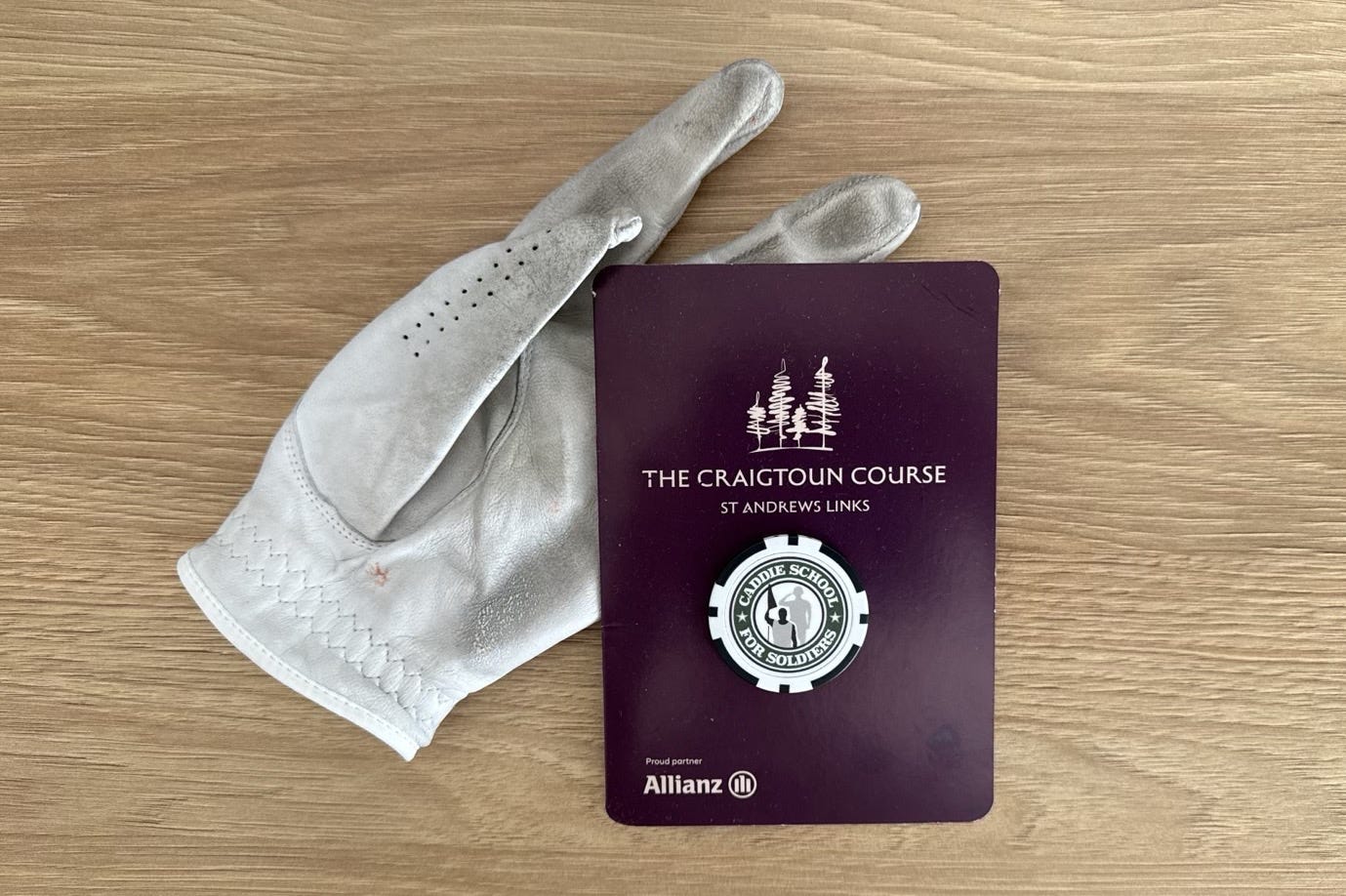
The initial target was to return in time for the Caddie School for Soldiers day at Craigtoun, which gave the comeback a useful focus. I was not simply trying to rush back for the sake of playing; I was trying to be ready for a specific day that mattered. Craigtoun is a hilly and physically demanding course, so the thought of returning there was quite daunting. Knowing I would have a caddie to help me round made it feel more manageable. In the end, after approval from my physiotherapist, I returned a couple of days earlier, easing myself in with rounds with friends on the Jubilee and Strathtyrum courses before playing at Craigtoun.
The bigger thing about the Caddie School for Soldiers day, though, was that it helped me get out of my own head. It is very easy, when you are working your way back from an injury, to become absorbed by your own thoughts, frustrations and moments of self-pity. Being at Craigtoun shifted that perspective. I was there alongside people recovering from issues far more severe than mine, trying to rebuild their lives in a new and more positive direction. That was humbling, and it was a privilege to be part of it. I hope I get the chance to do it again with future groups.
Physically, the return has been encouraging. The ankle has held up well to the rigours of play, although it remains strapped for the time being. Daily rehab is now part of my morning routine, and I’m trying to be disciplined about that rather than assuming that being back on the course means the work is done.
The elbow remains a bigger concern because it has been going on for so long. Again, daily rehab is part of the routine, and I’m also supplementing that with strength training at the gym. I’m determined to get on top of it. The theory behind switching to JumboMax grips is simple enough: a larger grip may reduce tension through the hands, forearms and elbow, and anything that eases that load is worth exploring. Initial impressions are positive, and the theory seems to be working in practice. I’ll write a proper review of the grips once I’ve had some more time with them.
Another change I’m still getting used to is orthotics, which affect how my feet meet the ground and, in turn, how the rest of my body organises itself. I’m working on the theory that if my connection to the ground is poor, if my balance is compromised, or if I’m not using pressure properly through the swing, then it makes sense that the hands and arms might end up doing more work than they should. I do not know whether that is what caused the tendonitis, but it is a possibility I am taking seriously. The question is not just how to quieten the elbow down. It is whether I can improve the movement pattern that may have helped create the problem in the first place.
As an AimPoint user, I’m relieved to report that the orthotics do not seem to have affected my ability to feel slope through my feet. If anything, their firmness may help more than hinder.
Playing with pain is mentally draining, and there have been times when I’ve found myself contemplating what life would be like if I could no longer play golf. There are bigger problems in the world than that, of course, but it is still an outcome I want to avoid. Don’t worry, I won’t be shopping for lycra any time soon.
I want to get back to playing properly, but the hard part now is not rushing to make up for lost rounds. The bigger aim is to return in a way that gives me years of golf rather than a few impatient weeks. That means balancing rounds with practice, rest and gym work. Sometimes a short, focused practice session may be better than a full round.
For now, the encouraging part is that I am playing again. A few weeks ago, the question was whether I could get back on the course at all. Now the question is how to keep moving forward without creating another setback.
That means keeping the load sensible and rebuilding trust gradually. The priority is rhythm, balance, movement, comfort and confidence.
Progress intelligently. Build it to last.
Thanks for reading. If you’ve dealt with injury, recovery, or rebuilding trust in your body on the golf course, I’d be interested to hear how you approached it.
Please like, comment, share or subscribe if you enjoy following these notes. It all helps the blog grow.
Further reading:
Recover Soon Keith!!