

Earlier this season, Auchterlonies were generous enough to lend me 5 new 2026 drivers and allow me to conduct a group test. I followed that up with a Callaway fitting, a speculative purchase of a Cobra Max K, and an experiment with a Ping G440 Max. It made me ask an interesting question.
What am I really looking for in a driver?
My current driver is a Titleist GT2, 10° in the standard setting, playing at 45 inches with a Fujikura Ventus Velocore+ Red 5S shaft. I was originally fitted for the GT3 head, but found it overly demanding and switched to the GT2. Titleist makes excellent drivers, and their popularity on Tour speaks for itself. But I’ve never really settled with mine, and that’s become a problem. My playing partners have noticed too, commenting more than once that I don’t drive the ball as well with the Titleist and that I’ve lost my consistent fairway-finding habit.
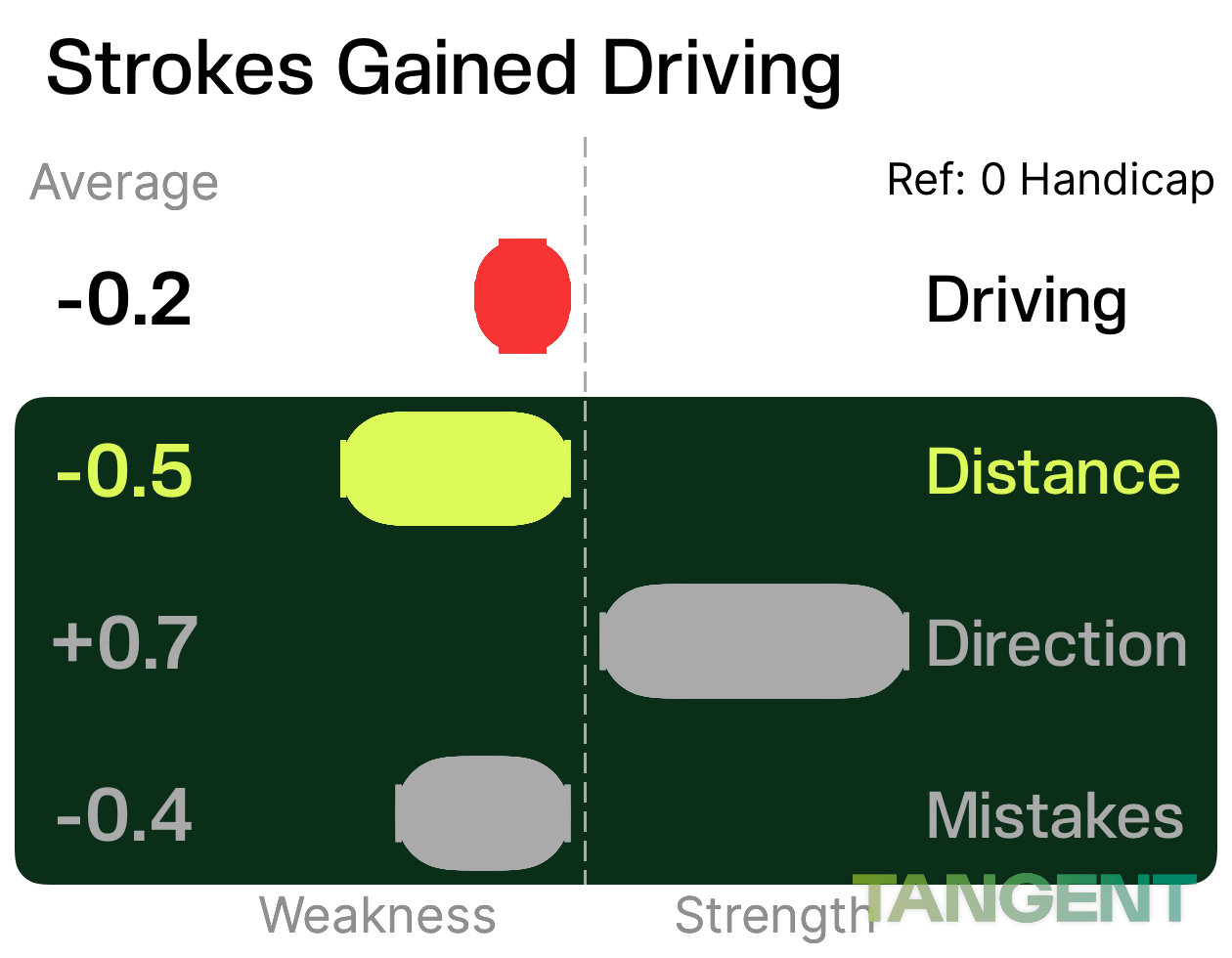
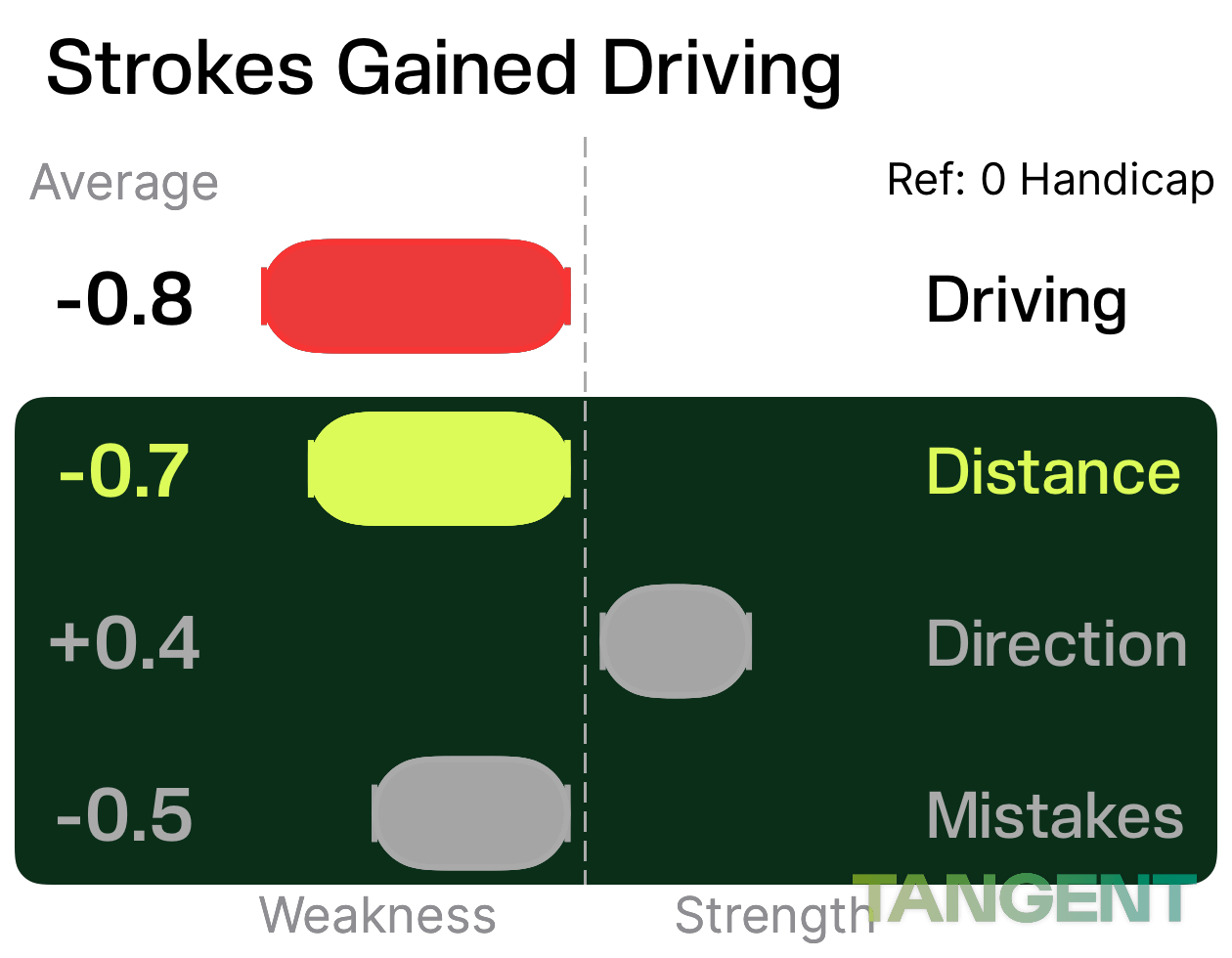
Tangent shows the deterioration since I switched too. This data is relative to a scratch golfer. I am working with James Tait to improve my speed and hopefully close some of the distance gap, but it’s interesting to see that distance deteriorated with the GT2. Direction at a headline +0.4 looks fine, but it has deteriorated relative to my old driver. Mistakes are basically the same.
None of this proves the GT2 was responsible. I know I can hit good drives with it; I just don’t do it often enough. No driver will cure a poor swing, just like no putter can compensate for a bad read. But when the numbers become less convincing, and you don’t feel particularly comfortable with the club in your hands, eventually you have to pay attention.
So What Am I Looking For?
Readers will remember that I wrote about why we keep buying new drivers, and I thought about that note carefully before going for this fitting. I’ve been struggling with the GT2 for too long, and my confidence has eroded to the point that I simply don’t trust it any more. My good shots are fine, but my poor shots get punished heavily. Playability and positioning are what’s important to me now, and that’s where the Ping G440 K impressed me in the early group test. It just wanted to go straight, and it found the fairway much more frequently.
I’m unlikely to find a transformational distance gain simply by changing driver heads, so the bigger opportunity is improving my swing and speed, which is exactly what I’m working on with James. But there is not much point in generating more clubhead speed if the ball is just disappearing further into the trees.
I wanted to see if a proper fitting session would confirm what I saw with the G440 K, and, given how much I like my Qi35 3HL and Qi4D 7 wood, I wanted to give the Qi4D driver a better test too. While I didn’t get on with the Core head in the group test, I always believed a fitting could get more from it. An earlier fitting had ruled out Callaway (I just don’t like the look behind the ball and can’t get comfortable), and the Cobra Max K experiment was interesting, but ultimately unsuccessful.
So, I booked a fitting with Adam Legg at Auchterlonies, and gave him a pretty simple brief: find me a forgiving driver that doesn’t sacrifice too much distance and keeps the ball in play. That sounds so simple written down!
Keeping the Fitting Simple


Adam has the benefit of knowing my game and my swing really well. Not just from previous studio sessions and fittings, but from golfing together too, so he has seen my GT2 issues up close.
The Ventus shaft was originally fitted independently of the driver head, and having also had success with the heavier version in my Qi35 fairway, we decided not to go down the rabbit hole of a full shaft fitting. The Ventus is also an expensive aftermarket shaft, so we wanted to re-use it if we possibly could.
Fortunately, Adam had a demo Ventus Velocore+ Red 5S available to use in the new heads, which allowed us to more fairly compare their performance against my GT2. In addition to the standard shafts provided by the club manufacturers, Adam also stocks a wide range of aftermarket shafts, and his universal fitting kit allows you to try the same shaft in different heads.
Establishing a Baseline
We started with my GT2. There were some good shots and some bad ones, which was probably a fairly accurate representation of my relationship with that driver.
I did manage one particularly good drive that gave us a useful benchmark for distance, spin, etc. While that best shot was good, the overall dispersion pattern was less convincing, and that was ultimately what I wanted to improve.
TaylorMade Qi4D Max
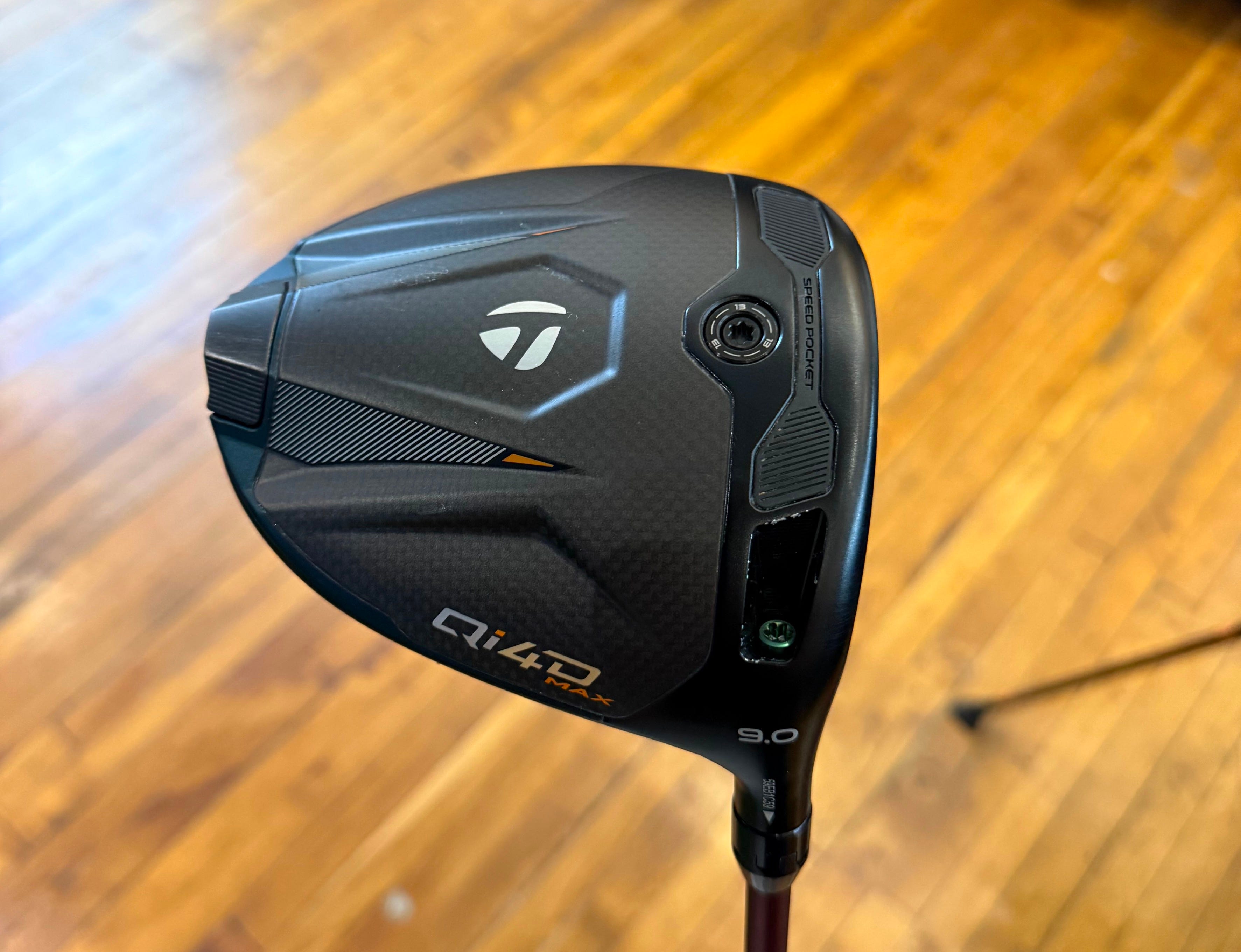
I had expected us to start with the standard Qi4D head, but Adam wanted to go straight to the Max. His reasoning was straightforward: my priority was forgiveness, so why not start with the most forgiving option and see whether there were any obvious compromises?
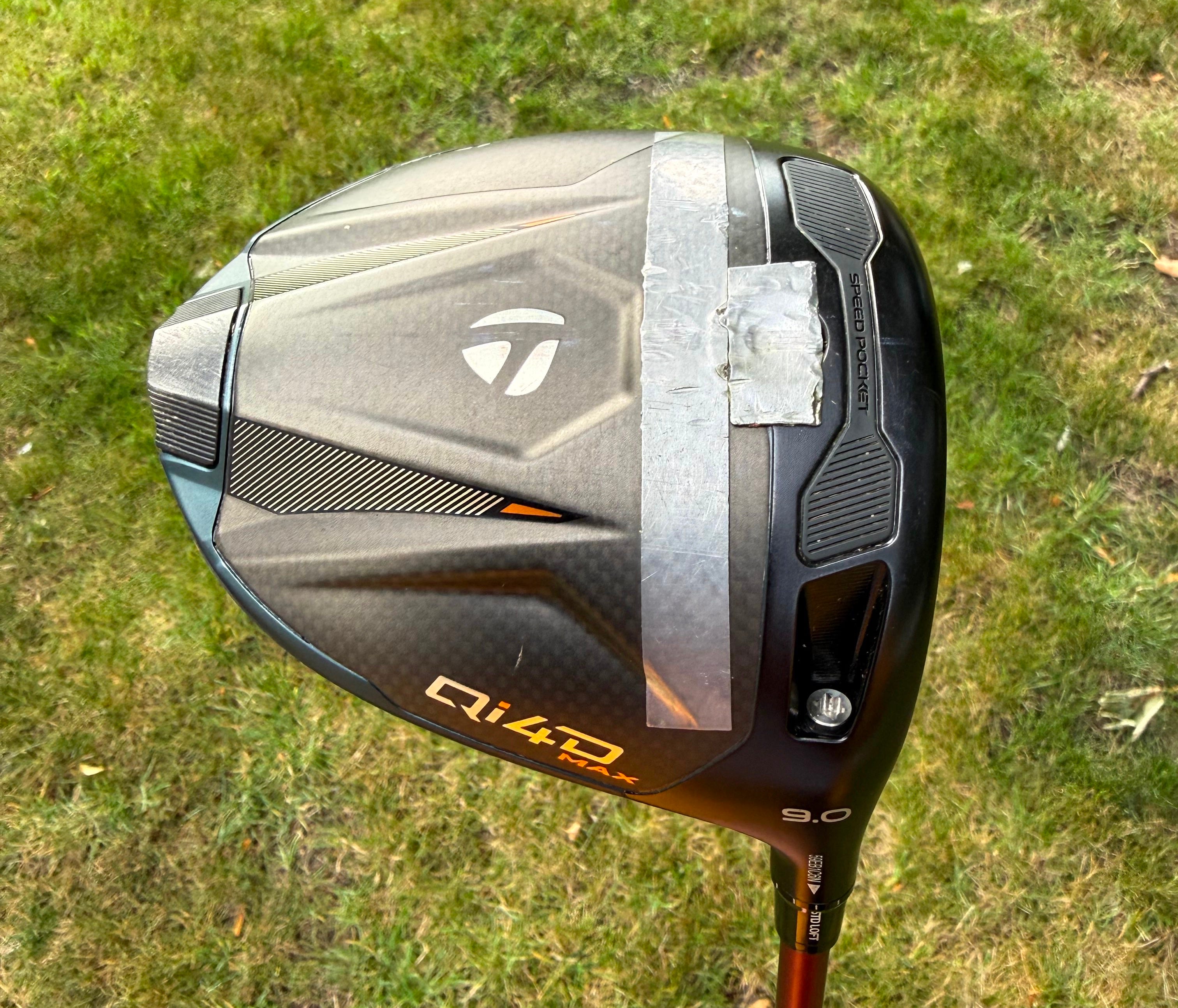
After my earlier G440 K testing, my concern with forgiving heads was spin. But that was a 10.5° head, and there was surely scope to improve. I have no trouble hitting up on the ball with driver, so we went with a 9° Qi4D Max in the standard setting, with the heavy weight positioned at the back.
As it turned out, the spin concern never really materialised.
I immediately liked the look and feel of the Qi4D Max. Having spent quite a bit of time with the Qi35 3HL and Qi4D 7 wood, the shape and presentation behind the ball felt familiar. I had read a lot of comments about the sound from the carbon face, but I liked that too. Interestingly, I had gone into the fitting expecting to prefer the Ping (as I like the turbulators), but I actually preferred the look of the TaylorMade.
More importantly, I was immediately hitting it well. My average club speed was around 100mph, with the fastest swing of the day reaching 101mph. That was encouraging in itself and suggests the work with James is starting to pay off. The best drive carried 250 yards and finished at around 270 yards total, while spin was generally around 2,300rpm, which was in a very comfortable window.
But the most important part was the dispersion.
Like my early testing with the G440 K, the Qi4D Max just seemed to want to go straight. Good swings produced good drives, but even the poorer strikes tended to stay much closer to the intended line. Where the GT2 might have produced a wider draw or fade, the TaylorMade was generally producing something much smaller.
There was still the occasional snap hook, but no amount of forgiveness is going to save me from that one. That is a swing problem, not a driver problem.
What impressed me was what happened with the lesser misses. The dispersion circle was noticeably tighter, and I was striking the Qi4D Max much more consistently than the GT2. That was exactly what I had asked Adam to help me find. That better strike was also producing good distance, and I actually managed to beat the best strike with the GT2. It’s amazing what hitting the sweet spot can do!
Ping G440 Max
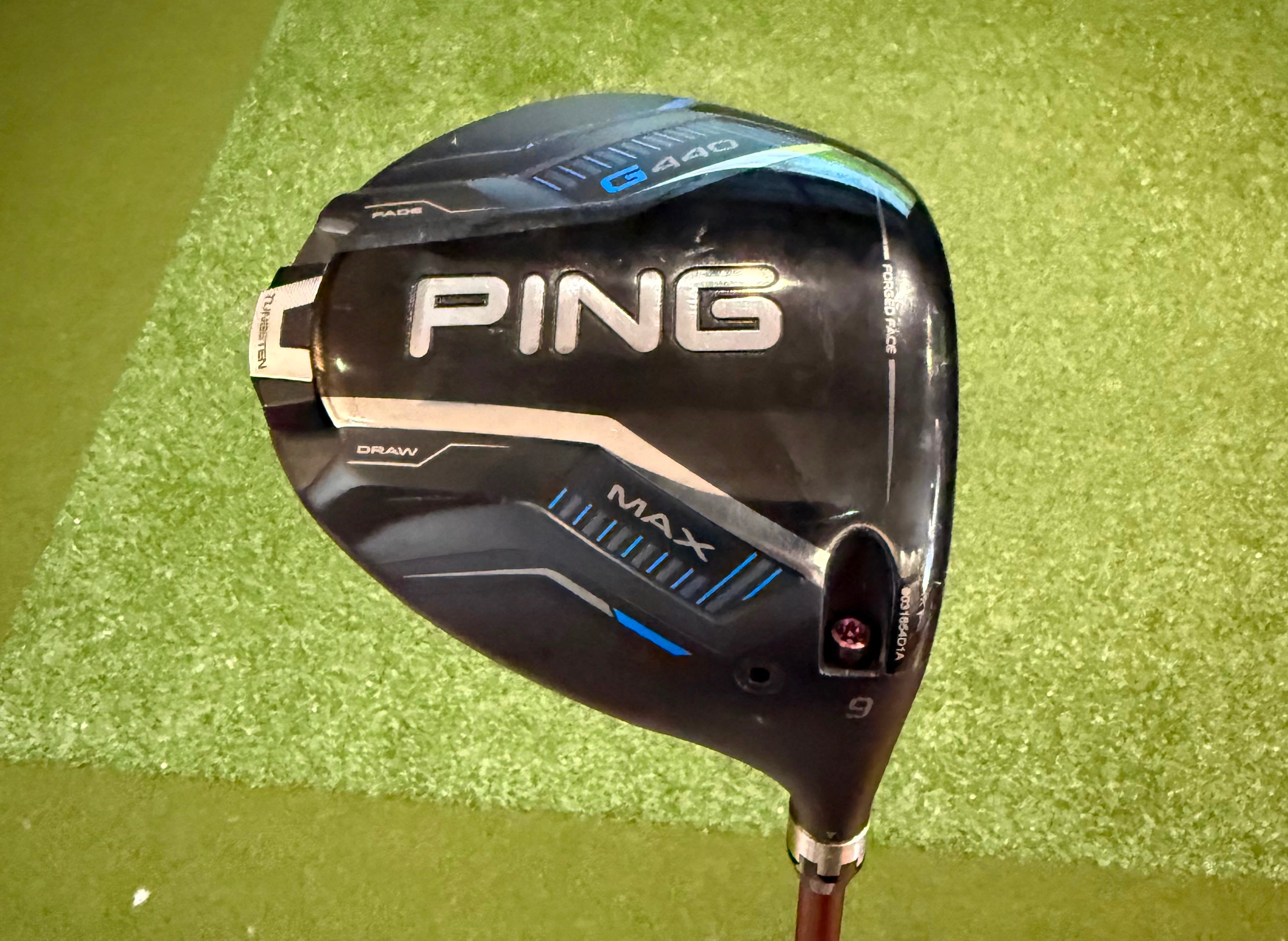
The Ping result was probably the biggest surprise. I had really liked the G440 K during my earlier group test and had also been very impressed with the standard G440 Max. If anything, I had gone into this session wanting Ping to win. I was really just hoping Adam would validate my thoughts before I pressed the “buy it now” button on one of the saved eBay drivers I was watching.
But it didn’t win.
We already knew from previous testing that I could generate a little too much spin with the K, but this time the bigger issue with the Max was simply that I struggled to swing it consistently. Ping driver heads are slightly heavier than those from many other manufacturers, and we wondered whether that was affecting how the Ventus shaft loaded during the swing.
Whatever the reason, I found it much harder to put a repeatable swing on the club. My swing speed was slower, and the dispersion was considerably wider than with the Qi4D Max, so we were able to rule it out quite quickly.
That made me think back to my own G440 Max experiment. I had played a couple of rounds with the same head using the Chrome 6S shaft and found it very impressive. The combination felt easy to swing and was much more consistent for me than the G440 Max and Ventus Red combination during this fitting.
That makes me reluctant to draw a firm conclusion about the Ping head itself. This was deliberately not a full head and shaft fitting and, given how much I had liked the G440 Max with the Chrome 6S, I do wonder how it might have performed with a dedicated shaft fitting.
For this particular test, with this particular shaft, the Qi4D Max was comfortably better. And that was what mattered.
A Clear Winner
By the end of this test, the Qi4D Max had produced the tightest dispersion; I was striking it better, the spin was good, and I was not giving anything away in distance.
In fact, the longest Qi4D drive slightly bettered my best GT2 shot. That was significant because I had gone into the fitting prepared to accept some trade-off of distance for accuracy. That didn’t happen. The Qi4D Max gave me the forgiveness I was looking for while still producing very good numbers.
Auchterlonies actually had a spare demo head available, so rather than ordering anything immediately, Adam swapped the adapter on my current Ventus shaft and gave me the Qi4D Max head to take away and try for a couple of weeks.
That seemed like the perfect next step. A launch monitor can tell you plenty, but if I am looking for a fairway finder, ultimately I need to find out whether it actually finds fairways.
An Unexpected Discovery
When Adam removed the adapter from my Ventus shaft, we discovered that it had been built with a 3g tip weight. That surprised both of us. The GT2 has interchangeable head weights, so if the original build had needed additional swing weight, we would have expected that adjustment to be made through the head rather than by adding weight at the shaft tip.
There may have been a perfectly good reason for doing it, and without knowing the thinking behind the original build, I don’t want to suggest it was necessarily wrong. But we decided to remove it. However, with my relatively heavy Golf Pride CP midsize grips, which weigh around 70g, the Qi4D Max then measured roughly C8 swing weight. And I definitely noticed that on the course.
Getting the Swing Weight Right
At C8, I struggled to sense the clubhead properly during the swing. The fitting had been excellent, but once I got outside, I did not feel like I could locate the head particularly well, and my timing suffered as a result.
So I started experimenting with lead tape. The first addition took the driver to around D0, and that immediately felt better. I had much more awareness of the clubhead during the swing and started to feel far more comfortable with the timing. I then added a little more tape and moved it to D1, which currently feels like the sweet spot.
In total, I have added roughly 6g of lead tape, all positioned towards the front of the head. That is not an insignificant amount of weight. Subjectively, I think the driver may now be launching slightly lower, which would make some sense given where I have positioned the extra mass, but I would need to get back on a simulator to confirm that suspicion.
What I can say with much more confidence is that the club feels considerably better to me at D1 than it did at C8 and, more importantly, it is performing better too. I’m still making swing changes with James, so I have to be careful about separating improvements in my swing from improvements in the club. Even allowing for that, I really think we’ve found a winner here, and I don’t anticipate giving the demo head back!
What Have I Learned?
The obvious conclusion is that the Qi4D Max was the clear winner of this fitting, but I think there is a little more to it than that.
The Ping G440 K and Max had both impressed me previously and looked like obvious contenders, yet the Ping and Ventus combination simply did not work as well for me on the day. That does not make either Ping a bad driver, nor does it mean they wouldn’t work for me with a different shaft. If anything, it reinforces the importance of fitting and properly testing the complete club.
The same applies to the Qi4D Max. The head was unquestionably the best fit during the session, but taking it onto the golf course at C8 showed me that choosing the right head was only part of the equation. Getting the overall build and feel right mattered too.
At D1, the driver now feels much more comfortable, and I really like how it is performing. Perhaps most encouragingly, I’m starting to see the extra speed I’ve been working towards while also feeling that I have a little more help when the swing isn’t perfect. I’ve hit some of my best drives of the year with this club, and it is quickly building trust.
For years, I was never the longest driver in the group, but I was usually a reliable one. I stood on the tee believing that a reasonable swing would normally leave me somewhere playable.
That is what I’ve been missing, and it was really the whole point of this exercise.
I wanted a fairway finder and, so far, the Qi4D Max is making a very strong case.
My thanks to Adam Legg at Auchterlonies for this fitting session and the opportunity to take the demo head away to try on the course.
Have you ever had a driver fitting produce a result you didn’t expect? Let me know in the comments.
If you enjoy this kind of real-world equipment testing, subscribe to The Club House for more reviews and fitting experiences.
Further Reading
Five New Drivers for 2026 – the original group test where the Ping G440 K first caught my attention.
Callaway Quantum Max Fitting Review – another part of the search for something better off the tee.
Speed Training with James Tait – the other half of the project: increasing speed while trying to keep the ball in play.
Thanks for sharing this Keith good stuff!!!