

First, the caveat
I have to preface this article by saying that while writing this review, I was made aware that a new model of the grip had been released. I was sent three samples of the new model to compare with the original version, so this review now combines my experience with both.

Why have I switched?
I didn’t switch to JumboMax ZenLite grips because I was chasing distance, trying to copy Bryson DeChambeau, or looking for a radical equipment experiment. I switched because I was looking for ways to make golf more comfortable while dealing with elbow tendonitis.
I’ve already moved into graphite shafts, and I’ll link to those posts below, but the next idea was thicker grips. The theory is fairly simple: a thicker grip may reduce grip pressure, which can reduce tension in the hands, arms and elbow tendons. If you are gripping the club a little less tightly, perhaps the whole system becomes a little less strained.
This review is therefore not just about whether the grips feel good in the hand, or whether they perform well in normal conditions. It is about whether thicker grips can make golf feel more playable while recovering from tendonitis. On that measure, the early signs have been positive, although the full story has turned out to be more complicated.
Why JumboMax ZenLite?
Part of the reason I was interested in JumboMax was that I had listened to a few podcast interviews with CEO John Mazzanoble and Director of Sales and Fitting Alex Trujillo. They made a convincing case for why grip size matters, why a thicker grip might help golfers reduce grip pressure, and the potential benefits of doing that.
Tour validation has also increased recently, with players such as Jason Day and Sergio Garcia switching to JumboMax grips. Good players are not going to make major equipment changes lightly, especially to something as personal as grips, so that sort of validation carries some weight.
That said, tour validation only goes so far. Tour players are not paying £17.95 per grip, dealing with UK stock limitations, waiting on customs delays from a UK website, or wondering whether to replace thirteen grips out of their own pocket if something goes wrong. Their experience of equipment is not the same as ours.
Ideally, I would have tested these properly first. JumboMax sell trial packs in the USA, which would have been the sensible route, but I couldn’t source one in the UK. That meant the decision was more of a jump than I would normally like.
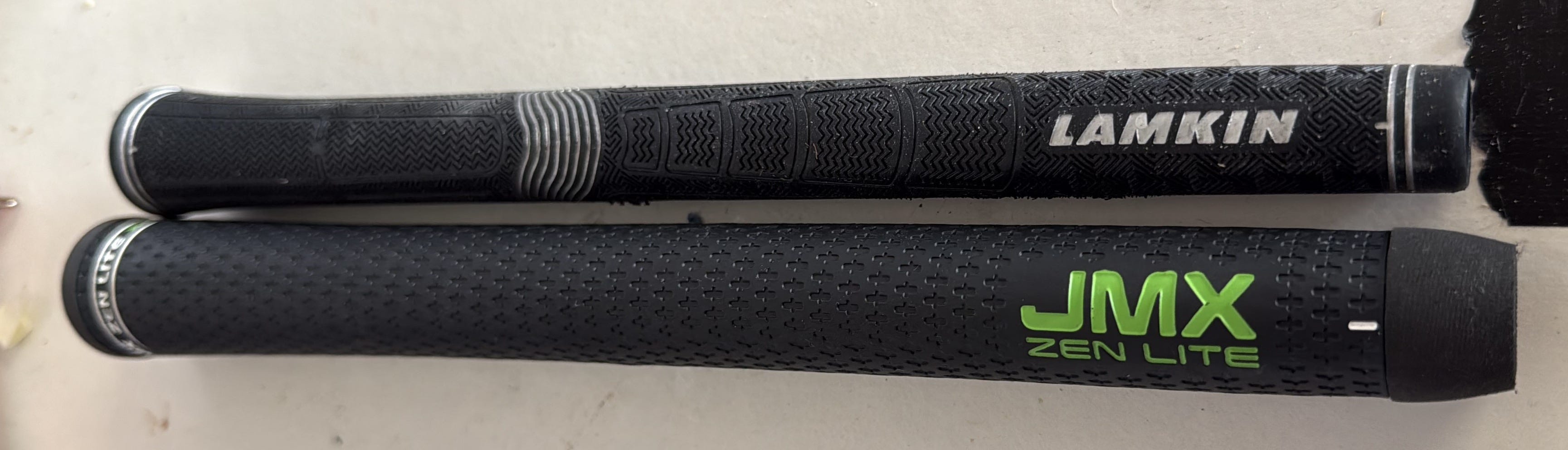
I used the JumboMax AI fitting tool, which recommended extra-small, and chose the ZenLite because it was an almost perfect weight match for my existing grips. That mattered because I wanted to change grip size without creating any major swing weight issues or completely changing the way the clubs felt.
Many jumbo grips are considerably heavier than standard grips, often by 20 to 30g or more. The ZenLite gets around that by using a lightweight inner core with a layer of grip rubber over it, keeping the overall weight much closer to a conventional grip.
As I was preparing to return from injury and wanted my clubs ready, I decided to replace all 13 grips rather than trialling a couple first. I was pretty convinced by the theory, and if thicker grips were going to help my elbow, I wanted the benefit across the full set rather than only on one or two clubs.
Buying Them In The UK
JumboMax grips are still not the easiest thing to source in the UK, especially if you want a specific model and size. Most of the usual online retailers I use were out of stock, and no local physical retailer stocked them either.
I contacted JMX in the USA to ask about UK suppliers, and they directed me to Ministry Golf. Peter Powell from Ministry Golf has been exceptionally helpful throughout this process, but his reply came after I had already found the grips in stock elsewhere. Being impatient, I had already ordered them from that site.
At the time, I had no reason to think I was buying anything other than current stock. That became more important later.
Fitting The Grips
Fitting them was not especially easy.
I have fitted plenty of grips before, but these took more effort than a normal grip. They are not impossible to fit, but I wouldn’t want to fit them if I were in a hurry. It’s a bit like installing a SuperStroke putter grip.
First Impressions
The initial impressions were positive.
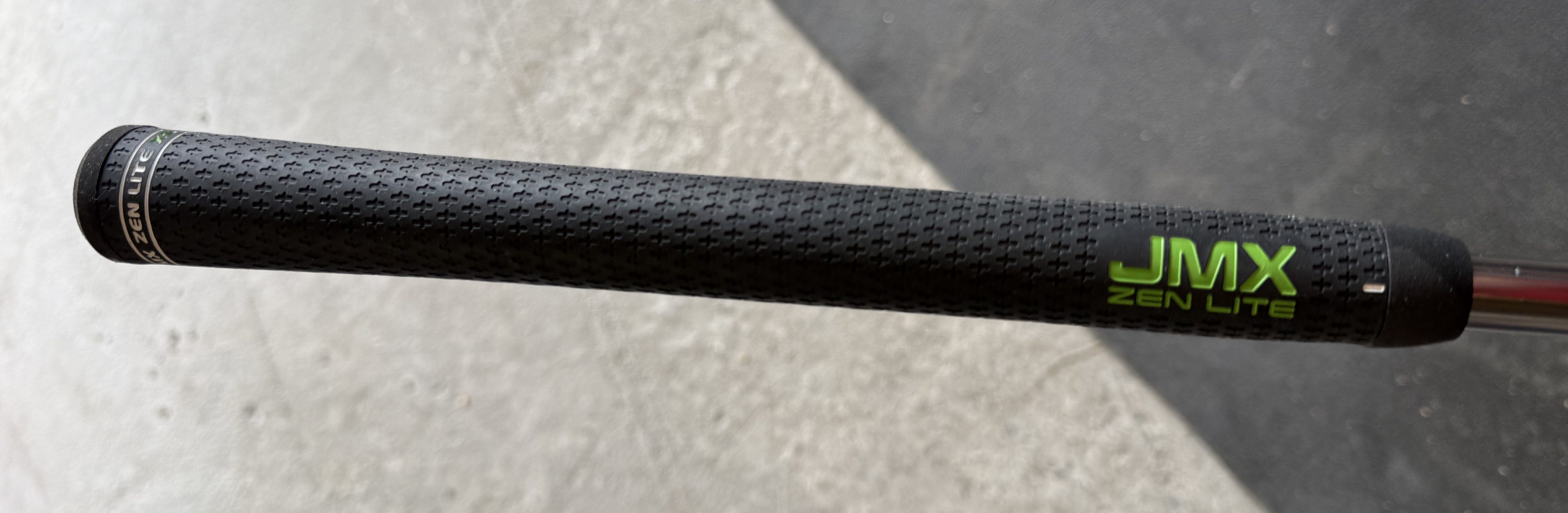
The ZenLite extra-small felt good in the hand and almost like a larger classic Tour Velvet. Yes, they are large, but not cartoonishly so, and the material felt pleasant in dry conditions. A few playing partners tried my clubs, and their reaction was generally positive. Even for golfers who had no intention of switching to something oversized, the grips made a good first impression.
After the first couple of rounds, I noticed less elbow fatigue after playing, which was exactly what I was hoping for. The size took a little adjustment, but not as much as I expected. The clubs still felt familiar, just with a larger grip in my hands.
Performance On The Course
In dry conditions, the grips have been good.
I have not found any real issue with different types of shots. Full swings, partial shots and chipping have all been fine. That was one of my concerns before fitting them, because I wondered whether a thicker grip might make the short game feel clumsy or reduce my sense of the clubhead.
If anything, the bigger grip has made the club feel calmer in my hands. I don’t feel as though I need to squeeze it in the same way, and that seems to be part of why my elbow has felt better. I’m not saying the grips have improved my golf, but they have made playing feel more comfortable.
Wet-Weather Performance
The wet-weather performance has been less convincing.
I’ve now had enough time with the grips to play in the rain, and even wearing rain gloves, I didn’t feel especially secure with them. The material felt less convincing once wet, and I found myself thinking about the grip rather than the shot. Not ideal.
I can’t say with certainty whether this is purely down to the material or whether I am still adjusting to using a thicker grip in wet conditions. It may even be a confidence issue. But either way, for my golf in Scotland, wet-weather performance matters. A grip can feel excellent in dry conditions, but if I don’t trust it in the rain, that becomes a serious limitation.
The Grip Failure
Unfortunately, the biggest issue was durability.
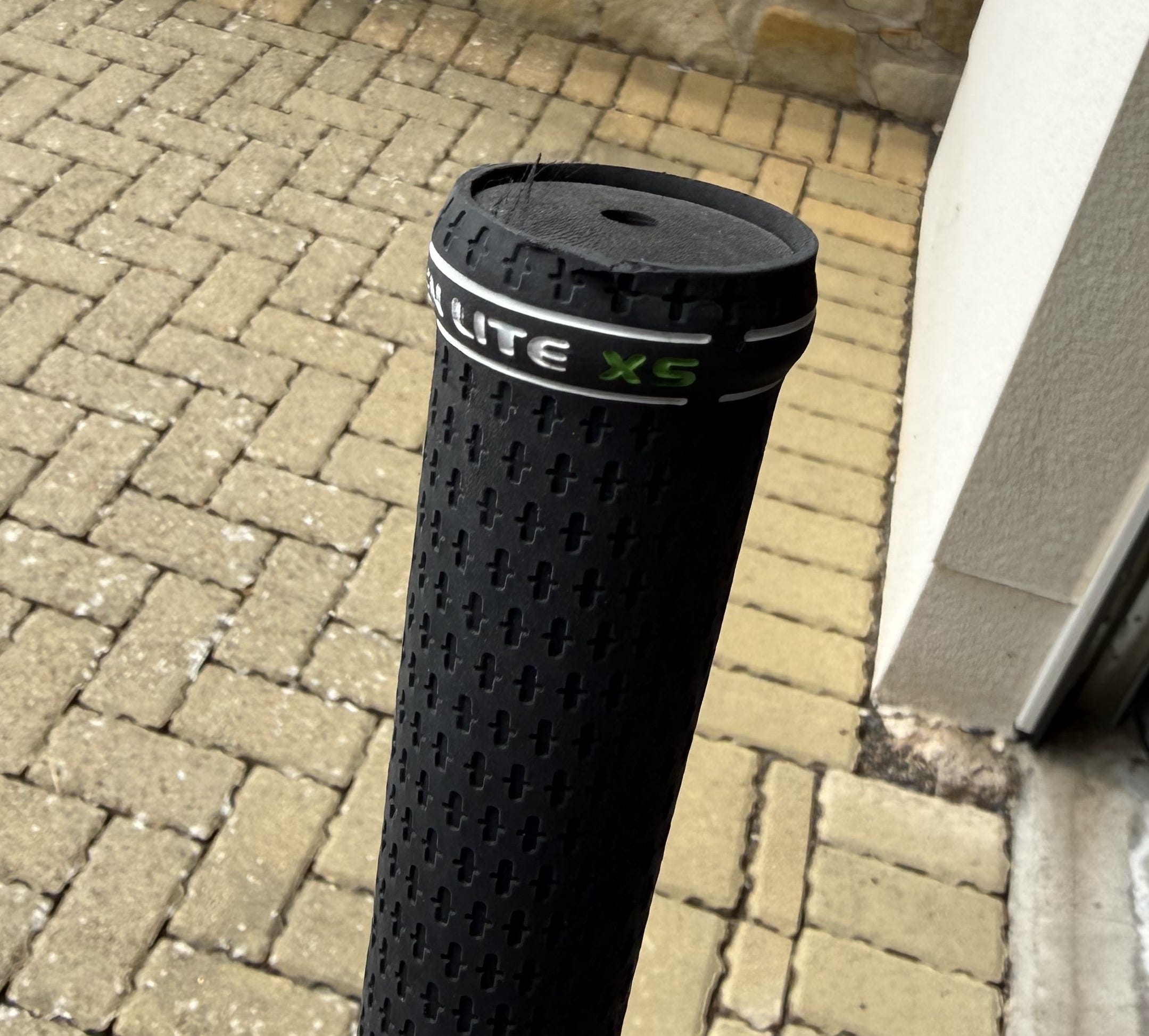
After only a couple of rounds, two of the thirteen grips started to fail. The rubber sleeve at the butt end became loose and began rolling down, exposing the inner section underneath. This was not normal wear. On one grip, it was bad enough that the end of the club looked completely unfinished. On another, the sleeve had clearly started to lift and deform around the cap.


A couple more grips also started to show similar signs, so this was no longer an isolated issue. Two failures from thirteen would already be disappointing for a premium grip, but with others beginning to go the same way, it became harder to dismiss as simple bad luck.
Could clubs rubbing together in the bag have contributed? Possibly. But clubs being taken in and out of a golf bag is ordinary use, and I would expect a grip to tolerate that without starting to come apart.
Customer Service And The Old Model Issue
This is where the experience became more frustrating, although I want to be clear that my issue is not with Ministry Golf.
When the problems started, despite not having supplied my grips, Peter at Ministry was very helpful. He explained that the black and green ZenLite I had purchased was an older model, and that the newer black and white version had been improved. He suggested that I contact the seller and have the faulty grips replaced.
When I raised this with my retailer, they said JMX had not contacted them about the issue. Their first offer was to refund the two defective grips, which addressed the visible failures but not the wider concern that I had fitted thirteen older-model grips and had lost confidence in the rest of the set. In the end, I agreed to a refund for the two failed grips, along with some compensation for the inconvenience. The retailer continued to list the grips as current stock.
While dealing with the retailer, I also contacted JMX USA directly. Their response confirmed that they were “aware of this issue with the older model Zen Lite”, and that the grips in my pictures were that older model. They also said they had switched to a different manufacturer for the new ZenLite and that the revised version would no longer have the lime-green detailing.
Until then, I thought I might simply have been unlucky with two faulty grips, and I had treated the refund for those two as a reasonable compromise. After the JMX reply, it felt more like I had bought old stock of a product with a known issue.
I therefore contacted the retailer again, and they agreed to a full refund. I also contacted JMX again to ask why older stock with a known problem had remained in the supply chain and continued to be sold as current product. They did not reply.
What happened next?
If the grips had simply felt poor, the decision would be easy. I would take them off, move on, and put the experiment down to experience. But that is not what happened. The thicker grip idea has helped, and I am more comfortable playing golf with them fitted.
The problem now is trust.
Having remained in contact with Ministry Golf, Peter suggested that he send me replacements from the new range for my three faulty grips. That was a very generous offer, and he sent one XS and two Standard Jumbo grips so I could also try a size down.
Did The New Model Fix It?
Initially, these felt slightly better than the older model, but unfortunately they have not resolved the durability concerns. In fact, they have raised a few additional quality questions.
The three grips I was sent were all slightly different lengths, which immediately seemed odd. They also have a noticeable seam where the grip wrap is joined together. I actually think that could have been turned into something useful if it had been positioned and finished deliberately enough to act as an alignment reference, but as it stands, it simply feels like a construction seam.
I like the texture of the newer grips, but they do not appear particularly durable. The grip on my driver was already showing signs of wear after only a few rounds.
Then, most significantly, the driver grip failed in the same way as the older model.


While trying the new model, I have also been experimenting with other grips. When removing one of the new ZenLite grips, we noticed that the core appeared more brittle than the old one and broke up during removal. We also noticed that the grip wrap detached from the core very easily and appeared to be attached with grip tape rather than glue.
The butt end looked to be better attached, but that had not prevented another grip from failing in use.
Removing that grip, combined with the failure of the second new-model grip, was enough for me. I do not intend to purchase any more ZenLite grips and will look for an alternative solution.


Verdict
The JumboMax ZenLite grips are a difficult review because the central idea has worked better than the product experience.
On comfort, they have been a success. They feel good in the hand, encourage a lighter hold, and have made golf easier to play while I manage my elbow.
On durability, they have been disappointing, especially for a premium product. More importantly, my experience with the newer black and white model has not restored any confidence. Having now seen the same type of failure on both versions, I think JumboMax need to investigate the issue further.
For now, they have lost me as a customer, and it will be very difficult to convince me to give them a third try.
I would still recommend the idea of testing thicker grips if grip pressure, arm tension or elbow discomfort are issues for you. For me, the lesson is not that thicker grips are a bad idea. It is that a good idea still needs a product you can trust.
A final word
If you’ve experimented with JumboMax grips, or moved to a thicker grip for comfort or to reduce grip pressure, I’d be interested to hear how you got on. I’m now trying a few alternatives, so I’ll share what I find once I’ve had enough time with them.
If you enjoy this kind of independent equipment testing, you can subscribe to The Club House to get future reviews and follow the experiments as they develop.
Other reading:
Fitting for graphite iron shafts at SGGT: here
Thanks for sharing, sounds frustrating! Hope you find a reliable solution.
Thank you for the honest and fair review. I was hoping they would have resolved the issues with the new model. It's disappointing that they did not. Looking forward to what your next grip review.